
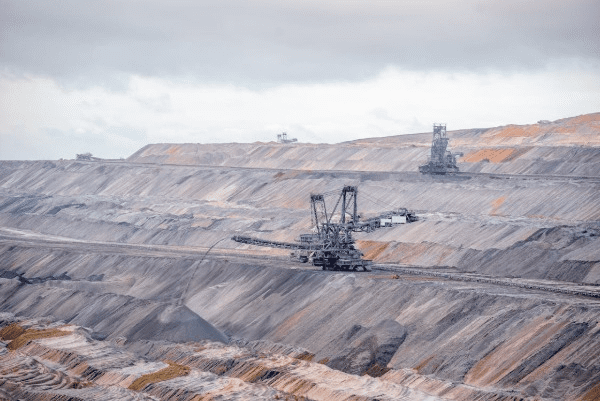
There are moments when a seemingly routine conversation ends up shaping the direction of a project that has been in development for years. A long table, several open folders, representatives from different countries, and a tension that is barely noticeable at first. In the mining industry, many decisions are not made with excavators or in geological laboratories, but in meetings where governments, communities, investors, and technical teams come together—groups that rarely share the same language or cultural references.
Conversations That Define Entire Projects
Modern mining rarely focuses solely on extracting resources. A project involves years of exploration, environmental assessments, agreements with communities, regulatory approvals, and complex financial commitments. Within that framework, negotiations appear at multiple stages.
First come the initial conversations with government authorities. These meetings often focus on permits, mining licenses, environmental impact, and fiscal conditions. Technical delegations, legal advisors, and political representatives frequently participate, often coming from very different linguistic and cultural contexts.
Then there are meetings with international partners or investors. Large mining projects typically involve consortia of companies, investment funds, or corporations that operate across several continents. Each stakeholder brings expectations, priorities, and regulatory frameworks that influence the conversation.
Finally, there are meetings with local communities. In many regions, relationships with communities are one of the most significant factors affecting the viability of a project. A misunderstanding during a community meeting can create distrust that may take years to repair.
In all these settings, dialogue does more than convey technical information. It also communicates intentions, respect, and credibility.
When Nuance Matters More Than the Numbers
A mining negotiation is often filled with technical terminology. Discussions may revolve around concessions, royalties, environmental mitigation plans, infrastructure development, or social investment commitments. Yet the challenge lies not only in explaining complex concepts, but also in preserving the nuances that accompany each argument.
A common example occurs when a company presents its environmental impact plan. The documentation may be technically clear, but during meetings questions often arise that require detailed explanations. If an answer loses precision during translation or interpretation, the perception of risk can increase quickly.
Something similar happens in discussions about economic benefits. When negotiating participation percentages or investment commitments, the difference between an ambiguous expression and a clear statement can shift the tone of the entire conversation.
In these contexts, language becomes a strategic tool. It is not enough to translate words; the meaning, intention, and context of each intervention must also be preserved.
The Invisible Logistics Behind Key Meetings

Organizing a strategic meeting in the mining sector often requires considerable preparation. Entire delegations travel from different countries, the schedules of officials and specialists must be coordinated, and technical documents—sometimes hundreds of pages long—need to be reviewed.
Amid this logistical effort, another factor emerges that rarely receives public attention but can determine the success of a meeting: how communication is managed among participants who speak different languages.
When a company brings together government representatives, community leaders, and international partners, the dialogue needs to flow without interruptions or confusion. In many cases, this means relying on professional solutions that help maintain precision in the exchange. At certain strategic meetings, companies may even rely on interpretation for on-site events to ensure that every statement retains its original meaning and that all participants can fully engage in the discussion.
From the outside, the difference may seem subtle, but inside the room it changes the dynamics of the meeting. Conversations become more fluid, participants speak with greater confidence, and technical arguments are understood more clearly.
Meetings That Also Build Reputation
In the mining industry, a company’s reputation is not defined solely by its operational capabilities. It also depends on how it interacts with the different stakeholders surrounding a project.
Governments, communities, investors, and environmental organizations closely observe how a company communicates its decisions. As a result, meetings become spaces where credibility is built.
When communication is clear, participants perceive transparency. When responses are ambiguous or confusing, trust can deteriorate quickly. This is especially visible in meetings with local communities, where the perception of respect often carries as much weight as the content of the proposals themselves.
For this reason, many mining companies have begun to treat communication as part of their social management strategy. They carefully prepare presentations, review technical terminology, and aim for each meeting to enable genuine dialogue.
When a Conversation Opens the Path to a Decade of Work
A mining project can span decades. From initial exploration to the closure of operations, each stage requires agreements involving multiple stakeholders.
The negotiations that take place at the beginning of a project often set the tone for the entire future relationship. If dialogue is built on clarity and respect, agreements are more likely to evolve in a stable way. If early conversations generate confusion or distrust, conflicts may reappear again and again.
For that reason, many companies have begun to view these meetings from a broader perspective. They understand that a meeting is not merely an administrative step, but a moment when expectations are aligned, commitments are interpreted, and a form of collaboration is established that may last for years.
