
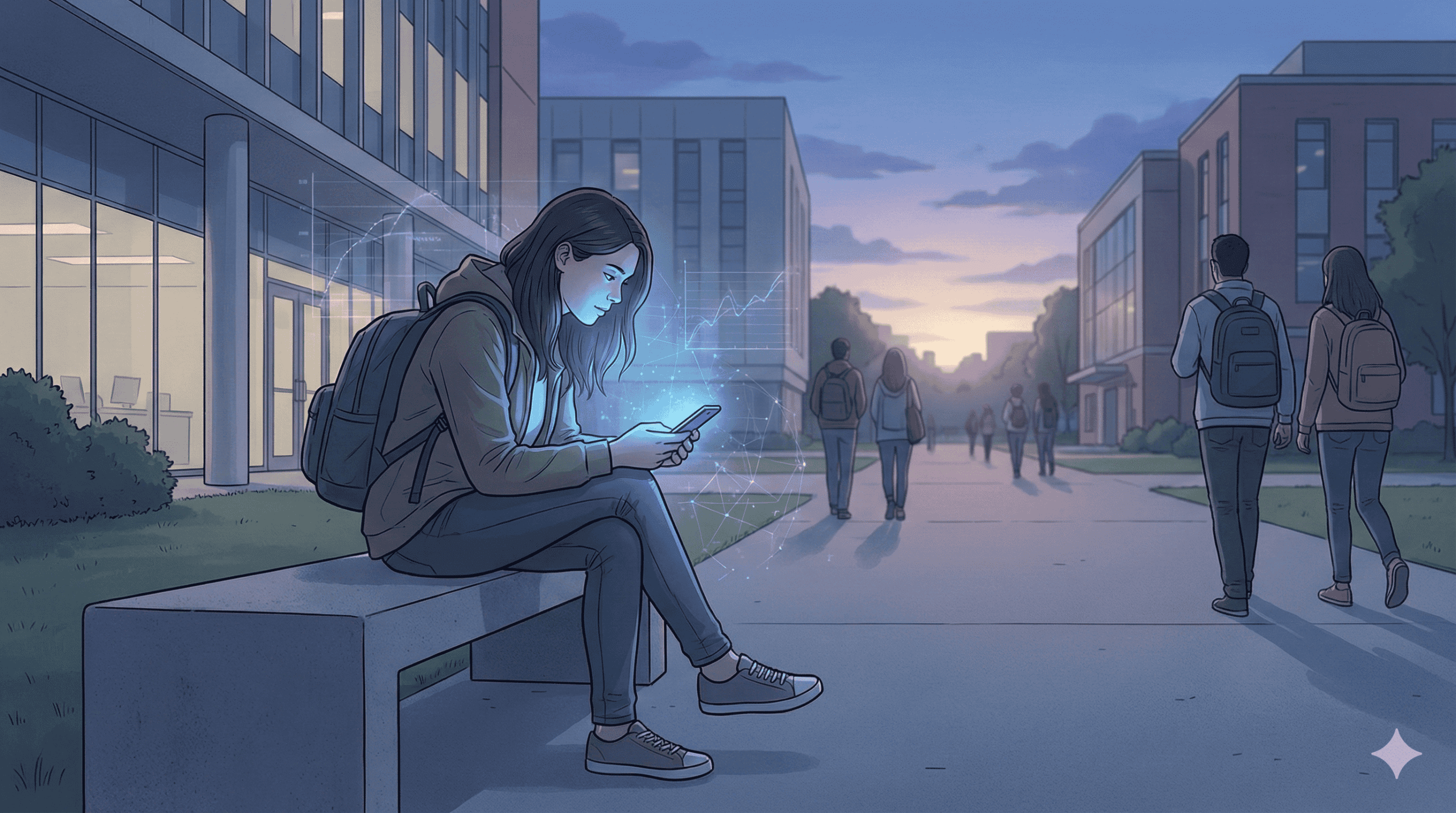
College campuses across the United States are facing a rapidly evolving mental-health crisis — one that is now influencing broader economic, behavioral, and technological trends. As student anxiety, social isolation, and emotional fatigue reach record levels, a new category of digital platforms has emerged to meet the demand: anonymous confession and emotional-support apps.
This shift is not only redefining student life; it is also signaling a change in how the next generation interacts with digital ecosystems, social networks, and mental-health technology.
A Growing Crisis in Higher Education
Recent national data paints a troubling picture. According to the American College Health Association:
- Over 75% of U.S. college students reported feeling overwhelmed in the past year.
- More than 60% described themselves as “very lonely.”
- Google searches for “lonely in college,” “campus isolation,” “how to make friends in college,” and “college social anxiety” have surged since 2020.
Universities have invested heavily in academic infrastructure, digital learning tools, and hybrid education systems. But despite the modernization of the learning environment, students are reporting emotional distress at levels unseen in previous generations.
The result? A growing behavioral shift toward anonymous, judgment-free online spaces.
Why Anonymous Platforms Are Gaining Traction
While traditional social media platforms thrive on identity, visibility, and performance, Gen Z is demonstrating increasing demand for the opposite: privacy, anonymity, and emotional safety.
Anonymous confession apps offer students something mainstream platforms cannot:
- A space to express vulnerability without digital consequences
- Protection from screenshots, public judgment, or social pressure
- Hyper-local connection with peers experiencing similar challenges
- Instant access without stigma or institutional barriers
Students use these platforms to share fears, frustrations, and insecurities related to academics, relationships, identity, finances, and mental health — subjects they would never attach their real names to.
This has created a unique intersection of mental-wellness technology and social networking, representing one of the most significant behavioral shifts among the Gen Z population.
Your Secret: A Pre-Launch Platform Reflecting the New Emotional Landscape
One emerging entrant into this space is YourSecret, an anonymous emotional-support community centered around university life. While the full mobile app is scheduled for release in 2026, early visitors can already explore the platform’s concept here.
YourSecret positions itself not as a traditional social network, but as a digital environment designed around empathy, honesty, and psychological safety. According to the founders, the goal is simple:
to provide students with a safe place to speak without fear.
A notable feature of the upcoming platform is campus-specific micro-communities, allowing users to connect with others from their own university. A preview of such communities is available here.
This hyper-local approach aligns perfectly with current Gen Z preferences: smaller, more meaningful digital spaces rather than large, identity-focused social feeds.
Economic and Behavioral Implications
1. The Mental-Wellness Tech Sector Is Growing Rapidly
The U.S. market for digital mental-health solutions is projected to surpass $31 billion by 2030. Anonymous support apps are emerging as a new sub-category within this ecosystem.
2. Privacy Is Becoming a Competitive Advantage
Gen Z values anonymity and data protection far more than Millennials did at the same age. Platforms that minimize tracking and identity exposure earn higher trust and engagement.
3. Hyper-Local Digital Communities Are Returning
Just as local commerce is experiencing revival, so are campus-based digital communities. Students want relevance — not global social feeds.
4. Anonymous Apps Are Acting as Early-Stage Mental-Health Tools
These platforms do not replace counseling, but they serve as a low-barrier entry point for emotional expression — something campus health centers increasingly lack capacity for.
The Business Signal: A Cultural Shift in Digital Interaction
The rise of anonymous confession apps is not merely a campus trend; it is a reflection of how Gen Z will shape the future of the internet.
They are redefining:
- How digital communities form
- What psychological safety means online
- How mental-health tools integrate with social technology
- How young adults express vulnerability in the digital age
Businesses, investors, and product developers should pay close attention — because the next wave of social platforms will likely prioritize anonymity, emotional authenticity, and community-driven support.
Conclusion
The quiet mental-health crisis unfolding across U.S. campuses is fundamentally reshaping student behavior and digital engagement. Anonymous confession apps like YourSecret represent a new emotional infrastructure — one driven not by branding or identity, but by authenticity and psychological safety.
As the platform prepares for launch, it highlights a powerful truth:
The next evolution of social technology may not be louder — it may be quieter, more human, and more anonymous.
