

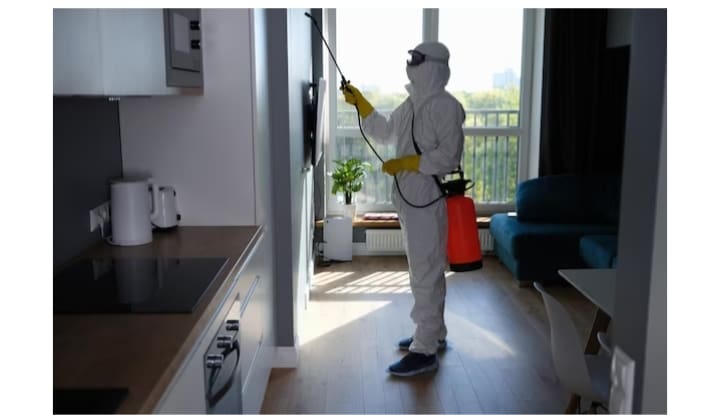
Most people wait until they’ve got a problem before calling someone about pests. You see a cockroach and suddenly it’s urgent. But here’s the thing—that one cockroach you spotted? It’s got dozens of mates hiding somewhere you haven’t looked yet. Pest management isn’t really about the pests you can see. It’s about everything happening in the parts of your house you never check.
Health Protection
A single mouse leaves behind droppings constantly throughout the day and night. They’re small and dry up quickly, then turn into dust. That dust gets into your air conditioning and you breathe it in. Most people have no idea this is happening. Cockroaches are genuinely disgusting when you learn what they actually do. They vomit on their food whilst they’re eating it. Every bench they walk across gets contaminated with whatever rotting garbage they ate last. Professional pest management stops these contamination patterns. It’s not just about killing bugs—it’s about breaking the chains of how disease spreads through your home.
Property Preservation
Everyone knows termites are bad. But do you know how bad? A decent-sized termite colony munches through substantial amounts of wood daily. They’re eating constantly, millions of termites working together. They’re consuming your house right now, around the clock, whether you’re asleep or at work or on holidays. The really nasty bit is where they eat. Behind tiles in bathrooms. Inside walls where moisture builds up. In roof spaces you haven’t visited in years. Pest inspectors use thermal cameras and moisture detection gear to find them before they’ve destroyed structural timber. That technology catches problems a torch and a visual check would miss completely.
Food Safety
Pantry moths don’t look dangerous. They seem like a minor annoyance fluttering around your kitchen. The problem isn’t the moths though. Female moths lay hundreds of eggs directly onto your food packaging. Those eggs hatch into larvae that eat through plastic, cardboard, and foil. One infected packet spreads larvae to everything else in your pantry within weeks. You’ll throw out the packet with visible webbing and think you’re done. Meanwhile, eggs are already sitting in multiple other packets that look perfectly fine. Pest management professionals understand insect lifecycles. They treat the eggs and larvae you can’t see, not just the adults flying around your lights.
Peace of Mind
Bed bugs do something particularly cruel to people. Your bed is supposed to be safe. It’s where you rest and feel secure. Bed bugs turn that into a source of anxiety. People lie awake checking their sheets. They feel itching that isn’t really there. Sleep quality collapses. This goes on even after the bugs are gone because the psychological damage persists. Professional treatment works partly because it removes uncertainty. You know the problem is actually solved, not just temporarily managed.
Allergen Reduction
Dust mites confuse a lot of Australians. They don’t bite. You can’t see them. So why do they cause allergic reactions? It’s their droppings. Each mite produces droppings constantly throughout its lifecycle. Your mattress probably contains massive populations of them. That’s countless tiny allergen particles in your bed right now. You can’t eliminate dust mites entirely—they’re too widespread. But pest control dramatically reduces their numbers in carpets, curtains, and furniture. Those are the reservoirs that keep reinfesting your bedroom.
Property Value
Buyers will overlook all sorts of cosmetic issues. Cracked tiles, dated colours, worn carpets—these things get negotiated on price. But pest damage? That kills sales completely. A termite report showing active infestation will send buyers running. Insurance gets complicated too. Companies refuse coverage or drastically increase premiums for properties with pest histories. Regular pest management creates a paper trail. It proves you’ve been responsible. That documentation becomes crucial when you’re trying to sell.
Environmental Considerations
Modern pest control isn’t about spraying poison everywhere. It’s about understanding behaviour. Mice have terrible eyesight, so they navigate by keeping their whiskers against walls. Put bait in the middle of a room and they’ll never find it. Knowing these patterns means you can use less chemical in smarter locations. Results improve whilst environmental impact drops. DIY pest control misses these insights completely.
Prevention Over Reaction
Pests follow seasonal patterns most homeowners don’t notice. Rodents come indoors as autumn temperatures drop. They establish populations before winter really hits. Termites swarm during spring when humidity rises. If you wait until you’ve got an infestation, treatment becomes far more intensive. Professional services time their visits around these biological cycles. They intercept pests during vulnerable stages rather than fighting established colonies. It’s much more effective than emergency callouts.
The best approach treats pest management as ongoing prevention rather than crisis management. Professionals who visit regularly notice small changes before they become disasters. New spider webs indicating more flying insects around. Moisture stains suggesting future termite risk. Fresh rodent marks along previously clean pathways. These early warnings are what keep properties genuinely protected.