
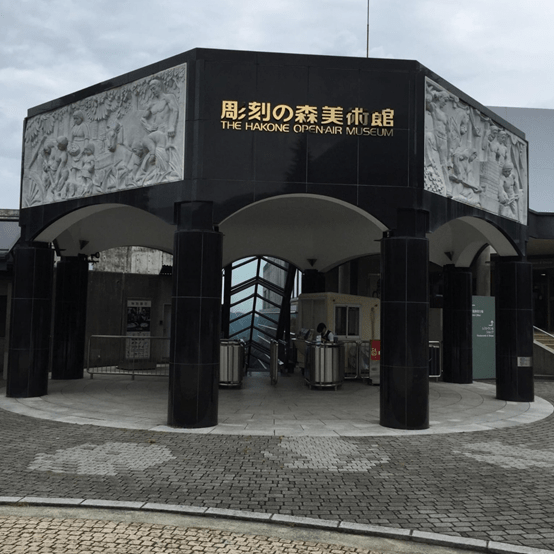
Located in Haken Town, Kanagawa Prefecture, the The Hakone Open Air Museum was founded in 1969. It is the first outdoor art museum in Japan. The museum is sponsored by the Fuji Foundation of Japan, and takes “the garden of sculpture” as the design concept of the museum. In the green garden covering an area of 70000 m2, there are hundreds of world-famous sculptures and Japanese famous sculptures on display. Visitors can relax and enjoy rare works of art in the fresh and pleasant natural environment.
The Artworks in The Hakone Open Air Museum
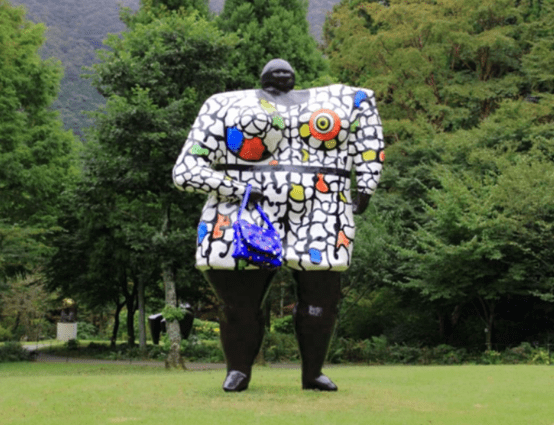
After entering the museum, take the escalator all the way down and walk out of the square to find a different cave. There are various sculpture arts on the 70000 square meters of green space. Every time you come, you will find some new collections, and even the location of the works will move.
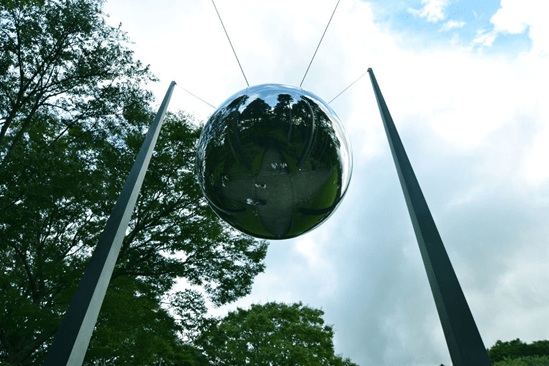
It takes about 60 to 90 minutes to visit the museum completely, and there is no fixed moving line. One of the works is “My sky hole 84 HAKONE” by Takeji Inoue, a Japanese artist. The silver ball hanging above the sidewalk can reflect the surrounding scenery and feel super romantic. Takeji Inoue is also the design director of the whole art museum.
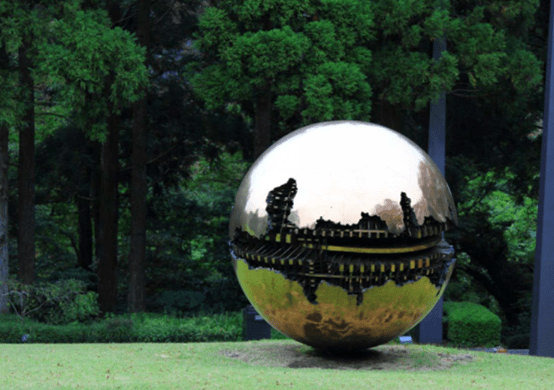
The other Metal Sphere Sculpture on the ground next to it is the ball in the ball by Italian artist Arnaldo Pomodoro. There is a crack in the middle of the mirror ball. And there is a jagged corrosion appearance inside, forming a strong contrast.
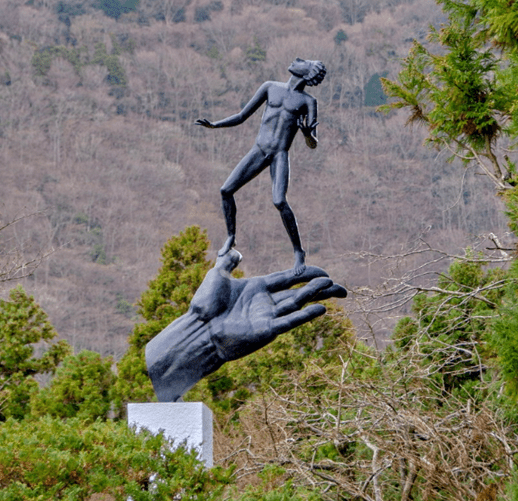
Swedish artist Carl Milles’ “The Hand of God” is a man stand on hand of God and shout to sky. It feels lonely with the empty mountain scenery around.
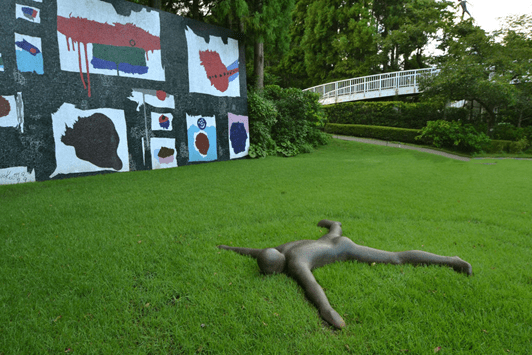
Close III by British sculptor Antony Gormley is quite interesting. It looks like a person sleeping on the grass. It is made with the creator’s own body shape, showing the close connection between the human body and the earth.
Behind the art museum is a tall tower “Symphonic Sculpture of Good Luck” with a height of 18 meters. The inner diameter is 8 meters. There are spiral stairs and painted glass in it. Walking up the stairs looks like walking in a colorful kaleidoscope. Climbing to the top can also overlook the art museum and the mountains.
Picasso Museum

At the end of the Sculpture Forest Art Museum, there is a Picasso Museum, which founded in 1984. It has collected more than 300 Picasso paintings, sculptures and other works. The main axis of the collection is 188 ceramic works from Picasso’s daughter. Photographs not allowed in the museum.
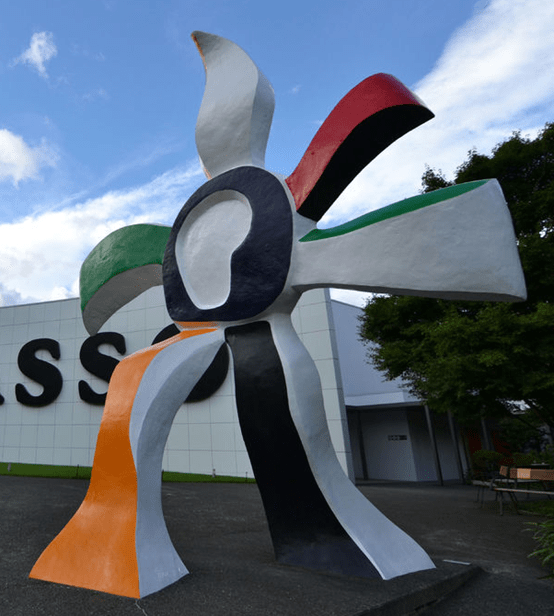
Beside the Picasso Museum is the Walking Flower by the French artist Fernand Leger. it is one of the representative works of the Art Museum. It can be seen in many places as a small logo. I didn’t expect the entity to be so large.
The Amusements in the Museum
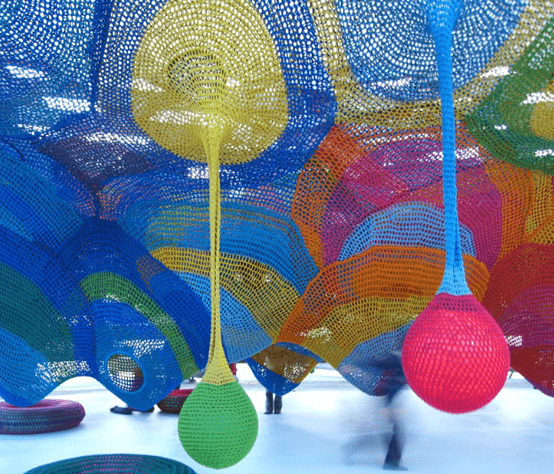
There are also many experiential artworks in the museum, which allow tourists, especially children, to walk in and play. This “forest of nets” is a huge hammock formed by connecting multiple colorful woven nets in a wooden dome space. Tourists can climb up and feel the gorgeous colors with their eyes and bodies.
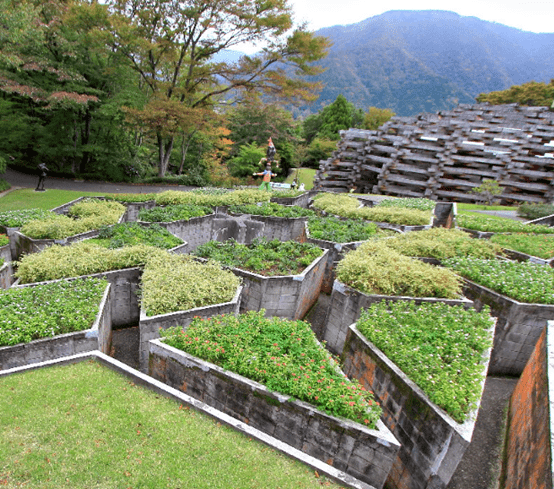
The Star Court next to it is a large star maze. It is interesting whether you walk into it to explore the lost way or overlook the whole maze from high.
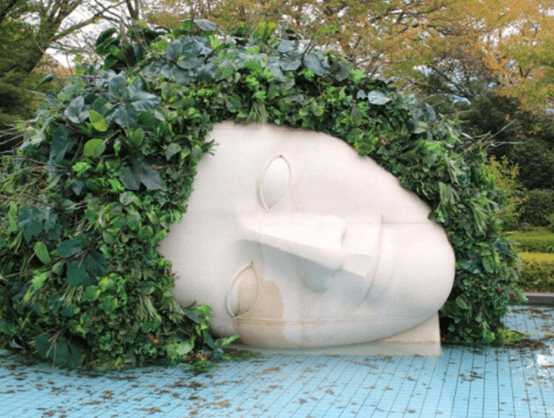
The Weeper, another famous Face Art Sculpture at the corner of the square. It produced by French couple artists Francois-Xavier and Claude Lalanne. The theme was the beautiful and narcissistic Narcissus in Greek mythology. He could not extricate himself from seeing his face in the pool, could not leave the pool, and died haggard. The sculpted hair is a leaf that keeps growing, and tears flow out of the corners of the eyes, forming a pond that can reflect the face, which is very artistic.
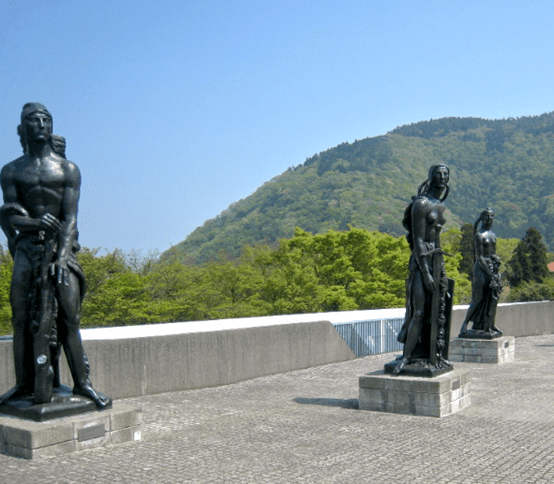
After a round trip back to the round square near the entrance, the four bronze sculptures of force, victory, freedom and eloquence made by the French sculptor