

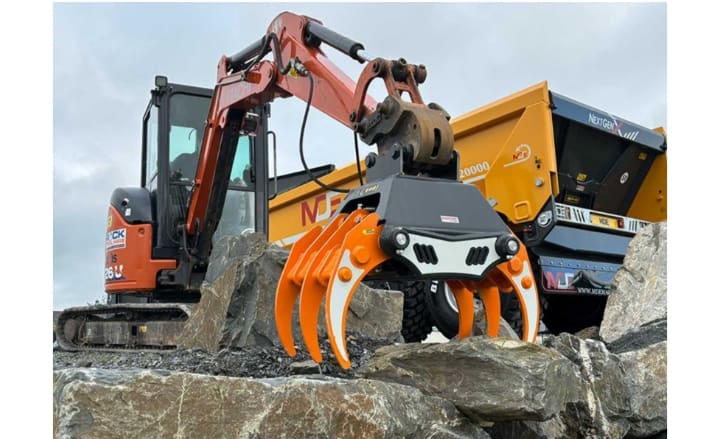
Most operators don’t realise that excavator grapple attachments can handle loads their bucket would drop three times before successfully moving. That’s not just frustrating. It’s expensive downtime that adds up quickly. These attachments have quietly revolutionised how awkward materials get moved on sites, yet many contractors still default to buckets for jobs that need a proper grip.
Why Buckets Fail Where Grapples Succeed
Here’s something worth knowing. Buckets work through scooping and containment, but grapples work through actual mechanical grip. When you’re dealing with tangled rebar, long timber offcuts, or demo waste with protruding edges, a bucket becomes a liability. Materials shift, slide, and fall because there’s no real purchase. Grapples wrap around the load. They create multiple contact points, which means the centre of gravity stays controlled throughout the lift and swing.
The Hidden Costs of Manual Sorting
Nobody talks about how much time gets wasted when crew members hand-sort materials before loading. A two-person team spending half a day separating metal from timber isn’t just labour cost. It’s also workers’ compensation risk and project delays. Excavator grapple attachments let operators do this sorting mechanically. They can pick through mixed piles and place materials into designated areas without anyone stepping into the debris field.
Demolition Work Changes Completely
Controlled demolition isn’t about smashing everything into rubble anymore. Modern projects demand selective dismantling where materials get recovered and recycled. Grapples let operators carefully extract window frames, pull apart roof truscos, and separate cladding panels whilst the structure’s still partially standing. This precision wasn’t possible with buckets. They could only push, scoop, or bash.
Forestry Applications Nobody Mentions
Plantation thinning and storm cleanup generate massive volumes of branchy, irregular timber. Buckets simply can’t consolidate this material efficiently. A grapple compresses it whilst lifting, which means fewer trips to the chipper or burn pile. What operators discover quickly is surprising. Branch material that would take a dozen bucket loads consolidates into three or four grapple loads because of the compression factor.
The Recycling Yard Reality
Scrap metal yards and recycling facilities face a specific challenge. Mixed loads arrive with valuable materials buried in rubbish. Grapples excel at fishing out copper wire from general waste, extracting aluminium window frames, and pulling apart nested materials. This recovery work directly affects profit margins. The difference between contaminated scrap and clean, sorted material can be substantial per tonne.
What Happens in Confined Spaces
Urban sites with restricted access change the equation entirely. When you’re working between existing buildings or near active roadways, every movement needs to be deliberate. It needs to be controlled. Grapples provide that control because materials don’t shift unexpectedly during transport. An operator can navigate a load through tight clearances. There’s no constant worry of something sliding off and damaging adjacent property.
Emergency Response Situations
Storm damage, structural collapses, and disaster recovery operations require equipment that can delicately move unstable materials. You can’t risk causing secondary collapses. Grapples allow operators to carefully extract debris whilst maintaining structural integrity of surrounding areas. This capability becomes critical when searching through collapsed structures or clearing blocked access routes. Aggressive bucketing could trigger further failures.
Maintenance Gets Overlooked Too Often
Here’s what doesn’t get discussed enough. Hydraulic systems suffer when attachments get misused for tasks they weren’t designed for. Forcing a bucket to grip irregular loads puts strain on cylinders and hoses. Grapples distribute hydraulic pressure properly across their closing mechanism. This means less stress on the excavator’s hydraulic circuit. Operators report fewer seal failures and cylinder repairs when they match attachments to actual job requirements instead of making do with whatever’s already mounted.
Long-Term Equipment Strategy
The real insight here is about machine utilisation rates. An excavator that can switch between digging, gripping, and sorting stays productive across different project phases. It doesn’t sit idle whilst other equipment gets mobilised. Excavator grapple attachments turn single-purpose machines into adaptive tools that earn their keep throughout a project’s lifecycle, not just during the earthmoving phase.
Australian sites present their own complications. Bushfire cleanup, mine site remediation, agricultural clearing all involve materials that don’t cooperate with conventional bucket work. The contractors gaining efficiency aren’t necessarily working faster. They’re working smarter by matching the right attachment to the actual material characteristics they’re handling.