

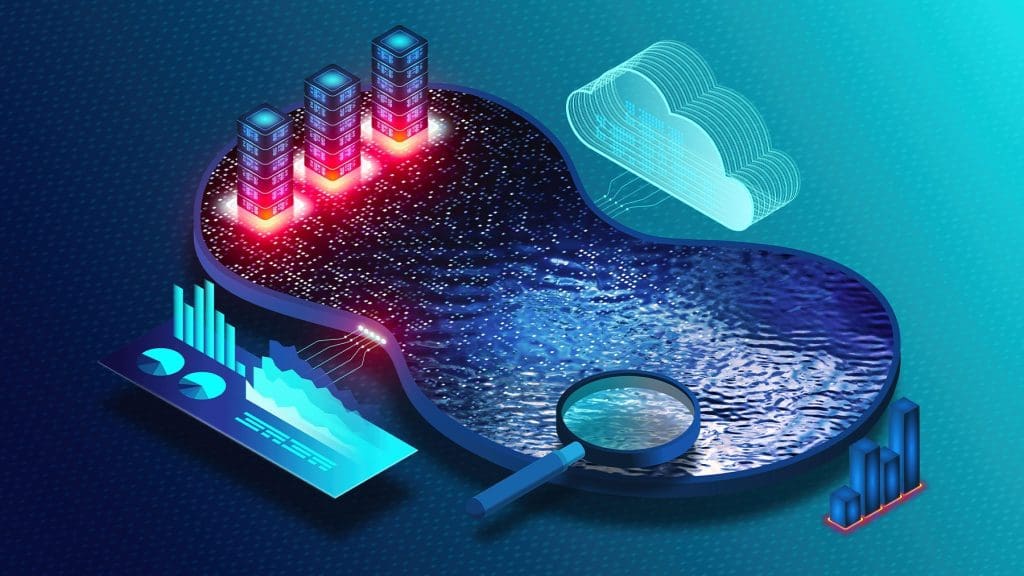
In the age of digital transformation, data isn’t just an asset, it’s the foundation of modern business intelligence, analytics, automation, and artificial intelligence. As organizations generate petabytes of information from operational systems, IoT sensors, user interactions, and cloud apps, the question becomes: how do you store, organize, govern, and extract value from all of that data?
One of the most transformative answers to that question is the data lake, a flexible, scalable repository that stores all enterprise data in its native form and makes it available for analytics, machine learning, and real-time insights. But as data needs evolve, so too must the architecture underlying the data lake. This is where the idea of fourth-generation data platforms comes in, unifying traditional data lake benefits with governance, metadata, and AI-ready capabilities.
Below we explore what modern data lakes bring to the table and what emerging 4th-gen platforms aim to solve — all informed by the latest white paper on this evolution. 
What Is a Data Lake?
At its core, a data lake is a central repository that allows you to store structured, semi-structured, and unstructured data at scale, without requiring a predefined schema. Unlike traditional data warehouses, data lakes can ingest data in its raw form directly from source systems — whether that’s logs, videos, documents, databases, sensor feeds, or application streams. 
A data lake’s power lies in its ability to:
• Store everything: Capturing all enterprise data, regardless of format
• Scale with demand: Seamlessly expanding as data volume grows
• Enable analytics: Supporting BI, ML, and exploratory data science
• Break down silos: Centralizing disparate datasets for cross-use insights
This flexibility is especially important for data scientists who need full context and access to raw data to build predictive models, detect patterns, and support decision-making across operations. 
Evolution of Data Lakes From Gen 1 to 4
First-Generation: Raw Storage
The initial idea of a data lake was simple provide a repository capable of holding huge quantities of raw data. However, these early implementations often struggled with governance, data quality, and performance issues.
Second-Generation: Analytics-Ready Lakes
As analytics tools matured, data lakes started supporting more structured processing but metadata and governance remained weak, sometimes turning lakes into “data swamps” where locating and trusting datasets became hard. 
Third-Generation: Integrated Features
Modern platforms added support for ACID transactions, schema enforcement, and enhanced SQL query performance. Tools like Delta Lake, Apache Iceberg, and Apache Hudi brought stronger consistency and manageability to data lakes.
Fourth-Generation: AI-Ready Data Platforms
According to Solix’s Enterprise AI: A Fourth-generation Data Platform white paper, a fourth-generation architecture elevates the data lake into an enterprise-ready platform capable of truly supporting AI and automation, not just storage and analytics. 
What Does 4th-Gen Really Mean?
The white paper introduces a framework that goes beyond traditional data lake capabilities, adding AI-centric intelligence, governance, metadata, and extensibility as core pillars. Here’s how 4th-gen data platforms enhance the data lake concept:
1. AI-Ready Data Everywhere
Data isn’t just stored it’s prepared for AI. This means:
• Clean, governed datasets for use in AI/ML pipelines
• Semantic enrichment and auto-classification
• Support for vector embeddings for retrieval-augmented generation (RAG) in large language model workflows 
This makes the platform suitable for real-time recommendations, natural-language analytics, and hybrid analytics workflows that combine structured queries with generative AI.
2. Enterprise-Grade Governance
Fourth-gen platforms tackle one of the most persistent challenges in data lakes: trust. Built-in governance includes:
• Centralized metadata catalog
• Lineage, auditing, and policy enforcement
• Automated classification and controls
This means data isn’t just available, its origin, state, and compliance posture are clear and auditable. 
3. Federated, Open Architecture
Rather than locking data into proprietary silos, these platforms support open table formats, multi-cloud deployment, and federated access, making them extensible, flexible, and future-proof. 
4. Safety, Security & Compliance
AI and data management now live in an era where regulatory requirements (from GDPR to emerging AI laws) demand strong governance built into the data pipeline. 4th-gen platforms bake compliance features into the infrastructure, not bolt them on. 
Why This Matters for Businesses
Today’s enterprises face several major data challenges:
• Massive, diverse data volumes that exceed traditional database architectures
• Governance and compliance requirements that traditional lakes don’t support natively
• AI adoption barriers due to inconsistent or inaccessible data
• Vendor lock-in and integration complexity across hybrid/cloud stacks
A fourth-generation platform addresses these by enabling:
✅ Better alignment between analytics and operational systems
✅ AI pipelines that consume and serve data seamlessly
✅ End-to-end visibility and governance
✅ Scalable, open architectures that grow with business needs
Real-World Impacts
Companies adopting 4th-gen data platforms can expect transformation in areas such as:
• Real-time decision-making: From sales forecasting to fraud detection
• AI deployment velocity: Faster time-to-value with reliable, governed data
• Operational efficiency: Reduced overhead for data wrangling and cleanup
• Security & compliance: Built-in controls that meet evolving regulatory standards
Final Thoughts
The data lake concept revolutionized the idea of data storage and analytics when it first emerged. But as AI, automation, and governance expectations have matured, data lakes too must evolve into platforms that support not just storage, but trust, intelligence, and enterprise readiness.
Fourth-generation data platforms, as detailed in the Solix white paper Enterprise AI: A Fourth-generation Data Platform, represent this new frontier blending data governance, rich metadata, AI integration, and open architecture into a unified foundation for modern data strategies. 
For businesses committed to analytics and AI at scale, this approach isn’t just a nice-to-have — it’s a strategic differentiator.
