

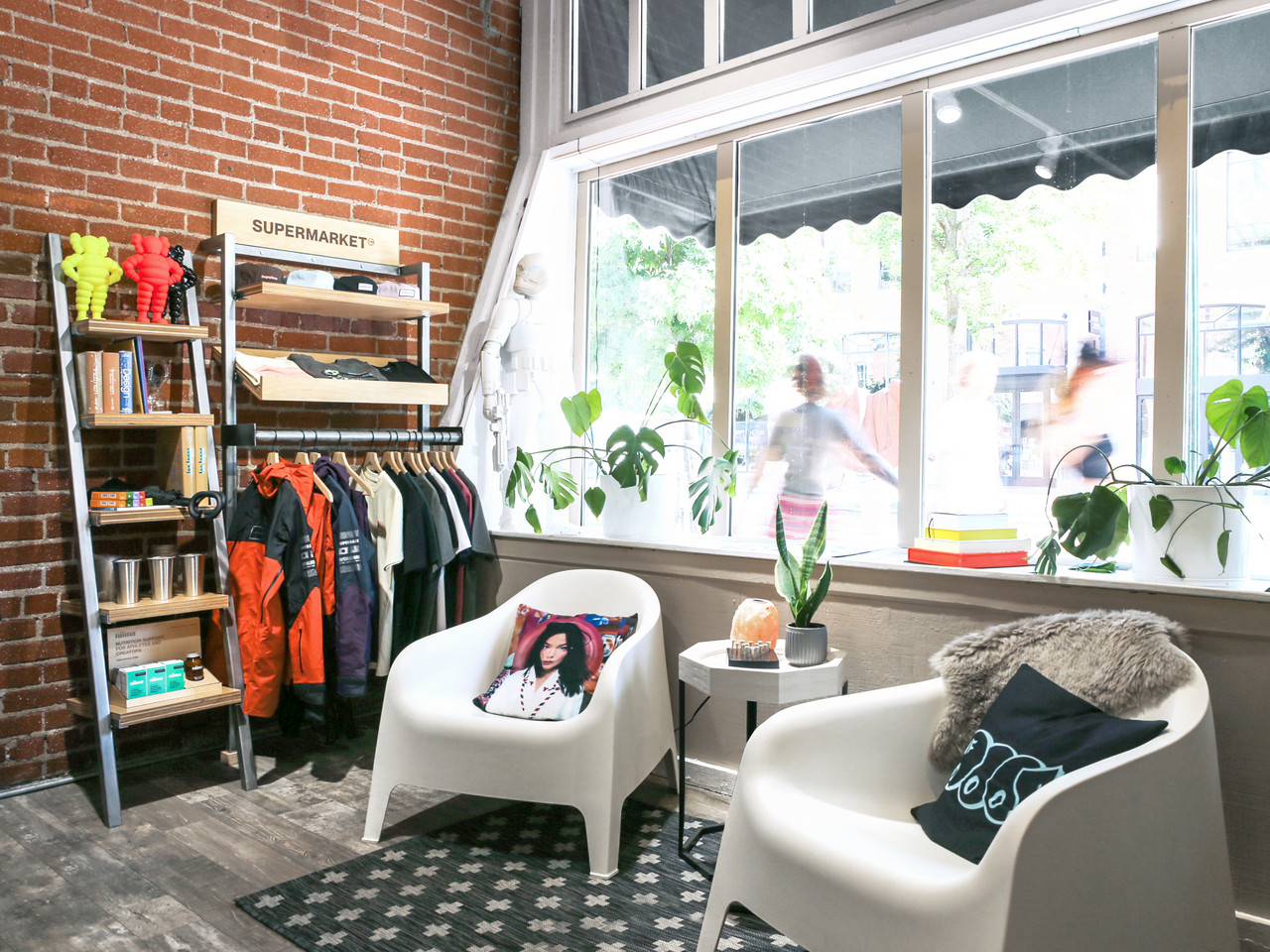
Most design studios will spend a lot of time talking about visuals. Moodboards, color palettes, or the serifs on a font. The whole conversation tends to revolve around imagery. As experts in graphic design, Superbase approached their work while speaking a different language entirely. They want to talk with their clients about how a brand actually functions. How it holds up in the real world. What happens to it when no one is presenting it on a backlit screen.
This might sound like a small distinction, but it shapes everything about how they work. Superbase operates less like a traditional creative agency and more like a lifestyle brand or consumer products companty. They treat brand identity as a system that has to perform under real conditions, not just look good in a deck. Their process has more in common with architecture than decoration. Perhaps this is why creative director Kelly Dee Williams coined the phrase Brand Architects. Before visual identifiers like color comes up in the conversation, they like to understand how a brand will need to move and adapt across every environment it might enter.
Where most of the industry still treats brand identity as a visual deliverable, Superbase builds structures. That distinction comes directly from years of working with lifestyle, outdoor, and consumer brands where real-world performance is the whole point. A logo can be admired. In fact, Williams has worked on brands that are so adored by customers that some of them even got the logo tattooed on themselves.
Beyond Brand Identity
The thinking behind this approach traces back to Williams’s first-hand experience and genuine respect for how product companies make decisions. Superbase doesn’t just pull inspiration from that world. They borrow the underlying logic.
In product development, every choice connects back to use. A material gets selected because it lasts. A shape gets refined because it has to fit in a hand or a pocket. The form factor matters. Surfaces get tested because they’ll experience friction. This kind of thinking demands clarity. It forces you to consider an object’s lifespan, rather than just its first impression.
Superbase applies the same judgement to their branding work. They think about what happens when a brand needs to scale from packaging to signage to a digital platform. They think about how a color behaves in print versus on a billboard at six in the morning. They think about a symbol embroidered onto a hat or embossed on a product surface. Each element is a working part of a larger brand-as-product system, not just a piece of artwork produced in isolation.
That approach gives clients something most agencies don’t offer: a brand that holds up across contexts. A shoebox, a website, a storefront, a piece of merchandise. The system stays consistent because it was built to be consistent from the start.
How They Build Systems That Actually Scale
The most telling example of their product-forward mindset is in how they prototype. Superbase tests brand systems the way an engineer tests a physical product. They build working versions, simulate real-world conditions, and push each element to find where it starts to break down.
This part of the process is hands-on and practical. A symbol gets printed small to test whether it still reads. A color palette gets checked under harsh or shifting light. Typography gets set in long-form paragraphs and quick labels. Every likely scenario gets put through its paces deliberately.
They also use tools that a lot of agencies skip over entirely: scenario mapping, stress testing, real-environment mockups that reflect where the brand will actually live. The toolkits they hand off are built so that teams across different regions and different departments can apply the brand without quietly undermining it.
What makes this different from a typical agency handoff is the commitment to testing before anything goes live. A lot of studios deliver a polished final presentation that has never faced a real challenge. Superbase treats branding as something that has to prove itself before the client even sees it.
Where Product Logic Meets Cultural Insight
None of this means the work feels flat or purely mechanical. Superbase hasn’t mistaken structure for personality. They know a brand has to connect emotionally before any of the functional logic matters.
Rather than starting with what something should look like, they start with how a brand needs to behave. Who’s using it. How those people move through the world. What shapes their decisions. They study audience behavior the way product teams study user journeys. Then they think about where the brand sits in culture and what kind of emotional space it needs to hold. That balance between the structural and the human is what makes their work endure. It’s functional without being cold. It’s creative without being arbitrary. Superbase isn’t designing brands for a presentation or a trend cycle. They’re designing them to live in the world for a long time. That’s a different job altogether, and we can tell they take it seriously.
