

Real estate tokenization is no longer a niche concept. As we move into 2026, it’s becoming one of the most serious applications of blockchain, AI, and digital finance combined. What once required layers of intermediaries, manual paperwork, and slow compliance checks is now evolving into intelligent, automated, and globally accessible investment infrastructure.
I’ve spent the last year closely tracking how AI is being applied to real estate tokenization platforms, from asset valuation to compliance automation and multi-asset portfolio management. What’s clear is this:
AI is no longer just a supporting layer, it’s the operating system behind modern tokenized real estate ecosystems.
In this article, I’ll walk through the best AI tools and frameworks shaping real estate tokenization in 2026, how they’re used, and why platforms that adopt them early will define the next generation of digital asset markets.
Why AI Is Becoming Essential for Real Estate Tokenization?
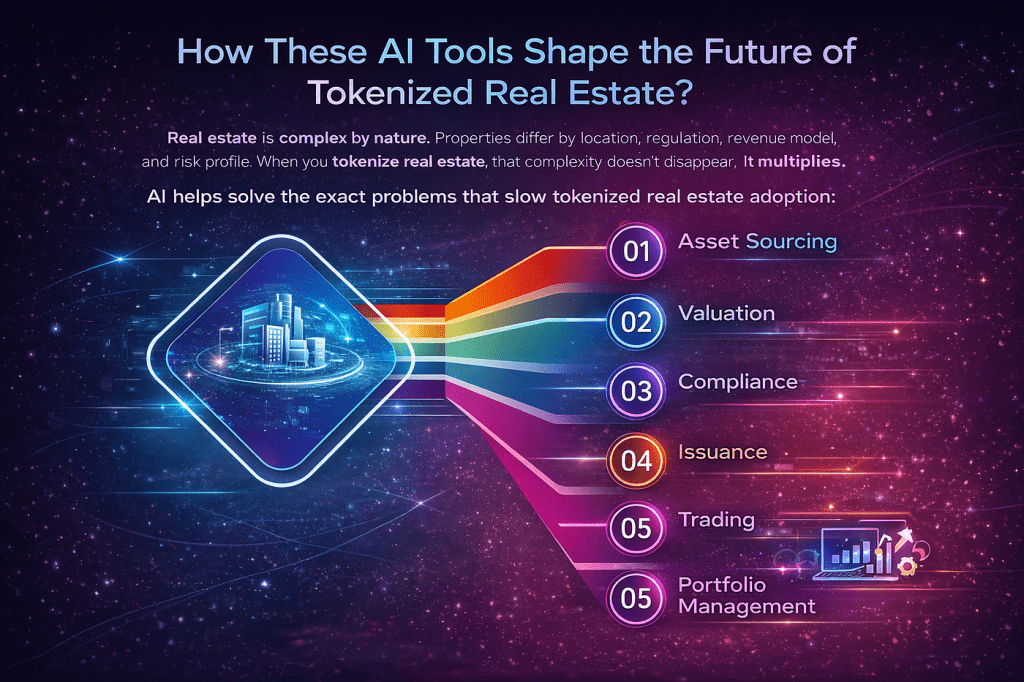
Real estate is complex by nature. Properties differ by location, regulation, revenue model, and risk profile. When you tokenize real estate, that complexity doesn’t disappear, it multiplies.
AI helps solve the exact problems that slow tokenized real estate adoption:
- Fragmented property data
- Manual valuation processes
- Compliance bottlenecks
- Illiquid secondary markets
- Poor investor visibility across assets
By combining AI with blockchain, real estate tokenization platforms can operate faster, smarter, and at global scale. This is why tokenized real estate news across 2024–2025 consistently points to AI-powered platforms outperforming traditional digital property models.
How I Evaluate AI Tools for Tokenized Real Estate?
Before listing the tools, I want to clarify how I assess them. The best AI tools for real estate tokenization in 2026 share five traits:
- They automate decision-heavy workflows
- They reduce compliance and operational risk
- They scale across regions and asset types
- They integrate cleanly with blockchain infrastructure
- They support multi-asset investment dashboards
This applies not just to real estate tokenization, but also to platforms working with commodities like gold, oil, and hydrogen, luxury assets such as cars, art, and watches, and even revenue stream and IP tokenization.
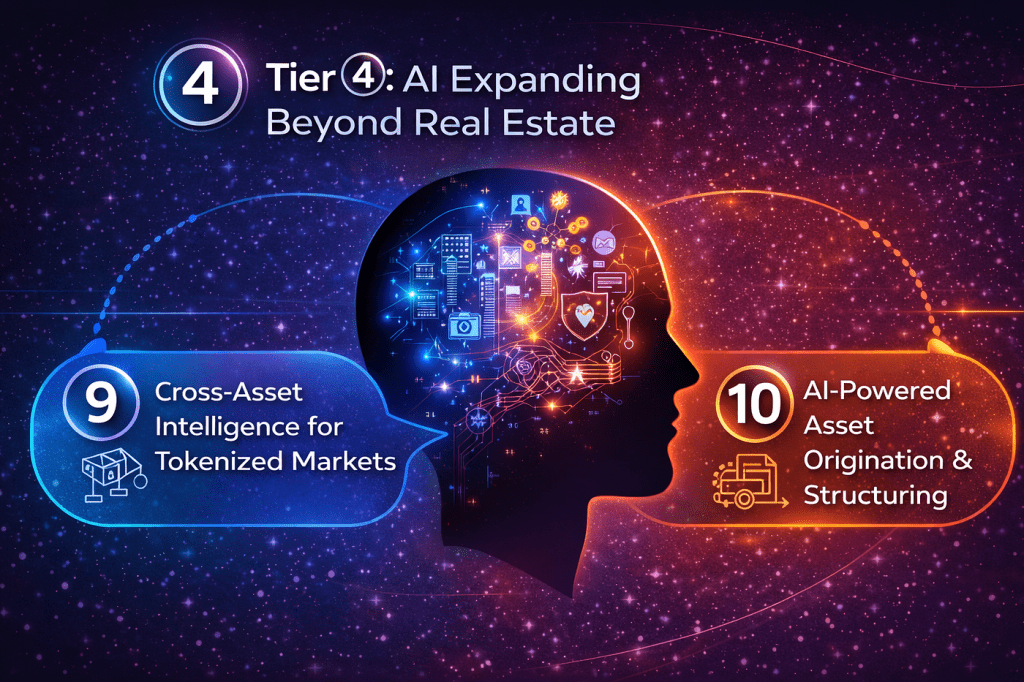
Tier ⓵: AI Tools Powering Core Real Estate Tokenization Platforms
1. AI-Driven Property Valuation Engines
Accurate valuation is the foundation of any real estate tokenization platform. In 2026, AI valuation tools no longer rely on static comparables alone. They process live market data, rental yields, zoning changes, and regional demand signals in real time.
These AI engines allow platforms to:
- Price tokenized real estate dynamically
- Adjust valuations as market conditions change
- Reduce disputes between issuers and investors
- Support fractional ownership models with confidence
This is especially critical in markets like XRP Dubai real estate tokenization, where cross-border investors expect transparent and continuously updated pricing.
2. AI-Powered Due Diligence & Risk Scoring
Tokenized real estate news often highlights failed projects caused by poor due diligence. In 2026, AI reduces this risk by scanning thousands of documents, historical records, and legal datasets instantly.
Modern AI tools now evaluate:
- Title history and ownership risk
- Legal encumbrances
- Environmental and zoning exposure
- Revenue predictability
For investors, this means better trust. For platforms, it means faster onboarding of properties without sacrificing compliance or quality.
3. Smart Contract Intelligence Layers
Smart contracts are central to real estate tokenization, but writing them manually is risky. AI tools now assist with smart contract generation, testing, and monitoring.
These tools:
- Flag logic vulnerabilities
- Simulate revenue distribution scenarios
- Monitor contract execution post-deployment
This is increasingly important as tokenized real estate platforms expand into multi-asset environments alongside commodities and luxury assets.
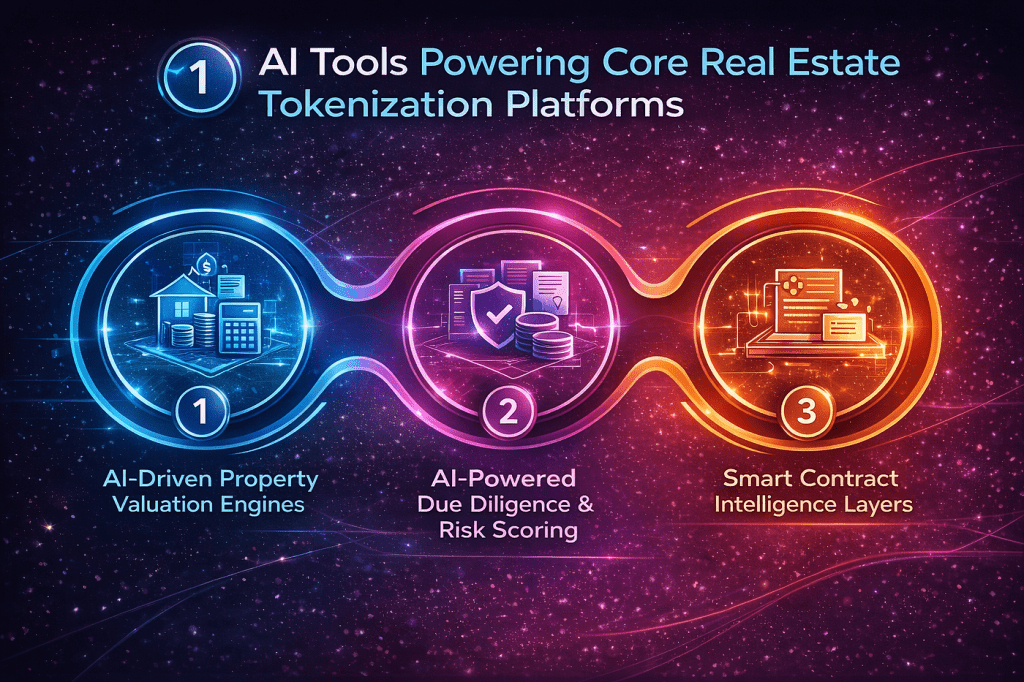
Tier ⓶: AI Tools Transforming Investor Experience
4. AI-Driven Investor Profiling & Matching
In 2026, real estate tokenization platforms are no longer generic marketplaces. AI tools analyze investor behavior, risk tolerance, and capital preferences to match users with suitable tokenized assets.
This results in:
- Higher investor retention
- More efficient capital allocation
- Reduced mismatch between asset risk and investor expectations
This same logic applies across tokenized real estate, commodities, and revenue stream and IP tokenization products.
5. Personalized Portfolio Optimization Engines
Managing tokenized real estate manually doesn’t scale. AI portfolio engines now help investors rebalance holdings across asset classes automatically.
These systems optimize portfolios that include:
- Tokenized real estate
- Commodities like gold, oil, and hydrogen
- Luxury assets such as art and watches
- Revenue-backed digital assets
This is where multi-asset investment dashboards become powerful. AI turns fragmented tokens into cohesive, risk-managed portfolios.
6. AI-Enhanced Liquidity & Secondary Market Tools
Liquidity has always been a challenge for real estate. AI tools now analyze market depth, buyer demand, and pricing trends to improve secondary trading for tokenized real estate.
Platforms use AI to:
- Suggest optimal sell timing
- Improve price discovery
- Reduce spread inefficiencies
As a result, tokenized real estate begins to behave more like a liquid financial instrument than a locked asset.
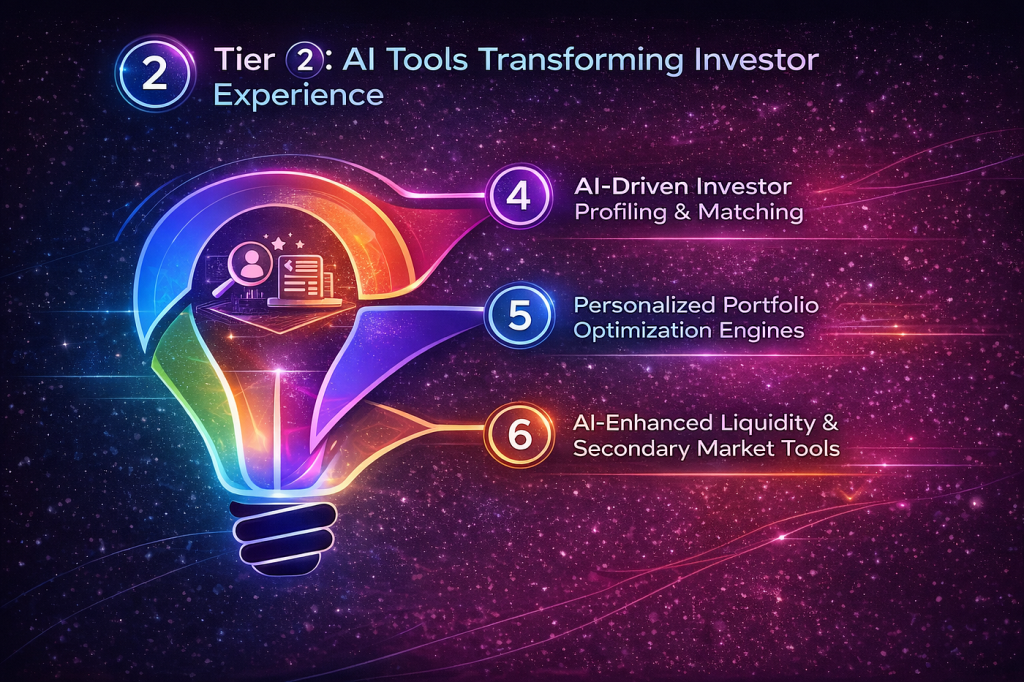
Tier ⓷: AI Tools Strengthening Compliance & Trust
7. Automated Compliance & Jurisdiction Mapping
Regulation is the biggest friction point in real estate tokenization. AI tools now map jurisdiction-specific requirements automatically.
They help platforms manage:
- Investor eligibility checks
- KYC and AML compliance
- Cross-border restrictions
- Ongoing reporting obligations
This is critical for global platforms operating across multiple regulatory regimes while offering tokenized real estate news-driven products.
8. AI-Based Fraud Detection & Transaction Monitoring
As volumes grow, fraud risk increases. AI tools monitor transaction behavior across wallets, tokens, and smart contracts to flag suspicious activity.
These systems:
- Detect abnormal trading patterns
- Identify wash trading attempts
- Protect investor trust
For institutional investors entering real estate tokenization, this level of monitoring is now expected, not optional.
Press enter or click to view image in full size
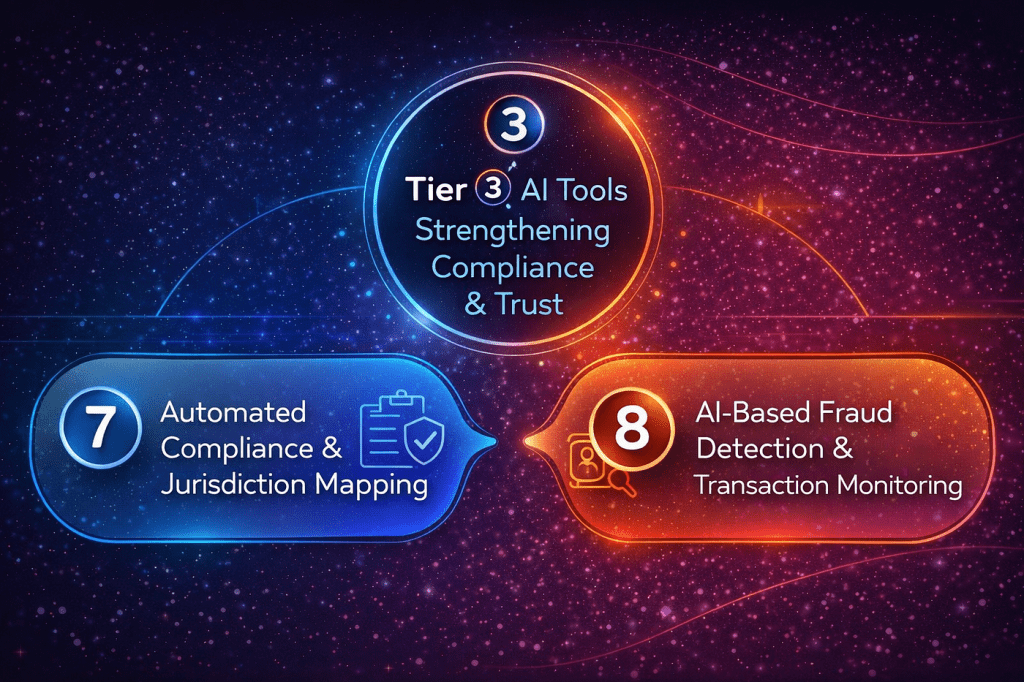
Tier ⓸: AI Expanding Beyond Real Estate
9. Cross-Asset Intelligence for Tokenized Markets
In 2026, real estate doesn’t exist in isolation. The most advanced platforms connect tokenized real estate with commodities, luxury assets, and IP-backed revenue streams.
AI tools analyze correlations between:
- Property yields and commodity prices
- Luxury asset demand and regional wealth trends
- IP revenue performance and real estate cash flows
This bring smarter diversification strategies across the entire tokenized economy.
10. AI-Powered Asset Origination & Structuring
Finally, AI is now used at the very start of tokenization. Instead of tokenizing assets manually, platforms use AI to identify which properties are best suited for tokenization.
AI evaluates:
- Revenue stability
- Legal simplicity
- Investor demand
- Token structure feasibility
This reduces failed launches and improves platform credibility from day one.
How These AI Tools Shape the Future of Tokenized Real Estate ?
What excites me most is how these tools work together. AI doesn’t just improve one step of real estate tokenization, it connects the entire lifecycle:
- Asset sourcing
- Valuation
- Compliance
- Issuance
- Trading
- Portfolio management
This convergence is why real estate tokenization platforms in 2026 feel less like property portals and more like intelligent financial systems.
Press enter or click to view image in full size
The Bigger Picture: AI, Tokenization, and Digital Ownership
The same AI tools powering tokenized real estate are now shaping:
- Commodity markets for gold, oil, and hydrogen
- Luxury asset investment platforms
- Revenue stream and IP tokenization ecosystems
What ties them together is intelligence. AI turns static ownership into programmable, dynamic, and globally accessible value.
Final Thoughts
The best AI tools for real estate tokenization in 2026 aren’t flashy add-ons. They are the invisible infrastructure making tokenized real estate scalable, compliant, and investable at global scale.
As adoption accelerates, platforms without AI-driven valuation, compliance, and portfolio intelligence will struggle to compete. Investors will gravitate toward ecosystems that offer transparency, speed, and confidence across real estate tokenization and beyond.
The future of real estate isn’t just on-chain, it’s intelligent by design.