
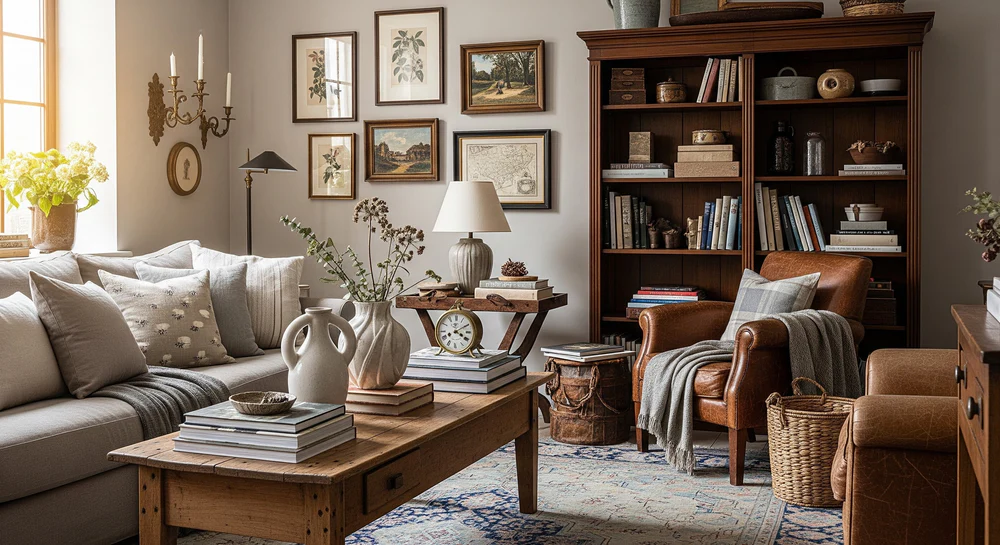
There is a certain kind of home that feels instantly appealing the moment you walk into it. It is not necessarily the biggest, the newest, or the most expensive. It just has depth. It feels layered, personal, and lived in. Nothing appears too perfect, too coordinated, or too eager to impress. Instead, every piece seems to have arrived there for a reason, over time, with a sense of ease that cannot be faked by buying an entire room in one afternoon.
That is the difference between a room that looks collected and one that looks “done”. A collected room tells a story. It suggests curiosity, patience, and confidence. It feels like the people who live there have added things gradually, chosen what they love, and allowed the space to evolve naturally. Even something as simple as a dining setting with beautifully crafted oak dining chairs can feel far more grounded and refined when it is part of a broader mix of textures, finishes, and personal details rather than one perfectly matched showroom suite.
Creating that look does not mean your home needs to be cluttered, eclectic to the point of chaos, or filled with expensive vintage finds. It simply means resisting the urge to make everything match too neatly. A genuinely collected room is built through contrast, restraint, and thoughtful variety. It embraces the idea that a beautiful space should feel like it has been assembled, not stamped out.
Why So Many Rooms Feel Over-Styled
One of the biggest reasons rooms end up looking overly curated is convenience. It is incredibly easy to buy a full furniture package, choose matching décor from the same retailer, and style everything at once. While there is nothing wrong with streamlined shopping, the result can sometimes feel flat. When every finish, shape, and tone comes from the same design language, the room loses tension. There is no friction, no surprise, and no sense of discovery.
A collected interior usually has a little push and pull. The timber might not match perfectly. The lamp may feel slightly unexpected beside the sideboard. The art may be looser or more expressive than the furniture itself. This gentle mismatch is what gives a room personality. It is what stops it from looking like a catalogue page and starts making it feel like a home.
Another common issue is rushing. When people try to finish a room too quickly, they often fill every gap immediately. They buy wall art because the wall is empty, a rug because the floor feels bare, and decorative objects because the shelves need something. But collected spaces are rarely built that way. They usually come together through editing, waiting, and choosing only what adds something meaningful.
Start With a Strong Foundation, Not a Full Set
If you want a room to feel collected, begin with the anchor pieces that matter most. This could be a sofa, a dining table, a bed, or a well-made armchair. Choose the pieces you will use every day and make sure they are timeless enough to support change around them. These larger items create the structure of the room, but they should not dictate every other decision.
The key here is to avoid making every purchase from the same family of finishes and forms. A walnut coffee table does not need matching walnut shelves. A linen sofa does not need identical cushions in the same tone. A solid oak dining table does not need the room to become an all-oak exercise. Instead, look for complementary elements that create balance rather than repetition.
A strong foundation gives you confidence, but the collected feeling comes from what you build around it. That is where the layering begins.
Let Variety Do Some of the Heavy Lifting
Collected rooms feel interesting because they allow different materials, eras, and silhouettes to coexist. This is not about throwing random items together and hoping for the best. It is about creating a conversation between pieces.
For example, if your main furniture is contemporary and clean-lined, you might soften it with a vintage-style rug, a textured ceramic lamp, or an older timber stool with visible wear. If your room already has heritage features or more traditional furniture, you might bring in a modern artwork or a more minimal light fitting to keep the space from feeling too heavy.
Variety creates rhythm. Smooth surfaces feel more dynamic next to rougher ones. Structured forms look better when they are balanced by something organic. A room with only one finish, one material, or one era can feel predictable. A room with gentle contrast tends to feel richer and more believable.
This is especially true when it comes to decorative objects. Rather than buying a matching set of vases, bowls, or candles, think in terms of pieces that relate without repeating one another. Different heights, slightly different tones, and a mix of handmade and refined finishes all help a room feel more developed.
Mix Old and New for Instant Depth
One of the easiest ways to make a room feel collected is to include at least one or two elements that do not feel brand new. That could be a vintage mirror, an old timber bench, a framed print sourced second-hand, or a tray with a little age and patina. These pieces add history, and history is one of the hardest things to replicate with brand-new interiors.
Even in very modern homes, an older piece can stop a space from feeling sterile. It introduces texture, imperfection, and a sense that the room has lived more than one life. At the same time, newer pieces help keep things fresh and functional. The balance between the two is where the magic sits.
This does not mean you need to become a collector of antiques. It simply means leaving room for pieces that feel discovered rather than ordered. Sometimes one older object in the right place can completely change the atmosphere of a room.
Be Careful With Matching Materials
Matching is often mistaken for cohesion, but they are not the same thing. A cohesive room feels connected. A matched room can feel overly controlled. The aim is not to avoid repetition altogether, but to use it lightly.
If you love timber, for instance, try mixing the tones rather than forcing every piece to be identical. Warm oak can sit beautifully beside deeper walnut or painted finishes if the overall palette feels harmonious. The same goes for metals, upholstery, and textiles. A room becomes more sophisticated when it looks considered rather than coordinated.
This principle is especially useful in dining rooms, living areas, and bedrooms, where it can be tempting to buy the complete suite. Breaking up those predictable combinations often makes the room feel more relaxed and more individual.
Use Art and Objects That Feel Personal
A collected room almost always says something about the person living in it. That does not happen through trend-driven décor alone. It happens through pieces with meaning, memory, and individuality.
Art is a big part of this. Instead of choosing wall pieces solely because they match the sofa, look for works that create feeling. They can be bold, quiet, imperfect, abstract, photographic, sentimental, or unexpected. What matters is that they add character. Framing personal photographs, travel finds, old sketches, or inherited prints can make a room feel far more authentic than generic wall art chosen just to fill space.
The same goes for styling objects. Books, ceramics, trays, bowls, candles, and collected pieces should feel like they belong to your life rather than to a display formula. When everything looks too obviously purchased for the room at the same time, the space loses personality. But when objects hint at interests, experiences, and taste, the room starts to feel grounded.
Give the Room Space to Breathe
A collected look does not come from filling every corner. In fact, one of the most overlooked aspects of a beautiful room is restraint. Empty space allows the eye to land. It helps key pieces stand out. It also prevents a layered room from tipping into visual noise.
This is particularly important when styling shelves, consoles, coffee tables, and sideboards. You do not need to use every surface. A single stack of books, a sculptural object, and a lamp may do far more for the room than a dozen smaller accessories competing for attention.
Collected interiors often feel calm because they are edited. There may be many layers in the room, but not every layer is shouting. That balance between richness and restraint is what makes the space feel effortless.
Let Time Be Part of the Design Process
Perhaps the most important ingredient in a collected room is time. Not everything needs to be solved immediately. In fact, some of the best interiors improve because their owners are willing to wait. They live in the room, notice what is missing, discover what does not quite work, and add pieces slowly.
This approach leads to better decisions. It allows for more unexpected finds. It also takes the pressure off trying to make a room feel perfect from day one. A home should not feel like a race to the finish. It should feel like something you are building gradually, with care.
When you allow time into the process, you make room for instinct. You begin to choose things because they feel right, not because the room needs to be completed by the weekend. That is often the exact shift that transforms a space from styled to soulful.
Focus on Feeling, Not Just Function
Of course, a room still needs to work. Furniture should be practical, lighting should be useful, and layouts should support daily life. But rooms that feel collected usually go a step beyond function. They also consider atmosphere.
Ask yourself how you want the room to feel. Quiet and grounded? Warm and social? Light and airy? Intimate and moody? Once you have a feeling in mind, your choices become more intentional. Texture, lighting, colour, and shape all begin to work together in support of that mood.
This is where softer details become important. Curtains that skim the floor, a lamp that casts a warm glow, a worn-in rug, a bowl passed down from family, or a chair with just enough age to tell a story can all help shape the emotional tone of the room. These are the things that make a home memorable.
The Beauty of a Room That Doesn’t Try Too Hard
There is something deeply appealing about a room that feels comfortable in its own skin. It is not begging for approval. It is not overloaded with trends. It simply feels resolved in a quieter, more confident way.
That is the true art of making a room look collected rather than purchased in one weekend. It is not about spending more. It is about choosing better, mixing more thoughtfully, and allowing personality to come through. It is about understanding that a beautiful room rarely comes from perfect matching or instant completion. It comes from balance, curiosity, patience, and the willingness to let a home grow over time.
When a room feels collected, it feels real. And in the end, that sense of authenticity is what makes it far more stylish than anything that looks too finished, too fast.