

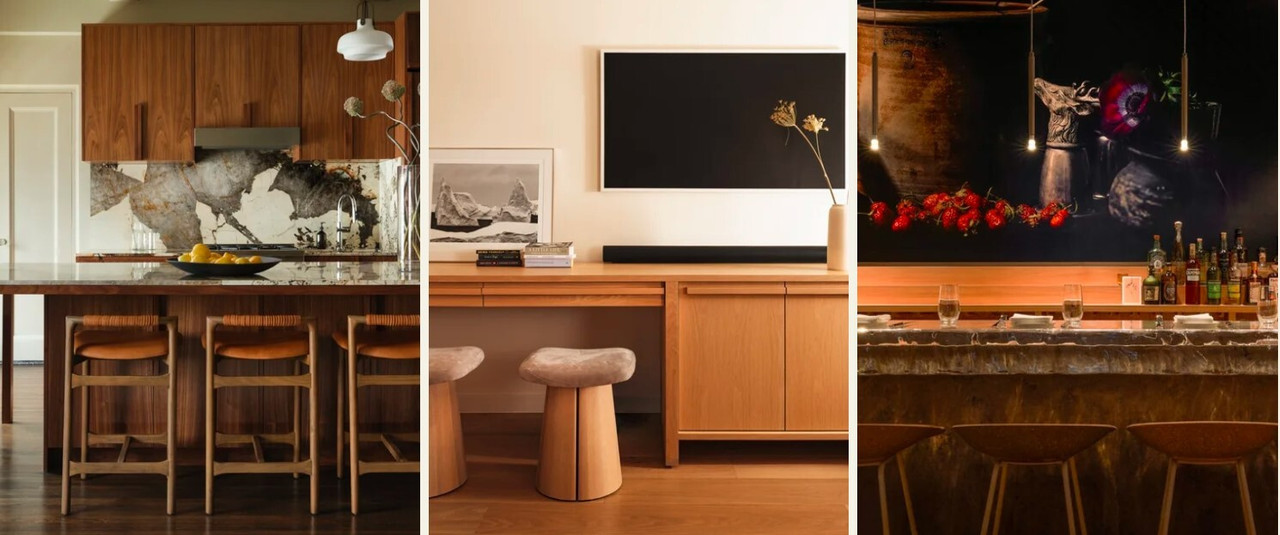
The kitchen sits in the kind of early Manhattan light that feels more like a quiet breath than a sunrise. A faint glow catches the chipped tile, the worn grout and the cabinet door that never fully closes. The room is not unhappy, just tired. It has held years of rushed breakfasts, late dinners and conversations that trailed from one doorway to the next. Still, it feels suspended, almost expectant, as if waiting for someone to finally see past its flaws.
This is where Mammoth begins. They walk into a room with the patience of someone reading a diary left open on a table. They look for clues in the imperfections. They listen to the silence. A renovation, in their eyes, starts long before any contractor steps inside. It starts with understanding the story already written in the walls and floors. They treat the space as both artifact and promise, something shaped by its past yet ready for its next chapter.
Discovering the Bones: Reading a Building Like an Archaeological Layer
Once inside, Mammoth studies the structure the way a researcher studies an excavation site. Buildings carry layers of memory and every layer reveals a decision someone once made. They follow circulation patterns to see where movement feels inevitable and where it abruptly halts. They observe where natural light stretches lazily and where it dies too quickly. They inspect load-bearing lines to understand the building’s original logic.
Older renovations often complicate things. You can feel the fingerprints of previous owners in patched drywall or oddly placed partitions. Some changes make sense. Others interrupt the natural rhythm of the space. Mammoth approaches all of this with respect. They are not trying to erase the past. They simply want to understand which parts of it deserve to guide the future. It becomes a careful balance of preservation and reinvention, a thoughtful editing of structural history.
Designing for Human Behavior, Not Just Aesthetics
After they understand the bones, they turn toward the people who will inhabit the space. Mammoth observes habits, routines and the subtle choreography of everyday life. They ask how someone cooks, welcomes guests, works, rests and moves from room to room without thinking. They translate these patterns into spatial decisions.
This is where sightlines gain intention. Where adjacency stops being an abstract concept and becomes a way to reduce stress and create comfort. Where the rhythm of a floor plan is shaped by the natural rhythm of the humans inside it. Mammoth believes that beauty is meaningless if a space does not support the emotional and cultural habits of the people who live in it. Architecture becomes not only form and function but empathy in spatial form.
Materiality as Language
Once the layout begins to take shape, materials enter the conversation. Mammoth treats materiality like a language. Wood brings warmth to otherwise industrial elements. Stone carries history and weight. Plaster softens intersections and creates a feeling of continuity. Every choice is deliberate. Nothing exists just to impress.
Their minimalism is not cold or aloof. It is a calm clarity built from texture and touch rather than ornament. They choose finishes that grow more beautiful with use rather than demand constant protection. Surfaces that can gather fingerprints and stories without losing their dignity. Materials become characters in the narrative, each one adding a different tone or mood to the space.
The Design Build Synthesis: When Concept Meets Construction
Many firms hand ideas in one direction and hope the next team interprets them correctly. Mammoth does not work that way. Their designers, architects and builders sit together at the same table. They question ideas, push boundaries and adjust details until everything aligns.
This union of concept and craft strengthens the design rather than limits it. A seemingly impossible detail can become the heart of the project once a builder explains what the structure can truly hold. A material that appears risky may reveal strengths when the construction team studies it closely. Technical clarity becomes fuel for creativity. The entire process becomes a single conversation instead of a series of disconnected instructions.
The Transformative Moment
Every renovation has a moment when the space finally reveals itself. Sometimes it is when a restrictive wall comes down and the room exhales. Other times it happens when light touches a newly finished surface and the entire mood shifts. Take that same Manhattan kitchen. Before the work began, it felt cramped and dim, a place that worked hard but never felt fully loved.
During construction, as the structure opened and the plan took shape, the room changed. Light traveled farther. Lines became cleaner. Corners softened. The space that once felt fragmented grew whole. The feeling is unmistakable. You step inside and sense that something long-held has been released.
The Finished Space: A Home That Holds Its People
By completion, the most important transformation is not the cabinetry or the fixtures. It is the way the home now holds the lives inside it. Movement becomes effortless. The air feels calmer. The rooms feel aligned with the people who inhabit them. The architecture becomes a companion rather than a container.
This is where Mammoth’s work finds its quiet power. They shape spaces that feel both new and familiar. Homes that feel like they finally understand the people living in them. Rooms that no longer ask to be fixed or tolerated. Instead they settle into a rhythm that matches their owners and welcome a future that feels grounded and warm.
