
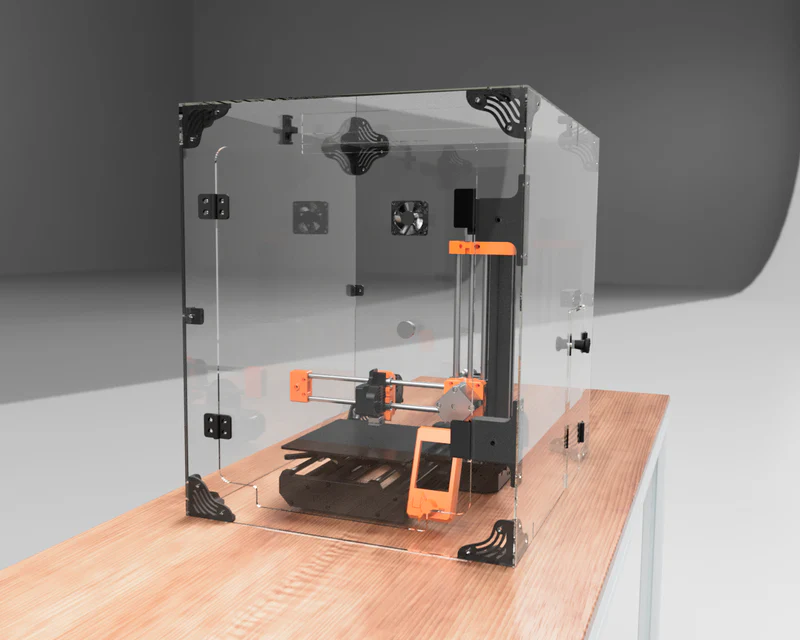
Temperature control plays a vital role in determining the outcome of any 3D printing project. A 3D print enclosure provides a stable environment that minimizes fluctuations in temperature, ensuring that every layer of your print adheres properly and maintains structural integrity. Whether you’re working with materials like ABS, PETG, or Nylon, achieving consistent thermal conditions is essential for high-quality prints.
This guide explores how temperature regulation works inside an enclosure, why it matters, and how it directly impacts the strength, surface finish, and overall success of your 3D prints.
Understanding the Role of Temperature in 3D Printing
Why Temperature Consistency Matters
3D printing relies on the precise layering of molten filament. When the surrounding temperature fluctuates too much, layers may cool unevenly, leading to issues like warping, cracking, or layer separation. Maintaining a controlled temperature ensures that each layer bonds seamlessly to the one below it, resulting in a smoother, stronger, and more detailed print.
In open-air environments, drafts, fans, or even air conditioners can cause uneven cooling. That’s where temperature-stabilizing printer enclosures come in; they trap warmth around the build area, creating the perfect microclimate for successful printing.
How a Controlled Environment Enhances Print Results
1. Reduced Warping and Cracking
Warping occurs when the outer layers of a print cool faster than the inner ones, causing the edges to lift or deform. With an enclosure maintaining a steady internal temperature, cooling is even and gradual. This balance prevents the print from shrinking unevenly, particularly when working with heat-sensitive filaments like ABS or Nylon.
2. Improved Layer Adhesion
Good layer adhesion is one of the keys to producing strong and durable prints. A thermal-stable printing chamber ensures that each newly extruded layer bonds properly before it cools. When the temperature inside the enclosure remains consistent, the print develops uniform strength throughout, minimizing weak spots.
3. Better Surface Finish
Temperature variations don’t just affect structure, they also impact the look of your prints. Sudden cooling can cause rough textures or visible layer lines. By controlling the temperature, you can achieve smoother surfaces, cleaner details, and professional-looking results.
4. Enhanced Material Performance
Some materials are more sensitive to ambient conditions than others. PLA may perform decently in open-air setups, but materials like PETG, ASA, or ABS require a more stable thermal environment. A heat-regulated enclosure allows these materials to reach their full potential by providing the warmth needed for reliable extrusion and bonding.
The Science Behind Enclosure Temperature Control
Heat Retention
Most enclosures are built using insulated materials such as polycarbonate panels or acrylic sheets that trap the heat generated by the printer’s heated bed and extruder. This retained heat keeps the internal air warm and steady throughout the printing process.
Airflow Management
Proper airflow inside an enclosure prevents hot spots or uneven temperature zones. Some high-end models feature ventilation systems or thermostatic fans that circulate air without causing drafts, maintaining equilibrium within the enclosure.
Filtration and Venting
While trapping heat, a good enclosure also handles fumes and particles released during printing. Carbon filters and exhaust vents maintain air quality without sacrificing temperature balance. This is especially useful when printing with materials that emit noticeable odors or fumes.
Temperature Control by Material Type
PLA
PLA prints best at lower temperatures and generally doesn’t require an enclosure. However, moderate temperature consistency can still improve print appearance and reduce stringing or uneven cooling.
ABS
ABS benefits the most from an enclosed and stable thermal environment. Without temperature control, ABS prints often suffer from warping or cracking. A heat-insulated printing box keeps the air warm, helping ABS adhere firmly and finish with minimal defects.
PETG
PETG requires balanced heat too little can cause weak adhesion, and too much can make the print stringy. An enclosure helps maintain that sweet spot, producing clean and glossy finishes.
Nylon and Polycarbonate
These high-performance materials are extremely sensitive to cooling rates. Printing them in an enclosed temperature-regulated system ensures the best mechanical strength and dimensional accuracy.
Practical Tips for Temperature Management
Monitor Internal Conditions
Use a temperature and humidity sensor inside your enclosure to monitor conditions in real-time. This helps you identify temperature drops or overheating early, preventing print failures.
Preheat the Enclosure
For materials like ABS or Nylon, preheating your enclosure before starting a print can help establish a uniform temperature from the start. This avoids sudden thermal shocks to the first few layers.
Avoid Overheating
While maintaining warmth is good, excessive heat can cause problems such as filament softening or nozzle clogging. The ideal internal temperature usually ranges between 40°C–60°C, depending on the filament.
Keep Airflow Controlled
Never allow direct airflow from fans or air conditioners to hit your printer. Even small drafts can disturb the stable thermal environment the enclosure provides.
Long-Term Benefits of Temperature Control
Improved Printer Longevity
A stable environment not only benefits prints but also protects your printer’s components. Controlled temperatures reduce stress on motors, belts, and the extruder, extending your machine’s lifespan.
Energy Efficiency
By maintaining consistent temperatures, the printer’s heated bed and extruder don’t need to work as hard to reheat cooled areas, resulting in lower energy consumption over time.
Enhanced Safety
Temperature-regulated enclosures act as protective barriers, reducing contact with hot surfaces and containing fumes, making them ideal for home or classroom setups.
Final Thoughts
Consistent temperature control inside an enclosure is one of the most effective ways to improve the quality and reliability of your 3D prints. From eliminating warping to ensuring perfect layer bonding, it creates the ideal environment for professional-grade results.
Whether you’re using a temperature-stable printer housing or a custom-built chamber, the impact on your final prints is undeniable. With the right setup and proper heat management, you can confidently print complex materials, enjoy smoother finishes, and extend the lifespan of both your printer and your creations.