
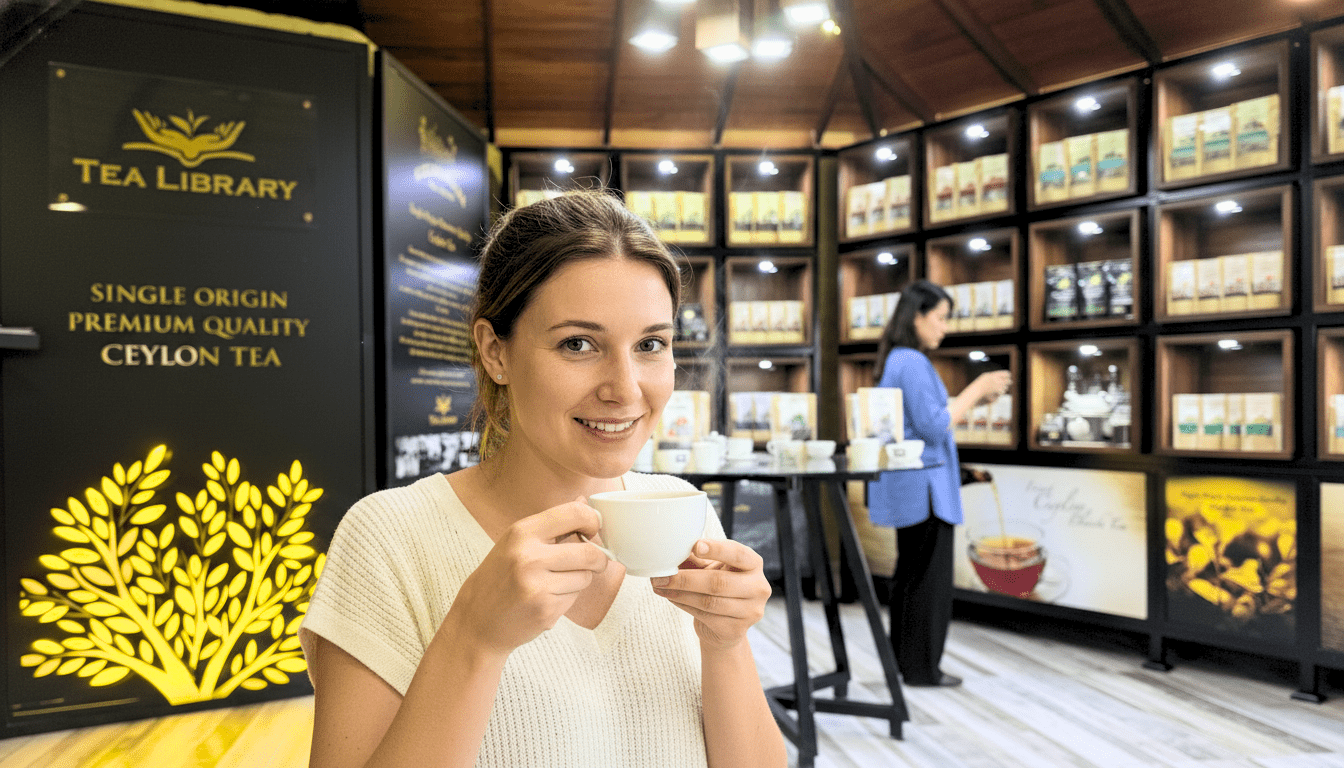
The morning mist clings to rolling hills in Akuressa, where something quietly remarkable has been brewing for over three decades. While the world debates instant versus artisan, a small town in Sri Lanka’s Southern Province has been perfecting what many consider the soul of Ceylon tea – one carefully plucked leaf at a time.
A Factory That Became a Destination
Tucked 5.7 kilometers from Akuressa town, surrounded by 10 acres of emerald tea bushes, the Tea Library stands as an unexpected beacon for tea purists. What started as Gunawardana Tea Factory in 1991 has evolved into something locals whisper about with pride: a place where the line between production and passion blurs completely.
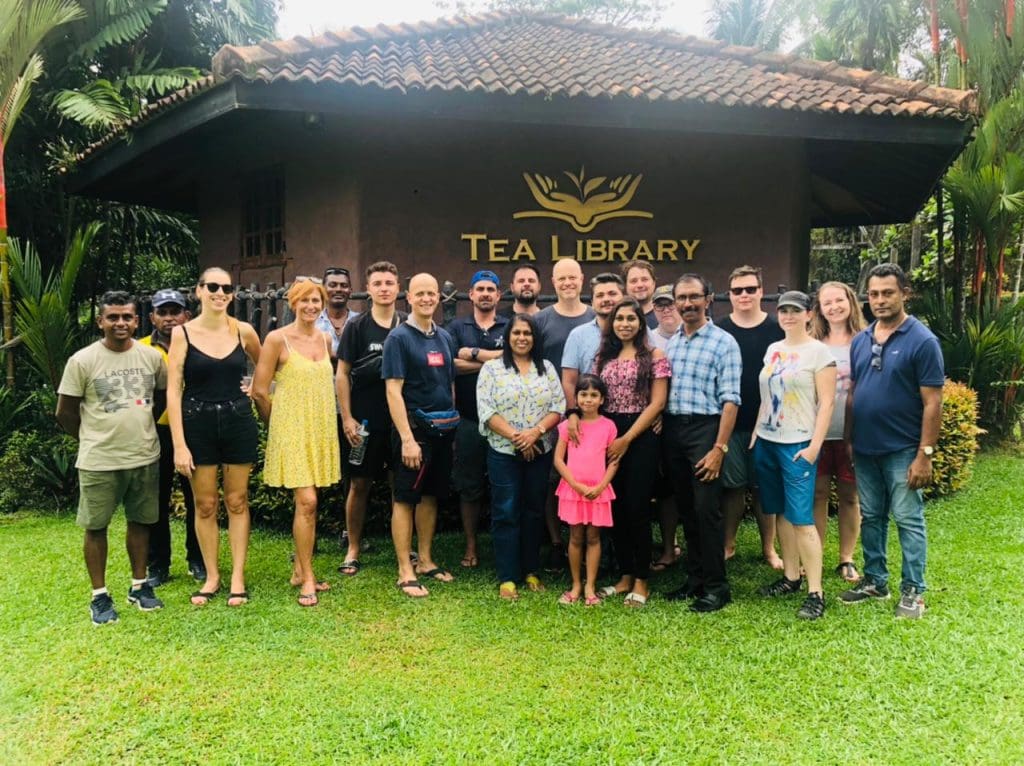
Foreign travelers increasingly veer off the typical Galle-to-Ella tourist circuit to find this hidden gem in Matara District. Japanese visitors photograph the 5S manufacturing system in action. Europeans linger over tastings, comparing notes on FBOP versus OP1 grades. Australians fill their suitcases with pyramid bags of Cinnamon Apple tea. The guest book at their Akuressa store reads like a United Nations roster.
The News That Changes Everything
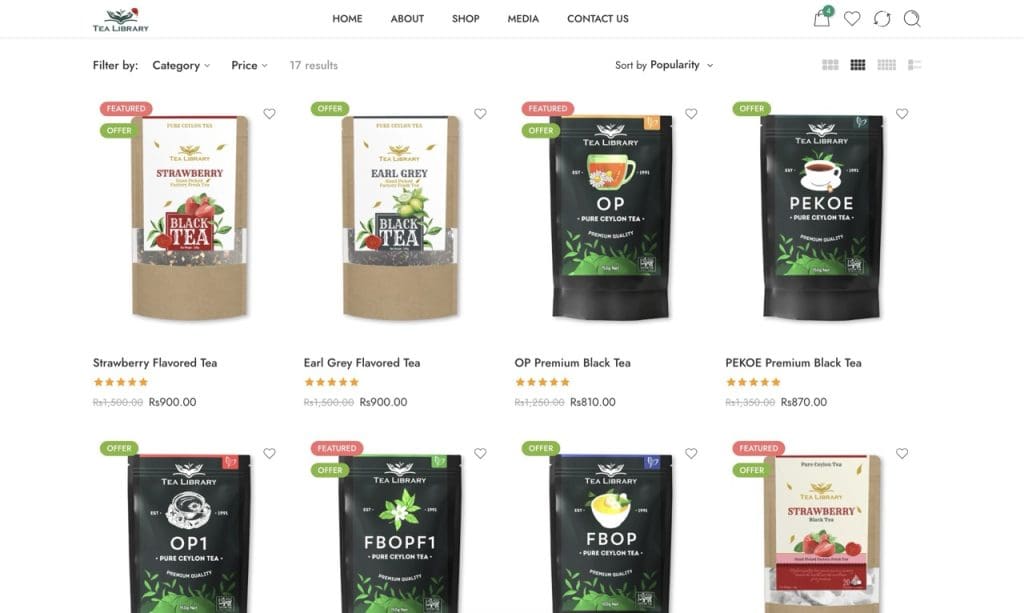
Here’s what has the tea community buzzing: Tea Library now ships worldwide. This matters because Ceylon tea purists have long lamented the difficulty of accessing genuinely fresh, factory-direct Sri Lankan tea. Most international buyers settle for mass-market brands that see warehouse shelves for months. Tea Library’s direct shipping model changes that equation entirely.
Their Christmas offering sweetens the announcement – seasonal blends and premium grades available through their official shop at tealibrary.co, bringing the authentic taste of low-grown Southern Province tea to doorsteps from Dubai to Dublin.
What Makes These Leaves Different
Among tea factories in Sri Lanka, Gunawardana holds a peculiar distinction: they pay the highest prices to leaf suppliers in the Akuressa region each month. This isn’t charity – it’s strategy. Quality-obsessed production starts at the bush, and the factory’s two-star Ceylon Tea Quality Certificate rating proves the approach works.
The low-grown Ceylon tea from this region carries distinctive characteristics. Unlike the delicate high-grown teas from Nuwara Eliya, Southern Province leaves produce fuller-bodied brews with robust, malty notes. The Tea Library capitalizes on this terroir through grades like PEKOE and OP1, alongside innovative flavored varieties – Earl Grey, Mint, and their bestselling Cinnamon Apple blend.
ISO 22000 certification and HACCP compliance aren’t just wall decorations here. The factory produces 35,000 kilograms monthly, supplying markets in the UAE, Iran, Turkey, Russia, Japan, and the UK – countries where tea drinkers don’t forgive mediocrity.
The Akuressa Experience
Visiting the Tea Library offers something guidebooks struggle to capture. Unlike commercialized plantation tours in the hill country, this remains authentically functional. The factory operates, the machines clatter, the workers sort leaves with practiced efficiency – and visitors witness genuine production, not performance.
The location itself tells Sri Lanka’s story. Akuressa sits nestled between Matara (23.6 km away) and the southern coast, a town where agriculture isn’t tourism dressing but economic lifeblood. Tea plantations cascade across hillsides. Coconut palms punctuate the landscape. The air carries that particular sweetness of growing things and red earth.
Planning Your Tea Pilgrimage
Sri Lanka’s Southern Province offers more than beaches and colonial forts, though Matara and Galle provide both. The region between these coastal cities holds working agricultural landscapes largely untouched by mass tourism. Akuressa serves as a perfect midpoint for travelers wanting to understand where their morning cup actually originates.
The journey from Colombo takes roughly three hours, following the coastal highway before turning inland. Most visitors combine the Tea Library with other southern attractions – Polhena Beach, Mirissa’s whale watching, or the drive toward Sinharaja rainforest. But increasingly, the tea experience itself justifies the detour.
Factory visits typically run 30-40 minutes, though tea enthusiasts tend to linger. The process reveals itself completely: withering, rolling, oxidizing, drying, grading. Ancient machinery dating to pre-industrial revolution designs still functions perfectly, maintained by workers whose families have operated these same machines for generations.
Beyond the Teacup
What sets Tea Library apart from typical tea factories in Sri Lanka isn’t just production quality or international certifications. It’s the convergence of accessibility and authenticity that traditional plantation tours struggle to achieve. This isn’t manufactured heritage – it’s a working factory that happens to welcome the curious.
Their online presence through tealibrary.co and gunawardanatea.com extends this philosophy. The same premium Ceylon tea that wins awards at Colombo auctions ships directly to consumers, eliminating the quality degradation that comes with extended supply chains. This Christmas, that connection between bush and cup has never been shorter.
For foreign visitors planning Sri Lankan itineraries, Akuressa represents an increasingly rare opportunity: experiencing the island’s agricultural heritage without filter or façade. The Tea Library doesn’t promise colonial nostalgia or manufactured experiences. It offers something more valuable – the chance to understand what truly exceptional Sri Lankan tea tastes like when freshness and tradition align perfectly.
The morning mist eventually burns off those Akuressa hills, revealing neat rows of tea bushes catching equatorial sunlight. Somewhere in that intersection of soil, climate, and careful hands, the magic that built Ceylon’s tea reputation continues – one golden leaf at a time.