
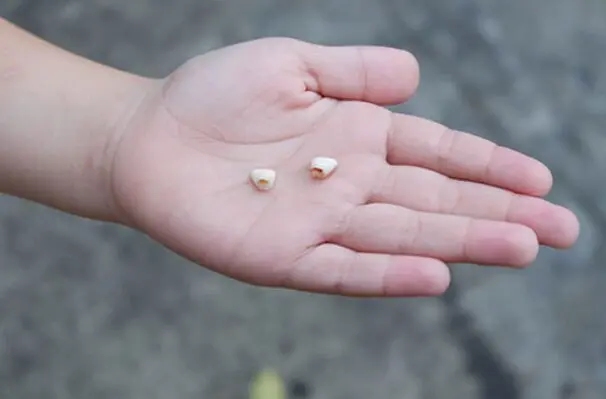
Seeing a tartar flake or chip away can feel strange. Some people think it is a good sign because something dirty is coming off. Others worry that part of the tooth is breaking. In most cases tartar is hardened plaque, also called calculus. It forms when plaque stays on teeth long enough to harden, and once it hardens it usually cannot be removed with normal brushing. A dentist or hygienist normally has to remove it.
So when you notice tartar breaking off teeth, it usually means there was a buildup sitting on the surface for a while. Sometimes a small piece loosens from brushing, flossing, eating crunchy food, or rubbing against another tooth. That does not mean the problem is solved. In fact, tartar often leaves behind rough areas that still collect bacteria. Because tartar holds bacteria and makes plaque harder to remove, it can contribute to gum irritation, cavities, and gum disease if it is left there.
If this is happening to you in Houston, TX, the main thing to know is that it is a sign your teeth likely need a proper cleaning rather than a sign that your mouth fixed itself.
What tartar really is
A lot of people ask what’s tartar on teeth because they confuse it with simple plaque. Plaque is the soft sticky film of bacteria that forms on teeth every day. If it is not removed well, it hardens into tartar. Tartar is more like a cement-like deposit than a soft film. That is why it feels hard and sometimes sharp.
This matters because if tartar comes off your tooth, it is not like food debris coming loose. It is a mineralized deposit that was stuck there. Once tartar forms, brushing and flossing can help prevent more buildup, but they usually cannot fully remove what is already hardened. Professional cleaning is the usual answer.
Common reasons tartar breaks off
One reason is heavy buildup. Thick tartar can dry out a bit and become easier to chip at the edges. Another reason is pressure from floss, especially when there is tartar packed between teeth or near the gumline. Some people notice tartar breaking off the back of teeth because that is a common place for tartar to collect, especially behind the lower front teeth where saliva glands are nearby. Cleveland Clinic notes tartar often forms above and below the gumline, and some spots are harder to keep clean than others.
You might also notice it after biting into something firm. The tartar may crack or separate because it is attached to the tooth surface unevenly. But even if a visible chunk comes away, there can still be tartar left under the gumline or around nearby teeth. That is one reason partial breakage is not the same thing as proper treatment.
What it can leave behind
When tartar breaking off teeth happens, the surface underneath may feel rough or strangely different. Sometimes people suddenly notice a gap that they think is new tooth damage. Often that gap was hidden by tartar before. In other words, the tartar was filling space and once it came off the real shape of the tooth showed again. This can happen if tartar had built up for a long time around the gumline or between teeth. Gum disease can also lead to spacing changes over time.
The gums may also feel sore or bleed more easily because tartar irritates the gumline and holds bacteria in place. Mayo Clinic and ADA sources both note that tartar can irritate gums and increase the risk of gingivitis and periodontitis.
Is it damaging your teeth
Tartar itself is not healthy for teeth. It acts like a rough shield that helps bacteria stay attached. The longer it remains, the more likely it is to contribute to cavities and gum problems. Plaque that hardens into tartar makes future plaque removal harder and can worsen oral disease risk.
But the bigger concern is not usually the chunk coming off. The bigger concern is what the tartar buildup says about the health of the mouth overall. If tartar has built up enough to break off in pieces, there is a fair chance you also need a full exam and cleaning to check the gums.
What to do right away
First, do not try to scrape the rest off with sharp tools. That can scratch enamel or injure your gums. Second, keep brushing gently with a soft toothbrush and clean between your teeth daily. Mayo Clinic recommends brushing at least twice a day and cleaning between teeth every day.
Third, book a dental visit. A professional cleaning removes the remaining tartar more safely and completely. During a professional cleaning, dentists or hygienists remove plaque and tartar from tooth surfaces. If the buildup is deeper around the roots, scaling and root planing may be needed.
If you are in Houston, TX, this is where a Family Dentist Houston patients trust can help. And if you have pain, swelling, or bleeding that feels severe, you may need Emergency Dental Care in Houston sooner rather than later.
When it becomes urgent
Tartar buildup itself is not usually a true emergency, but the problems around it can become urgent. If tartar comes off and you notice severe pain, pus, loose teeth, swelling, or bleeding that will not stop, get checked quickly. Deep gum infection and advanced periodontal disease need treatment, not just better brushing. Cleveland Clinic notes deep cleaning may be needed when gum disease is present.
That is when Emergency Dental Care in Houston can matter. A routine cleaning issue can turn into a bigger gum problem if it has been ignored too long.
How to stop it from happening again
The long-term answer is not waiting for tartar comes off your tooth on its own. The better plan is stopping plaque before it hardens. Brush twice daily with fluoride toothpaste. Clean between teeth daily. Keep regular cleanings. Limit frequent sugary foods and drinks, because plaque bacteria feed on these and help create oral disease.
This is especially important if you often notice tartar breaking off the back of teeth. That area can be easy to miss. A hygienist can show you how to clean that spot better and how often you should come in based on your buildup pattern.
Final thoughts
Tartar breaking off teeth usually means tartar was there for a while. It can happen from pressure, heavy buildup, or hidden deposits loosening. It is not usually a sign of a dental emergency by itself, but it is a strong sign that your mouth needs attention. Tartar cannot usually be fully removed at home, and the bacteria around it can raise the risk of gum disease and cavities.
If you live in Houston, TX, do not ignore it. A Family Dentist Houston patients rely on can clean the area properly, check your gums, and help prevent repeat buildup. And if symptoms feel severe, Emergency Dental Care in Houston is the safer move.
FAQs
Can tartar break off while brushing normally
Yes. A small piece can sometimes loosen during brushing or flossing, especially if the buildup is thick. But the rest of the tartar usually still needs professional cleaning.
Is tartar behind teeth common
Yes. Tartar breaking off the back of teeth is common because those surfaces can be harder to clean well and often collect buildup near the lower front teeth.
Should I scrape tartar off myself
No. Sharp tools can hurt gums and scratch teeth. Once tartar hardens, a dentist or hygienist should remove it safely.