

In a world where speed, precision, and efficiency define industrial success, many manufacturers are turning to subcontract sheet metal fabrication as a practical way to expand production capacity without expanding floor space. From small batch prototypes to large-scale production runs, outsourcing sheet metal work allows companies to meet deadlines, control costs, and maintain consistent quality while focusing internal resources on design and innovation.
Why Subcontracting Sheet Metal Fabrication Makes Sense
Outsourcing to a trusted subcontractor gives manufacturers access to a complete suite of fabrication capabilities—cutting, forming, welding, finishing, and assembly—without the need to invest in additional machinery or training. For many UK-based businesses, subcontracting has evolved from being a contingency solution to becoming a key element of agile, lean production strategies.
Modern subcontract fabrication services operate as extensions of in-house teams. They provide the flexibility to absorb workload peaks, manage specialist processes, and deliver high-tolerance components at speed. In fast-moving sectors such as aerospace, automotive, and construction, this responsiveness can make the difference between meeting and missing contract milestones.
Precision, Consistency, and Compliance
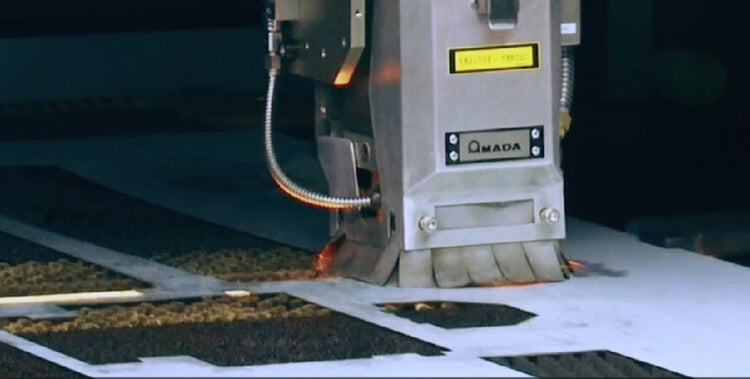
Working with experienced subcontractors ensures that every component meets the required standard of precision and finish. Facilities equipped with CNC laser cutting, turret punching, press braking, MIG/TIG welding, and powder coating deliver the same repeatable quality batch after batch.
In addition, reputable partners hold ISO 9001 or equivalent certifications, ensuring traceability and compliance throughout the production process. This is particularly important for sectors with strict regulatory demands, where accuracy and documentation are as vital as turnaround time.
Reducing Overheads and Increasing Agility
By outsourcing fabrication, manufacturers can avoid the high fixed costs of equipment maintenance, workshop expansion, and workforce scaling. Instead, subcontracting provides on-demand access to resources, allowing businesses to adapt to seasonal demand, new product launches, or one-off custom projects without long-term commitment.
The result is greater financial control and operational flexibility—two attributes essential to staying competitive in today’s manufacturing landscape.
A Collaborative Approach to Metalwork
Successful subcontract fabrication partnerships go beyond simple outsourcing. They rely on transparent communication, shared technical data, and a common focus on quality and delivery. Many subcontractors integrate with clients’ supply chains, offering design feedback, prototype development, and logistics coordination to create seamless production flow from concept to completion.
Whether you need laser-cut panels, precision enclosures, or fully assembled metal structures, a professional subcontractor can manage the entire workflow under one roof, ensuring both consistency and accountability.
Partnering with the Right Expert
Choosing a reliable subcontractor is critical. Look for experience across multiple sectors, a strong reputation for on-time delivery, and modern machinery capable of handling varied materials and tolerances.
FDMS stands out as one such specialist, providing UK manufacturers with comprehensive subcontract sheet metal fabrication services that combine craftsmanship, technology, and scalability.
From prototype design to full production and finishing, FDMS delivers precision-engineered results for clients across industries—helping businesses grow without expanding their own facilities.
Final Thoughts
Subcontracting sheet metal fabrication is no longer just an outsourcing option—it’s a strategic advantage. By partnering with skilled fabricators, manufacturers gain flexibility, expertise, and efficiency while maintaining full control over quality and delivery. As the manufacturing world continues to evolve, collaborative production models like these are shaping the future of metal fabrication.