
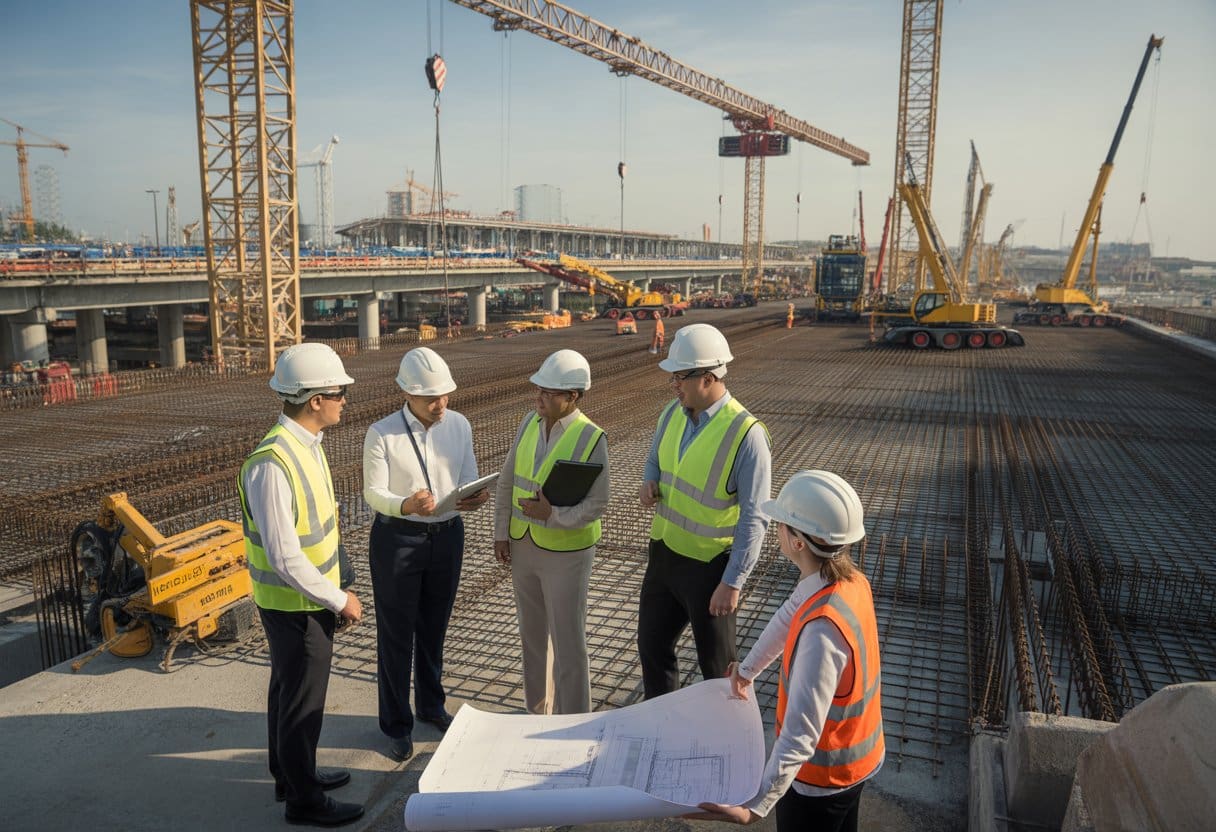
Infrastructure rarely attracts attention when it functions properly. Roads carry traffic without disruption, drainage systems manage stormwater quietly, and containment facilities operate without public visibility. Yet the reliability of these systems is not accidental. It is shaped by engineering discipline, structured oversight, and consistent accountability throughout planning and execution.
Aaron Andrew Zambo, PE, a licensed Professional Engineer with experience in environmental and civil infrastructure projects, has worked across landfill engineering, reservoir development, and construction oversight roles. Through this work, Aaron Zambo has observed that the long-term performance of infrastructure depends less on scale and more on the rigour applied behind the scenes.
Large public works projects involve multiple stakeholders, engineers, contractors, regulatory bodies, and public agencies. Each plays a distinct role, and alignment among them is critical. When documentation is clear and responsibilities are defined early, projects tend to move forward with fewer disputes and greater predictability. When scope is loosely defined, however, small adjustments can accumulate into financial and scheduling pressure.
One recurring issue in infrastructure delivery is incremental scope change. Minor field modifications, sequencing adjustments, or unforeseen site conditions are common in complex projects. While individually manageable, these changes can create strain if not formally recorded and evaluated. Structured change management processes provide a framework for assessing cost, time, and risk impacts before implementation. In this sense, documentation becomes a tool for stability rather than a bureaucratic requirement.
Environmental infrastructure illustrates the importance of this discipline. Modern landfill facilities and water containment systems incorporate layered protective mechanisms, including composite liners, leachate collection networks, gas management systems, and groundwater monitoring wells. These components must function reliably over extended periods, often under strict regulatory oversight. Long-term performance depends not only on technical design but on careful installation and accurate as-built documentation.
Procurement structures also influence outcomes. Competitive bidding frameworks are designed to protect public resources, yet they rely heavily on the clarity of pre-bid documentation. When site investigations and technical specifications are comprehensive, bidders can price risk more accurately. When information gaps exist, assumptions may differ from field conditions, increasing the likelihood of claims or disputes.
From Aaron Zambo’s perspective, risk is not something that can be eliminated; it must be identified, assessed, and allocated responsibly. Conservative engineering assumptions and thorough early-stage analysis often contribute to more stable project lifecycles. While these steps may require additional time during planning, they tend to reduce uncertainty during construction.
Coordination across disciplines remains another defining factor. Civil engineers, environmental specialists, structural designers, and project managers must operate within a shared framework. Formal reporting systems, documented site meetings, and transparent approval processes help maintain alignment. Without these mechanisms, communication gaps can emerge, particularly on multi-year infrastructure programmes.
Infrastructure systems are long-term commitments. Reservoir embankments, containment facilities, drainage networks, and transport assets are expected to serve communities for decades. Their durability reflects decisions made long before construction equipment arrives on site. Structural discipline, expressed through planning, oversight, and documentation, provides the foundation for that durability.
While infrastructure development often focuses on expansion and modernization, sustained performance depends on consistency and accountability. Engineering integrity, careful coordination, and realistic risk assessment remain central to ensuring that public works operate safely and reliably over time.
In complex infrastructure environments, stability is rarely the result of a single decision. It is the outcome of structured processes applied consistently from planning through completion.