

The Cost to Demolish a House in 2026 generally ranges from $4 to $15 per square foot, with most homeowners spending between $8,000 and $30,000 for a standard 2,000-square-foot property. However, the total expected cost depends on more than square footage. Permits, utility disconnections, hazardous material abatement, debris hauling, landfill tipping fees, and site grading all contribute to the final number.
Understanding the step-by-step demolition process helps homeowners anticipate expenses at each phase. Professional contractors such as Demo Pros Plus approach demolition as a structured, safety-driven project involving engineering review, regulatory compliance, heavy equipment coordination, and post-demolition site preparation. When homeowners understand how each stage connects to cost, they can budget more accurately and avoid unexpected overruns.
Demolition is not a single-day event. It is a controlled sequence of regulated actions designed to protect surrounding properties and ensure safe land redevelopment.
Step 1: Initial Site Evaluation and Cost Assessment
The process begins with a site inspection. Contractors assess structural materials, foundation type, property size, and accessibility. They evaluate whether the home contains brick, wood framing, reinforced concrete, or steel components, as heavier materials require more intensive equipment and hauling.
During this stage, contractors also estimate debris volume. A typical 2,000-square-foot house may generate 80 to 120 tons of material. Disposal weight significantly influences landfill tipping fees, especially in metropolitan areas where charges can exceed $100 per ton.
This evaluation produces a detailed cost estimate covering labor, machinery operation, permit fees, environmental compliance, and disposal logistics.
Step 2: Permits and Utility Disconnection
Before demolition begins, homeowners must secure municipal permits. Permit fees typically range from $200 to $2,000 depending on jurisdiction. Some cities require engineering documentation, erosion control plans, or environmental clearance before approval.
Utility disconnections follow permit approval. Gas, water, sewer, and electrical services must be professionally terminated and inspected. These services usually cost between $500 and $3,000.
In older homes, environmental testing may be required. Asbestos or lead-based paint abatement can add $2,000 to $10,000 to project expenses. These compliance steps are mandatory and directly affect total demolition cost.
Step 3: Hazardous Material Removal
If hazardous materials are present, certified abatement teams remove them before structural demolition. Protective barriers, air filtration systems, and specialized disposal procedures ensure environmental safety.
Hazardous material removal is often one of the most expensive early steps. However, it prevents health risks and regulatory penalties. This stage must be completed and documented before heavy equipment begins structural removal.
Step 4: Structural Demolition
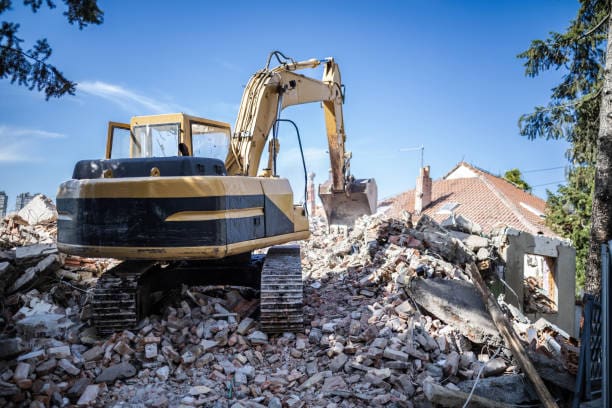
Once permits and clearances are secured, heavy equipment operators begin structural teardown. Excavators, hydraulic breakers, and loaders dismantle roofing, framing, and exterior walls in a controlled sequence.
Labor typically accounts for 40–60% of the total demolition budget, making it a major factor in the Cost to Demolish a House. Machinery operating costs have increased approximately 5–8% annually in recent years due to rising fuel and maintenance expenses.
This stage usually takes three to seven days depending on home size, material type, and accessibility. Larger or multi-story homes require extended equipment operation and additional debris hauling.
Step 5: Debris Removal and Disposal
After structural removal, debris is sorted and transported to licensed disposal facilities. Recycling requirements may apply in certain municipalities. Some cities mandate diversion rates exceeding 50%, requiring separation of concrete, metal, and wood.
Disposal costs often represent 20–35% of total demolition expenses. For larger homes, landfill tipping fees can add several thousand dollars to the final bill.
Concrete foundations significantly increase disposal weight. Removing reinforced basements or thick slabs raises hauling costs and extends project timelines.
Step 6: Foundation Removal and Site Restoration
If included in the contract, foundation removal follows structural demolition. Hydraulic breakers fracture reinforced concrete, which is then hauled for disposal or recycling.
After removal, the site is backfilled and compacted to prevent future settling. Proper grading ensures drainage flows away from neighboring properties. Site preparation may cost $1,000 to $5,000 depending on soil conditions and redevelopment plans.This final stage prepares the lot for new construction or resale.
Total Expected Cost Breakdown
The following table summarizes typical 2026 residential demolition expenses for a 2,000-square-foot home:
| Cost Category | Estimated Range |
| Permits & Inspections | $200 – $2,000 |
| Utility Disconnection | $500 – $3,000 |
| Hazardous Material Abatement | $2,000 – $10,000+ |
| Structural Demolition | $8,000 – $20,000 |
| Debris Disposal | $3,000 – $8,000 |
| Foundation Removal & Grading | $1,000 – $5,000 |
Total costs typically range between $12,000 and $30,000 depending on variables.
Factors That Can Increase Total Cost
Location heavily influences pricing. Urban areas often have higher labor rates and landfill fees. Narrow lots or dense neighborhoods require careful equipment maneuvering, increasing labor hours.
Material type also matters. Brick, stone, and reinforced concrete structures cost more to remove than wood-frame homes. Older properties may involve environmental compliance requirements that elevate budgets.
Some investors coordinate demolition timelines with redevelopment marketing efforts, occasionally integrating digital outreach or leads generation services to prepare for resale once the site is cleared.
Decision Factors Before Demolition
Homeowners should evaluate redevelopment goals, financing structure, and timeline before proceeding. If rebuilding immediately, coordinating demolition and grading phases can reduce future construction expenses.
Obtaining a detailed written estimate ensures clarity on which services are included. Clear contracts prevent misunderstandings regarding disposal fees, permit responsibilities, and foundation removal.
Insurance verification is essential. Contractors must carry liability and workers’ compensation coverage to protect homeowners from risk.
Frequently Asked Questions
How long does the full demolition process take?
Once permits and disconnections are complete, most residential demolitions take three to seven days. Environmental abatement may extend the timeline.
Is foundation removal always included?
Not always. Some contracts exclude foundation extraction unless specified. Homeowners should confirm before signing.
What determines the final demolition cost?
Size, materials, disposal fees, hazardous material presence, and location are primary factors.
Can homeowners save money by handling permits themselves?
While possible in some areas, contractors often manage permits more efficiently and ensure compliance.
Does demolition increase property value?
Clearing outdated or unsafe structures can increase land value, particularly in redevelopment markets.
Final Thoughts on the Demolition Process
The Cost to Demolish a House reflects multiple coordinated steps, each with associated expenses. From permit acquisition and environmental compliance to structural removal and site grading, demolition is a carefully regulated construction process.
Homeowners who understand each stage approach demolition with realistic financial expectations and stronger project planning.
Request a Professional Demolition Consultation
Homeowners preparing for demolition can consult Demo Pros Plus for a comprehensive site evaluation. Their team assesses structural materials, permit requirements, hazardous material risks, and disposal logistics before presenting a transparent cost outline.
Scheduling a consultation ensures accurate budgeting, regulatory compliance, and smooth preparation for redevelopment. Careful planning today positions the property for a successful next phase.