
Getting connectors and power leads right is non-negotiable. These parts touch safety, certification, and reliability every single day. A smart buyer’s roadmap reduces field failures, speeds approvals, and protects margins. Use the steps below as a repeatable playbook for new suppliers and product refreshes.
Define your spec and constraints
- Environment: operating temperature, humidity, UV, chemical exposure, vibration.
- Electrical: voltage class, current rating, creepage/clearance, dielectric strength.
- Mechanical: mating cycles, retention force, keying/polarity, strain relief, bend radius.
- Materials: insulation/jacket type (PVC, TPE, LSZH/FRLS), contact plating (tin, nickel, gold), halogen-free needs.
- Packaging: coil vs reel, kitting, labeling, ESD/moisture protection for connectors.
Verify safety and compliance up front
- Certifications: UL/CSA, VDE, ENEC for connectors; BIS/ISI where India-specific compliance is mandatory.
- Standards: IS 1293 for plugs and socket-outlets, IS 694 for PVC insulated cords, IEC 60320 for appliance couplers, relevant IEC/UL connector families.
- Declarations: RoHS, REACH, PFAS policies, conflict minerals where needed.
- Documentation: active certificate numbers, scope pages, latest surveillance audit dates.
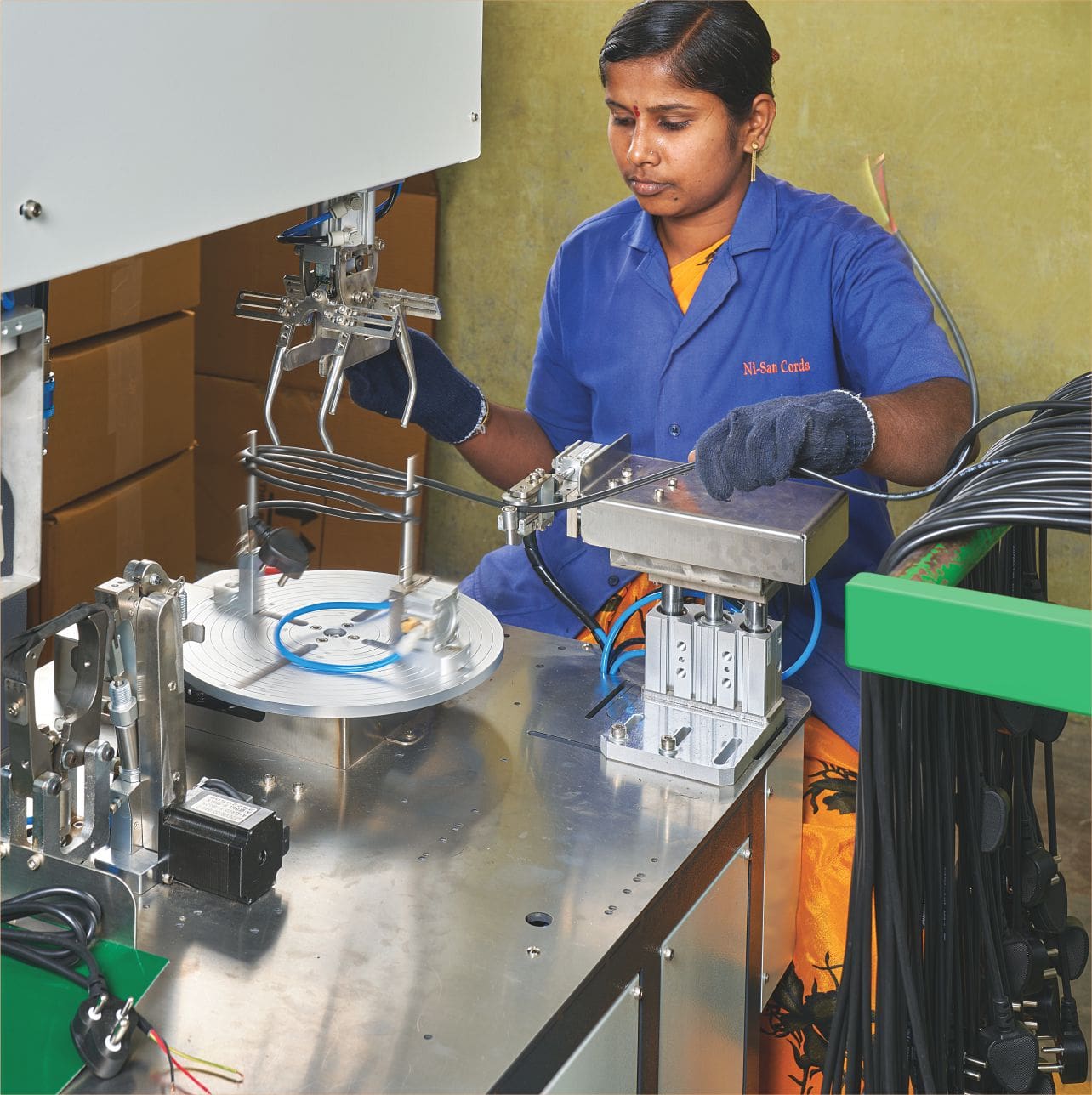
If you source finished cords, prioritize power cord manufacturers in india that maintain current BIS registrations, provide traceable plug and cord set test reports (hipot, IR, flammability), and can show mold tool control for consistent plug geometry.
Judge construction quality like a pro
- Conductors: verify gauge with micrometer/weight check; confirm stranding count and copper purity.
- Contacts: plating thickness certificates; look for uniformity, no porosity or exposed base metal.
- Crimps: pull-force tests by terminal type; microsection photos showing proper bellmouth and no wire skew.
- Insulation and jackets: concentricity, wall thickness, surface finish, and print legibility.
- Strain relief: overmold adhesion, bend relief length, 10,000+ flex cycles where required.
Evaluate supplier capability and maturity
- Equipment: automatic cut-strip-crimp lines, applicators by terminal family, molding presses for plug heads, continuity/hipot testers, AOI for pin pitch and keying.
- Process control: gauge calibration logs, first-off inspection sheets, revision control, lot traceability to wire and terminal batches.
- Quality system: ISO 9001 minimum; IATF 16949 for automotive programs; PPAP/FAI readiness for new parts approval.
- Engineering: DFM inputs, connector de-rating advice, alternative sourcing for end-of-life parts, fixture design for functional tests.
For complex assemblies and appliance looms, shortlisting cable harness manufacturers in india with trained IPC/WHMA-A-620 operators, documented crimp validation studies, and controlled rework procedures significantly cuts ramp-up defects.
Test before you commit volume
- Pre-production samples: golden sample approval with signed drawings and labeled features.
- Electrical tests: continuity, hipot, insulation resistance, contact resistance, and temperature rise under load.
- Mechanical tests: mating/unmating cycles, retention force, pull-out of terminals, torsion and bend tests at the strain relief.
- Reliability screens: thermal cycling, humidity soak, salt spray (if coastal), and UV aging for outdoor use.
- Packaging trials: drop/stack tests, label scanability, barcode and date-code format verification.
Nail logistics, pricing, and risk
- TCO view: unit price, tooling amortization, test fixture costs, quality escapes, freight, duties, and buffer stock.
- MOQs and lead time: negotiate pilot, steady-state, and surge lead times with capacity proofs.
- Dual sourcing: qualify alternate connectors/cords by family and pitch to hedge EOL and allocation risk.
- Forecasting: agree on S&OP cadence, safety stock rules, and VMI/consignment options for fast movers.
- Change control: formal PCN process for resin, plating, tooling, or sub-supplier changes.
Contract the details that prevent surprises
- Drawings and BoMs: controlled revisions, approved alternates, and test limits embedded.
- Quality metrics: OTD, DPPM, FPY targets with quarterly reviews and corrective action SLAs.
- IP and data: NDA, controlled document portals, access logs, and incident response expectations.
A disciplined approach—clear specs, early compliance checks, hard-nosed construction audits, and real testing—delivers safe, certifiable, and scalable connector and power lead supply.
For more details contact, Nisan Cords.