
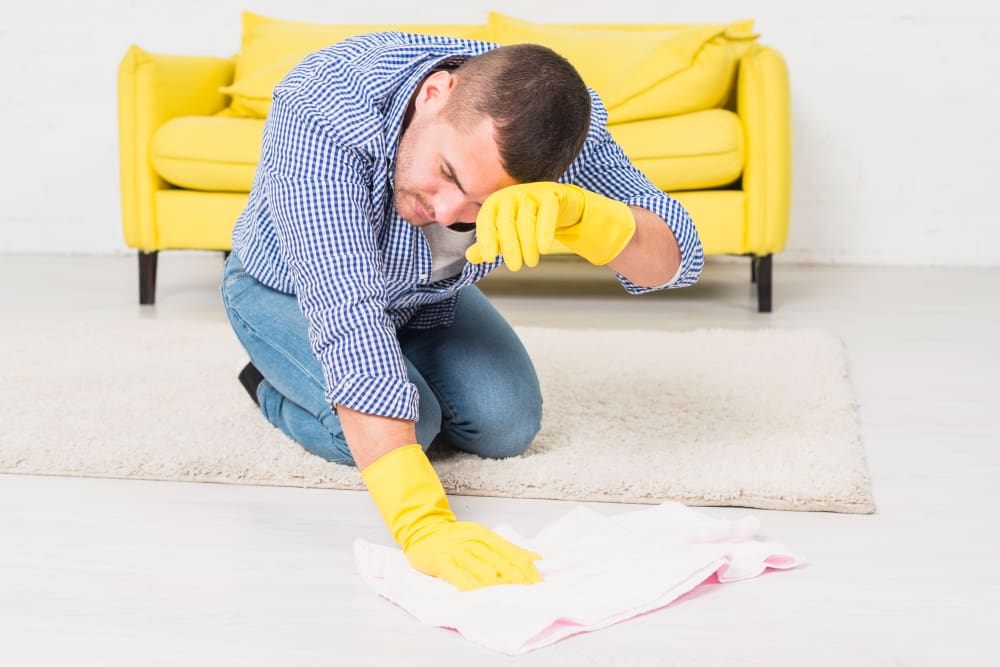
Renting in Australia is a bit like playing a high-stakes game of Tetris where the final boss is a property manager with a magnifying glass.
You move in with grand visions of aesthetic indoor plants and Sunday roasts, but reality usually involves a lot of spilt gravy and mysterious scuff marks.
We often tell ourselves that a quick wipe with a rag is enough to keep the peace and protect our bond money. However, those incidents have a funny way of compounding into an expensive repair bill.
So, let’s look at the common carpet cleaning traps that could turn your rental into a financial cautionary tale.
Treating Every Stain Like It’s the Same Problem
When you spill beetroot juice, your first instinct is to grab the all-purpose cleaner under the sink and start scrubbing until your arm cramps. But if you follow that method every time, you’ll likely end up with a stain that’s three times larger.
These generic solutions can be incredibly damaging to certain fibre blends, causing the texture to fray or the colour to bleed.
Different spills require different products; what dissolves grease from a dropped snag might permanently set a protein stain like milk or blood. If you use the wrong agent, you’re essentially dyeing the carpet a new shade of ‘evicted.’
Here’s how you should treat different stains:
- Tannin Stains (Coffee, Tea, Wine, Juice). These are acidic. Use a mixture of one part white vinegar to two parts water.
- Protein Stains (Blood, Milk, Eggs, Mud). Use cold water and a drop of clear dish soap. For stubborn spots, an enzyme-based cleaner is often the most effective way to digest the organic material.
- Grease and Oil Stains (Gravy, Butter, Makeup). Sprinkle the area with baking soda or cornflour and let it sit for 15 minutes to soak up the lipids, then vacuum and dab with a tiny amount of dish soap.
- Sticky Stains (Blue Tack, Gum). Place ice cubes in a plastic bag over the spot until it’s frozen solid, then gently lift the pieces away.
Ignoring High-Traffic Areas
We all have a flight path in our homes. It’s that specific route we take from the couch to the fridge and back again. Over time, the dirt can act like sandpaper, grinding down the carpet fibres until they look flat and lifeless.
If you wait until the end of a two-year lease to address this, the carpet may be crushed beyond the point of a simple vacuum.
In these cases, a standard domestic vacuum is about as effective as trying to put out a bushfire with a water pistol.
If you’re seeking out professional carpet cleaning in Sydney or your local suburb, you’ll find it’s a strategic financial move that acts as a necessary reset button for your flooring.
The high-pressure steam reinvigorates the material, lifting those crushed, grey fibres and improving their appearance. That’s why it’s much cheaper to book a seasonal deep clean than it is to explain to a landlord why the hallway now looks like a well-worn hiking trail.
Letting Dirt Build Up Along Carpet Edges and Skirting
The edges of the room tend to get ignored, silently building up a thick grey layer as we focus on the main walking areas. This is often where filtration soiling starts, which is when your carpet traps dust along the edges near the skirting boards.
As the air moves through small gaps around the room, it carries fine dust and particles that get pushed into the carpet fibres along the wall.
This can result in a concentrated, oily residue stuck deep in the carpet. Leave it for six months, and it reacts with the humidity, turning into a dark, stubborn stain along the edges.
Because air keeps pushing dirt into the fibres, it settles deep into the base well beyond what a standard vacuum can handle.
When a property manager runs their finger along that carpet edge, they’re looking for evidence of long-term neglect. If they find that established dark grey line, they may claim part or all of your bond for a specialist deep clean or even damage restoration.
A quick vacuum with the crevice tool once or twice a week is one of the most effective ways to prevent this buildup from becoming a permanent fixture. It takes all of two minutes and saves you from an expensive professional correction during your final moving week.
Using Too Much Water
One of the most expensive mistakes a renter can make is getting the carpet too wet during a weekend cleaning spree.
If you over-saturate the pile, the moisture seeps into the underlay and the wooden floorboards beneath, which can lead to mould and wood rot. In the humid coastal air of an Australian summer, a wet carpet can develop mould and bacteria in less than 48 hours.
Not only does this create a musty smell that is impossible to mask, but it can also cause the carpet to shrink or ripple.
A rippled carpet is no longer a cleaning issue; it becomes a structural one that may require restretching or even replacement. So, always ensure the carpet is touch-dry within a few hours, or you’ll be paying for repairs or restretching instead.
Forgetting to Protect Carpets From Heavy Furniture Indentations
We often forget that our heavy wardrobes and leather sofas are slowly crushing the life out of the carpet underneath. While ‘fair wear and tear’ is a thing, deep, permanent pits in the pile can be seen as damage if the fibres have been snapped or matted.
If you move your furniture on the last day and find four deep craters in the rug, you are in for a stressful inspection.
You can prevent this by using furniture cups or simply shifting the position of your heavy items by a few centimetres every few months. If the damage is already done, a bit of steam and a gentle brush can often revive the fibres.
In any case, it’s much cheaper to prevent the damage than to try to explain to a landlord why the carpet looks worn out in all the wrong places.
Leaving Pet Accidents to Soak into the Carpet
We love our furry roommates, but their ‘accidents’ are a common cause of bond deductions. Even if the surface of the carpet looks clean, the liquid often travels straight down into the backing and the floor below.
Over time, the salts in the urine attract moisture from the air, creating a smell that gets stronger every time the weather warms up.
Standard deodorisers only mask the scent for a few hours, but a property manager’s nose is trained to find these hidden issues.
If the underlay is contaminated, it may require full replacement, which can cost thousands of dollars. Treating these spots with an enzymatic cleaner immediately is one of the most effective ways to digest the proteins and keep your cash in your pocket.
Neglecting the Carpet Inside Built-in Wardrobes
It’s easy to ignore the carpet that is hidden behind sliding doors and under stacks of shoes. However, these dark, stagnant spaces are the prime breeding ground for carpet moths and silverfish that feed on natural carpet fibres.
A small patch of moth-eaten carpet in a corner can be an automatic grounds for a bond deduction.
So, make sure you vacuum inside your wardrobes as thoroughly as you do the main living area. Moving your boxes and airing out the floor once a month can help reduce the risk of a pest infestation.
It’s a five-minute task that helps you avoid discovering damage when it’s time to move out.
Conclusion
You’ve now got the secret blueprint to keeping your bond safely in your own pocket where it belongs.
It’s a massive relief to reach the end of a lease and know you aren’t about to get stung for a two-year-old lasagna stain that has become a permanent part of the floor plan. So, hand back those keys knowing you’ve left nothing behind but a clean, well-kept space!