
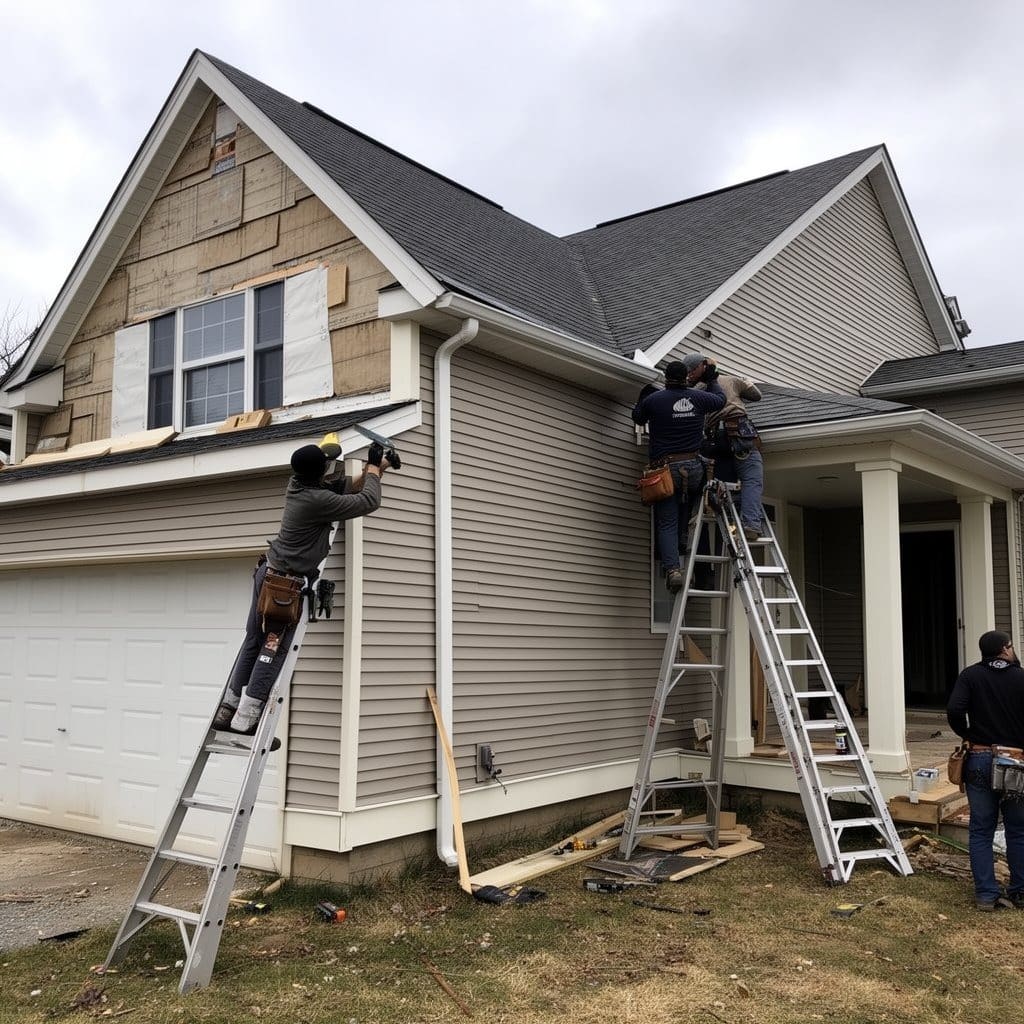
Lynnwood, WA – Building inspectors, home inspectors, and exterior contractors across Snohomish County are reporting a measurable increase in moisture-related damage traced back to substandard siding installation in Lynnwood, WA. The pattern is showing up during pre-sale inspections, insurance renewal assessments, and renovation projects where removing existing cladding reveals wall assemblies that were never properly protected. The findings are prompting a closer look at what separates a code-compliant siding installation from one that will cause structural problems within a few years of completion.
Why Siding Installation Quality Has Become a Pressing Issue in the Lynnwood Market
The Pacific Northwest’s climate does not forgive installation shortcuts. Western Washington receives sustained rainfall across eight to nine months of the year, and the Lynnwood area sits in a zone where exterior wall assemblies face continuous moisture pressure that amplifies every gap, missed fastener, and improperly sealed penetration.
What makes the current situation newsworthy is not that poor installation exists. It has always existed in every market. What is drawing attention now is the volume of failures appearing in properties that were sided within the last five to ten years, a period when both material options and installation standards were theoretically more advanced than in previous decades.
Industry professionals point to several contributing factors. The residential construction surge that followed the 2008 recession brought a large number of new entrants into the exterior contractor market, not all of whom had the training or experience to execute installations correctly. Material manufacturers updated their installation requirements during this period, and those updates were not uniformly communicated or followed in the field. The result is a cohort of residential properties across Snohomish County where siding installations that appeared acceptable on the surface are now revealing their deficiencies as materials age and moisture accumulates.
The Technical Gap Between a Passing Inspection and a Durable Installation
Washington State’s residential building code establishes minimum standards for exterior wall assemblies, but meeting the minimum standard and producing a durable installation are not the same thing. Code compliance is the floor, not the ceiling, and the distance between a code-minimum installation and a properly executed one can determine whether a home’s exterior performs well for 30 years or begins failing within a decade.
The critical variables are in the details that inspectors cannot always see. Housewrap installation that meets the letter of the code may still have horizontal laps running the wrong direction, allowing water to migrate behind the membrane rather than drain away from it. Flashing at window heads may be present but not integrated correctly with the housewrap, leaving a capillary pathway that channels water into the rough opening over time. Fiber cement panels may be installed at the correct minimum clearance from grade in accessible areas but left short at locations hidden by landscaping or deck framing.
None of these conditions trigger a failed inspection. All of them cause damage.
What Proper Siding Installations Require That Most Homeowners Do Not Know to Ask About
A correctly executed siding installation in the Pacific Northwest involves a sequence of steps that begins well before the first panel goes on the wall. The existing substrate must be evaluated for moisture content, levelness, and structural integrity. Any deteriorated sheathing must be replaced before new cladding is applied. The housewrap or weather-resistive barrier must be installed with shingle-style laps, taped seams at all penetrations, and properly integrated flashing at every opening.
Window and door openings require pan flashing at the sill, head flashing above the opening, and sill tape that creates a waterproof transition between the rough opening and the weather-resistive barrier. These steps are specified in manufacturer installation guides and referenced in the International Residential Code, but they require time, material, and skill to execute correctly. Contractors under cost or schedule pressure frequently abbreviate them.
At the cladding level, fastener placement, panel spacing, and joint treatment all affect long-term performance. Fiber cement requires specific fastener types and penetration depths to avoid cracking. Engineered wood products have defined edge distances that prevent moisture wicking at cut ends. Vinyl siding requires nail slot center-fastening and overlap dimensions that allow for thermal movement without buckling or pulling away from the wall.
How Homeowners Can Evaluate Siding Installation Quality Before and During a Project
The homeowner’s ability to evaluate siding installation quality is limited during the process because many of the critical steps are covered up as the work progresses. This makes pre-project contractor evaluation more important than in-progress inspection for most residential projects.
A local siding contractor with a verifiable track record in the Lynnwood market should be able to provide references from completed projects of similar scope, explain their housewrap and flashing approach in specific terms before the project begins, and supply manufacturer installation documentation for the products they intend to use. Contractors who respond to technical questions with vague assurances rather than specific answers are signaling a level of operational depth that may not match what the project requires.
During the project, homeowners who want to verify installation quality can request to see the housewrap and flashing work before it is covered by the cladding. A contractor who objects to a documented walkthrough at that stage is worth questioning. Reputable firms welcome the opportunity to show their process because the substrate work is where their technical investment is most visible.
Premier Siding and Exteriors operates in the Lynnwood market with an installation process built around manufacturer specifications and Washington State code requirements, reflecting the kind of technical standard that the region’s climate demands and that informed homeowners are increasingly requesting documentation before committing to a project.
The Financial Consequence of Getting Siding Installation Wrong
The cost difference between a properly executed siding installation and a shortcuts-driven one is not always visible in the initial project price. A contractor who skips pan flashing, uses staples instead of cap nails on housewrap, or installs panels without adequate clearances may price a project similarly to one who follows every step. The divergence shows up years later when the homeowner is paying for rot repair, mold remediation, or a full re-installation on top of structural repairs.
Insurance adjusters handling water intrusion claims in Snohomish County regularly identify improper siding installation as a contributing factor, and many standard homeowner policies contain exclusions for damage resulting from faulty workmanship. That exclusion means the financial consequence of a poor installation falls entirely on the property owner rather than the insurer.
For homeowners planning an exterior project in the current season, the case for prioritizing installation quality over project cost is grounded in that financial reality. Engaging a qualified contractor for siding installation in Lynnwood, WA who documents their process and follows manufacturer requirements is the decision that determines whether a siding project adds lasting value or deferred liability to a home.
The standard for what constitutes acceptable siding installation in Lynnwood, WA continues to rise as more homeowners, inspectors, and advisors understand what a properly executed exterior assembly actually involves. Owners who apply that standard at the contractor selection stage are the ones most likely to avoid the repair cycle that substandard installations consistently produce.
For information about siding installation standards and exterior wall assembly requirements in the Lynnwood area, consult a Washington State registered contractor or a certified home inspector familiar with Pacific Northwest residential construction.
