

Introduction
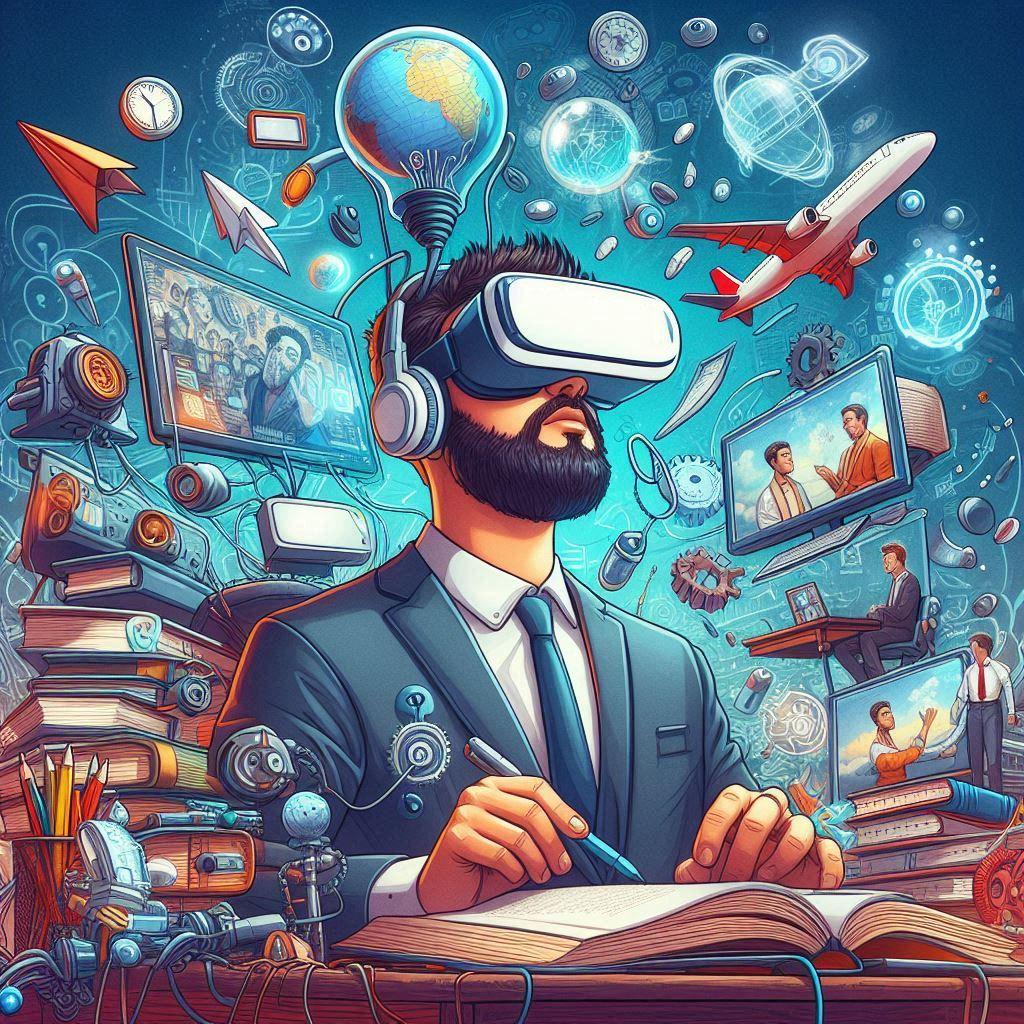
Virtual Reality (VR) has emerged as a game-changer in multiple industries, and education is no exception. As digital learning evolves, VR technology is paving the way for immersive and interactive educational experiences. Renowned innovator Samir Salih has been at the forefront of exploring how VR can reshape learning methodologies, making education more engaging and effective. In this article, we delve into Samir Salih’s insights on the role of Virtual Reality in education, its benefits, challenges, and future potential.
The Evolution of Virtual Reality in Education
Traditional learning methods often rely on passive consumption of information, such as reading textbooks, attending lectures, and watching videos. However, VR brings a paradigm shift by enabling active learning, where students engage in simulated environments, interact with virtual objects, and experience real-life scenarios in a controlled setting.
Samir Salih highlights that VR’s evolution in education has been accelerated by advancements in hardware and software. With the advent of affordable VR headsets and cloud-based applications, schools, universities, and training centers can now integrate VR into their curricula with greater ease. From virtual field trips to interactive science labs, the possibilities are endless.
Key Benefits of Virtual Reality in Education
1. Enhanced Engagement and Retention
Samir Salih emphasizes that one of the biggest challenges in education is student engagement. Studies show that immersive experiences improve memory retention and comprehension. When students can visualize abstract concepts—such as molecular structures in chemistry or historical events in history—they gain a deeper understanding of the subject matter.
2. Experiential Learning in a Safe Environment
Certain disciplines, such as medicine and engineering, require hands-on practice that can be costly or dangerous. VR eliminates these risks by allowing students to practice surgeries, explore construction sites, or even train for emergency responses in realistic yet risk-free simulations.
3. Global Accessibility and Inclusion
VR overcomes geographical and financial barriers to education. Samir Salih points out that students from remote areas or underprivileged backgrounds can access world-class education through VR, regardless of their location. Additionally, VR can cater to different learning styles, providing auditory, visual, and kinesthetic learners with a customized experience.
4. Bridging the Skills Gap
Industries such as manufacturing, aviation, and healthcare face a growing skills gap. Samir Salih advocates for VR-based training programs that provide practical, hands-on experience to students and professionals. This helps reduce the time and cost associated with traditional training while ensuring better skill acquisition.
Challenges of Implementing VR in Education
While the benefits are clear, Samir Salih acknowledges that there are challenges to widespread adoption of VR in education.
1. High Initial Costs
VR hardware and software can be expensive, especially for educational institutions with limited budgets. However, Salih notes that as technology advances, costs are gradually decreasing, making VR more accessible.
2. Need for Specialized Training
Teachers and educators must be trained to integrate VR into their lessons effectively. Samir Salih suggests collaborations between ed-tech companies and schools to develop teacher-friendly VR solutions and training programs.
3. Content Development and Integration
Creating high-quality VR content requires time and expertise. Educational institutions need support from developers and content creators to design VR modules that align with curriculums and learning objectives.
4. Health and Safety Concerns
Prolonged VR use can cause eye strain, dizziness, or motion sickness in some individuals. Salih recommends implementing time limits and ergonomic designs to ensure safe usage in classrooms.
The Future of VR in Education: Samir Salih’s Vision
Looking ahead, Samir Salih envisions an education landscape where VR is an integral part of mainstream learning. He predicts advancements such as:
- AI-powered VR tutors that provide personalized learning experiences.
- Haptic feedback technology for a more immersive experience, allowing students to “feel” virtual objects.
- Collaboration in virtual spaces, where students from different parts of the world can study together in shared VR environments.
- VR in lifelong learning, where professionals can upskill through continuous, immersive training programs.
Conclusion
Samir Salih’s insights on the role of Virtual Reality in education highlight its transformative potential. From increasing engagement and accessibility to revolutionizing skill-based training, VR is set to redefine how knowledge is acquired and retained. While challenges exist, ongoing technological advancements and strategic partnerships can help overcome these barriers.As VR continues to evolve, educators, policymakers, and tech innovators must collaborate to harness its full potential. The future of education is immersive, interactive, and driven by innovation—and Virtual Reality is leading the way.