
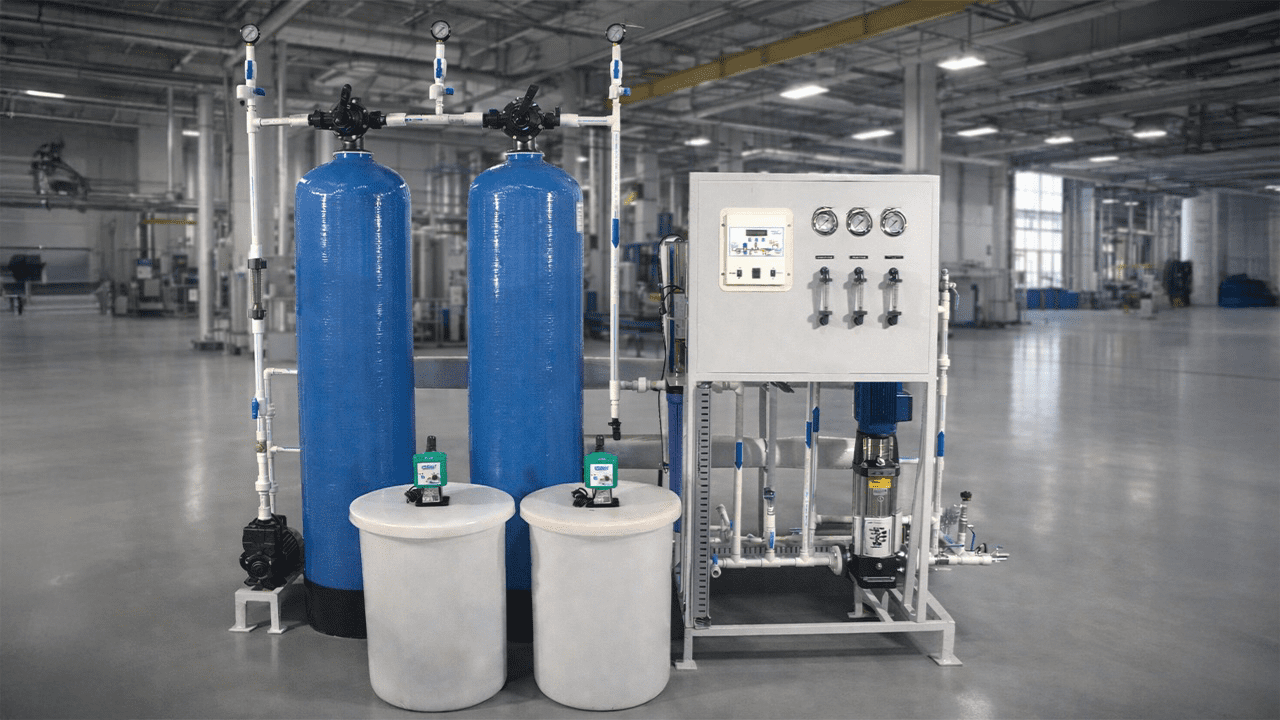
Selecting an RO plant involves more than just looking at the technology or the price tag. Capacity is one of the most important factors, yet it is often overlooked. The right capacity ensures a steady supply of purified water throughout the day, supports peak usage without strain, and helps keep operating costs under control.
Whether it is an office, an educational institution, a hospital, or an industrial facility, RO water plant capacity has a direct impact on day-to-day performance, system reliability, and long-term return on investment.
Understanding RO Plant Capacity in LPH
RO plant capacity is typically defined by the volume of purified water dispensed per hour under standard operating conditions. This capacity is measured in LPH (Litres Per Hour), which indicates how much treated water the system can produce in one hour. Common capacities such as 250 LPH, 500 LPH, and 1000 LPH, along with customisable higher outputs, are widely used across commercial and industrial sectors.
Factors That Influence RO Plant Capacity Selection
When evaluating the appropriate RO plant capacity, it is important to consider the following factors:
- Daily water requirement
- Peak usage hours
- Operating duration per day
- Inlet water quality and recovery rate
- Future expansion needs
A mismatch between demand and capacity can lead to water shortages, system overload, or unnecessary capital expenditure.
- 250 LPH RO Plant (Small Commercial Applications)
A 250 LPH RO plant is typically suited for low to moderate water demand environments.
Common usage includes:
- Small offices and co-working spaces
- Clinics and diagnostic centres
- Cafés, restaurants, and food outlets
- Training institutes
This capacity is well-suited for applications where water usage is predictable and evenly distributed throughout the day. From a RO plant price perspective, 250 LPH systems are generally more economical and easier to maintain, making them an ideal entry-level RO solution for commercial use.
- 500 LPH RO Plant (Medium Commercial and Institutional Use)
A 500 LPH commercial RO plant is designed to meet water requirements that exceed entry-level capacities while remaining practical for a wide range of commercial and institutional applications.
Suitable for:
- Medium to large offices
- Schools and colleges
- Hospitals and nursing homes
- Hotels and commercial kitchens
This capacity comfortably supports higher footfall and peak-hour consumption without compromising output consistency. Improved efficiency and reduced reliance on stored water make it a practical and reliable long-term solution for institutions.
- 1000 LPH RO Plant (High-Demand Commercial and Industrial Use)
A 1000 LPH RO plant is engineered for environments where water demand is continuous, high-volume, and critical to daily operations.
Typical use cases include:
- Large office campuses and IT parks
- Industrial canteens
- Food and beverage processing units
- Small-scale manufacturing facilities
At this capacity level, system design typically incorporates enhanced pre-treatment systems, higher recovery rates, and advanced automation features. While the water purifier plant cost increases with capacity, the ability to support uninterrupted operations and consistent output makes this investment both practical and justified.
- Customisable RO Plant Capacities for Industrial Applications
In many industrial settings, standard RO plant capacities may not be enough to meet specific process demands. Industries with high water consumption or strict quality requirements often require RO plants designed to suit their operating conditions. These systems can be configured for required output levels, recovery rates, and compatibility with existing water treatment setups.
In such situations, choosing the right RO plant is not based on capacity alone. Raw water quality, the number of treatment stages needed, process requirements, and the level of automation all influence the final system design. A well-planned, customisable RO plant helps ensure stable performance, efficient operation, and dependable water supply in industrial environments.
RO Plant Capacity Comparison for Commercial and Industrial Applications
| RO Plant Capacity (LPH) | Typical Daily Output* | Suitable Applications | Key Advantages | Considerations |
| 250 LPH | 2,000-3,000 litres | Small offices, clinics, cafés, training institutes | Lower initial cost, easy maintenance, compact footprint | Limited peak-hour handling, not suitable for expansion |
| 500 LPH | 4,000-6,000 litres | Medium to large offices, schools, hospitals, and hotels | Handles higher footfall, better output consistency, and reduced storage dependency | Requires proper inlet water quality management |
| 1000 LPH | 8,000-12,000 litres | IT parks, industrial canteens, food processing units, and small manufacturing | Supports continuous demand, higher efficiency, automation-ready | Higher capital cost, needs stronger pre-treatment |
| Custom Capacity | As per design | Large industrial processes, specialised manufacturing | Output matched to process needs, scalable, optimised recovery | Requires detailed water analysis and system planning |
Daily output estimates are based on 8-12 hours of operation and may vary depending on inlet water quality and system recovery rate.
Common Mistakes in Capacity Planning
Some common mistakes include:
- Choosing capacity based only on current usage
- Overlooking recovery losses in RO systems
- Ignoring future growth or scale-up needs
- Comparing the water plant machine price without assessing actual output efficiency
Proper capacity planning helps ensure consistent water availability and delivers better long-term return on investment.
Conclusion
Selecting the right RO plant capacity, whether 250 LPH, 500 LPH, 1000 LPH, or a custom setup, plays a key role in how reliably a system performs in commercial and industrial environments. When capacity matches actual demand, the RO plant delivers stable water quality, avoids operational strain, and keeps running costs in check.
Assessing daily usage, peak demand, and source water conditions helps ensure the water purifier plant remains efficient and adaptable over time. For facilities evaluating options across these capacity ranges, Aquaguard by Eureka Forbes provides commercial RO plants designed for real operating conditions. With proven system design, durable components, and dependable service support, Aquaguard helps organisations put RO solutions in place that continue to perform consistently in day-to-day commercial and industrial use.