
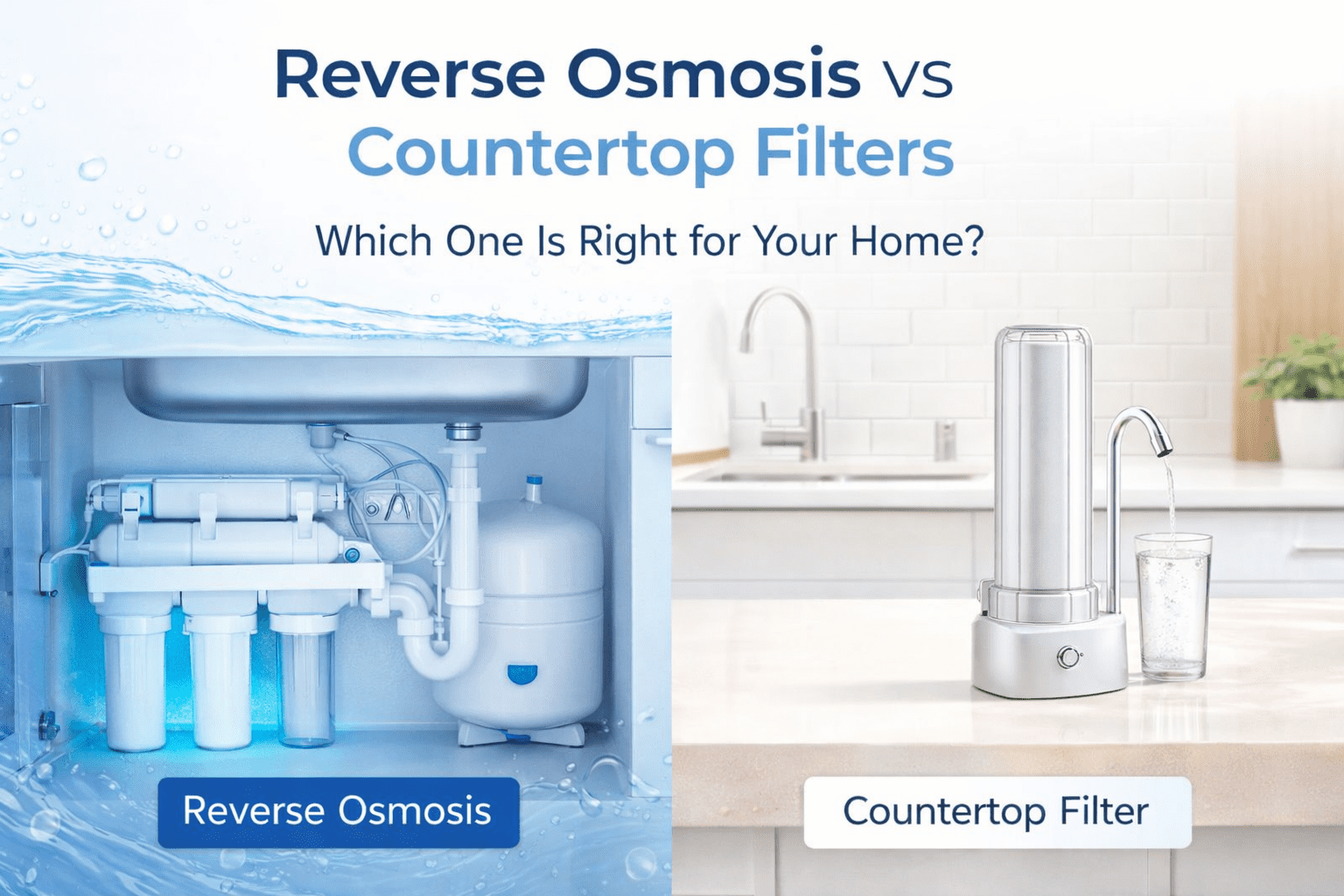
When it comes to upgrading your drinking water, most homeowners compare Reverse osmosis water filter systems with countertop filtration units. Both improve water quality, but they work in very different ways and serve different household needs.
Choosing the right system depends on your water source, contamination concerns, kitchen setup, and long-term goals. Let’s examine every important factor in detail so you can make an informed decision.
Side-by-Side Comparison
Below is a clear comparison of both systems across key performance and usability factors:
| Feature | Reverse Osmosis Water Filter Systems | Countertop Water Filters |
| Filtration Technology | Multi-stage with RO membrane | Carbon or ceramic filtration |
| Contaminant Removal | Removes TDS, heavy metals, fluoride, nitrates, chlorine | Reduces chlorine, taste, odour, sediment |
| Water Purity Level | Very high purification (low TDS) | Moderate improvement |
| Installation | Under-sink, requires plumbing connection | Connects to tap, no permanent installation |
| Kitchen Space Impact | Hidden under sink | Sits on countertop |
| Upfront Cost | Higher initial investment | Lower initial cost |
| Maintenance | Annual filter changes, membrane every few years | More frequent cartridge replacement |
| Best For | Long-term use, high contaminant concerns | Renters, basic taste improvement |
| Water Pressure | Separate dispensing tap | Uses regular tap flow |
What Makes Reverse Osmosis Different?
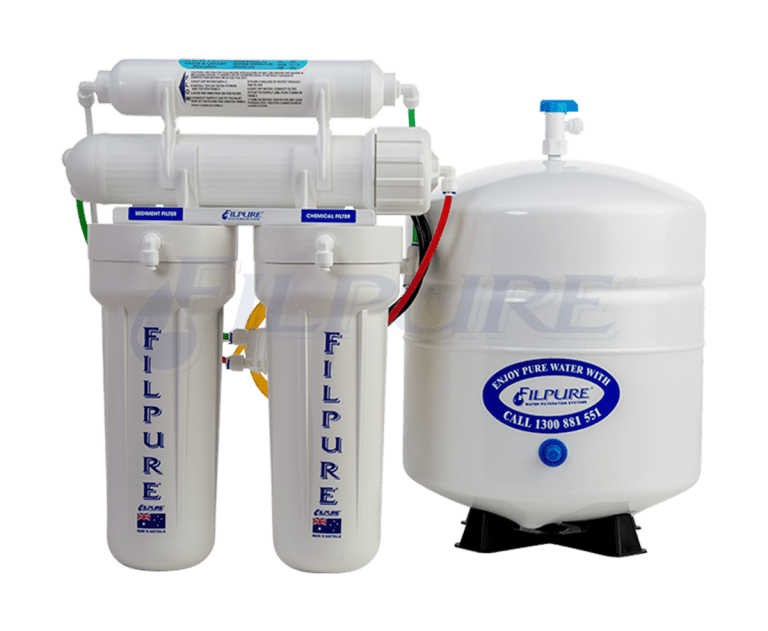
Reverse osmosis (RO) is one of the most advanced water purification technologies used in residential filtration. Unlike basic carbon filters that mainly improve taste, reverse osmosis uses a semi-permeable membrane to remove dissolved solids at a microscopic level.
A standard RO setup usually includes sediment pre-filtration, activated carbon stages, the RO membrane itself, and post-filtration polishing. Some systems also include remineralisation cartridges to balance pH and restore essential minerals like calcium and magnesium.
Because of this multi-stage filtration process, reverse osmosis can significantly reduce:
- Total Dissolved Solids (TDS)
- Heavy metals such as lead
- Fluoride
- Nitrates
- Chlorine and chemical residues
- Certain microorganisms
This makes RO systems particularly suitable for households concerned about long-term exposure to contaminants or poor municipal water quality.
How Countertop Water Filters Work
Countertop water filters are much simpler in design. They sit directly on the kitchen bench and connect to your tap through a diverter valve. Most use activated carbon and sometimes ceramic filtration.
Their primary function is to improve taste, remove chlorine, reduce odours, and filter visible particles. They are effective for basic water improvement, especially in areas where water is already treated but has an unpleasant taste or smell.
However, countertop filters generally do not remove dissolved salts, heavy metals, or fluoride at the same depth as reverse osmosis systems.
Filtration Depth and Water Purity
This is where the major difference lies.
Reverse osmosis water filter systems operate at a molecular level. The membrane blocks contaminants that are too small for standard carbon filters to capture. As a result, the output water typically has very low TDS levels and a noticeably clean, neutral taste.
Countertop filters enhance water quality but do not fundamentally change its mineral content. If your concern is primarily chlorine taste, they perform well. If your concern involves dissolved contaminants, RO offers far greater purification capability.
Installation and Kitchen Integration
Reverse osmosis systems are usually installed under the sink and connected to the plumbing. They require a dedicated faucet and sometimes a small storage tank. While installation is more involved, the result is a clean, integrated solution that keeps the kitchen surface clutter-free.
Countertop filters require no permanent plumbing changes. They are portable and ideal for renters or temporary living situations. Installation takes only minutes, which makes them attractive for users who prefer flexibility.
Maintenance and Long-Term Costs
Reverse osmosis systems involve replacing pre-filters and post-filters annually, while the membrane typically lasts several years depending on water quality. Although the initial investment is higher, the cost per litre of purified water becomes economical over time.
Countertop filters have lower upfront costs but smaller cartridges. Depending on usage, filter replacements may be needed more frequently.
In terms of durability and long-term performance, reverse osmosis systems generally offer greater value for households with consistent daily water consumption.
Health Considerations and Water Safety
For families concerned about heavy metals, fluoride, agricultural runoff, or ageing pipe infrastructure, reverse osmosis offers a higher level of reassurance. It is widely used in residential, commercial, and even medical settings due to its purification efficiency.
Countertop filters are better suited for improving already safe municipal water rather than addressing complex contamination concerns.
Environmental Impact
Both systems significantly reduce reliance on bottled water, lowering plastic waste and long-term environmental impact. Reverse osmosis systems do produce some wastewater during filtration, but modern systems are increasingly designed to improve water efficiency.
From a sustainability perspective, both options are more environmentally responsible than continuous bottled water consumption.
Wrapping Up; Which One Is Best?
If your priority is maximum contaminant removal, low TDS water, and long-term reliability, reverse osmosis water filter systems clearly provide superior purification.
If you want a convenient, low-commitment solution that improves taste without complex installation, countertop water filters are practical and accessible.
The best choice ultimately depends on your water quality concerns, budget, installation flexibility, and performance expectations.
Frequently Asked Questions
✦ Does reverse osmosis remove beneficial minerals?
Yes, reverse osmosis removes most dissolved minerals. Many systems now include remineralisation filters to restore healthy mineral balance.
✦ Are countertop filters enough for heavy metal removal?
Most countertop filters focus on chlorine and taste improvement. They are not typically designed for comprehensive heavy metal reduction.
✦ Is reverse osmosis water safe for daily use?
Yes. Reverse osmosis is widely recognised as a safe and effective purification method for residential drinking water.
✦ Which option is better for renters?
Countertop filters are generally more suitable because they require no permanent installation.