
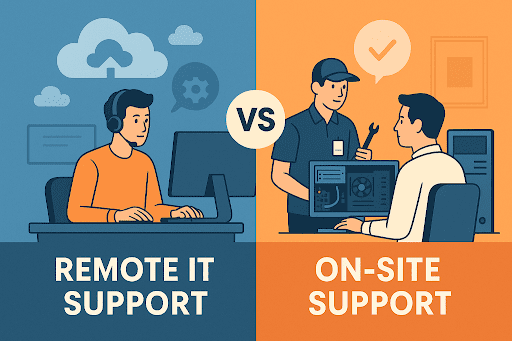
Western Canada is a massive region with long distances, harsh winters, and industries that depend on uptime. From small offices in Vancouver to field teams in Alberta or remote operations in Saskatchewan, IT leaders are asking one question:
Is remote IT support enough, or do you still need on-site technicians to stay productive?
Let’s break it down using real-world patterns, regional dynamics, and what Western Canadian businesses actually struggle with.
Understanding How Western Canada’s Geography Impacts IT Support
Western Canada isn’t like other markets. You’re dealing with:
- Long travel distances between sites
- Sudden storms that cut road access
- Rural areas with limited local IT professionals
- Industries relying heavily on uptime (construction, logistics, mining, energy)
This region naturally pushes to rely on remote IT support companies. But on-site still plays a major role, especially when physical hardware needs attention.
What Remote IT Support Canada Offers (And Why It’s Growing Fast)
For most SMBs, remote support handles 80-90% of IT issues. It’s popular because it delivers:
1. Faster Resolution
Remote teams can access your systems instantly.
No travel time.
No weather delays.
When someone can’t log in, needs Desktop Support, or gets hit with a software glitch, remote service solves it immediately.
2. Lower Costs
You’re not paying for travel or hourly on-site callouts.
Most providers price remote support in predictable packages.
3. Better for Distributed Teams
If you have staff in multiple Western provinces, remote IT becomes essential.
4. Works Well With Cloud and Hybrid Infrastructure
Microsoft 365, Azure, Google Workspace, and line-of-business SaaS apps can be monitored and managed remotely.
Ideal for:
Vancouver offices • Calgary SMBs • Remote-first teams • Hybrid workplaces • Service businesses • Multi-location operations
When On-Site IT Support Is Still Essential
Even remote-first companies eventually need technicians physically present.
1. Hardware Failures
Servers. Switches. Workstations. Printers. POS systems.
Somebody has to touch the device.
2. Cabling, Network Upgrades, Physical Installs
No remote session can run Ethernet.
3. Warehouses, Clinics, and Facilities
Some work environments require on-site:
- Surveillance system support
- Wi-Fi tuning
- Access control
- Emergency recovery after power outages
4. When Weather or Environment Causes Damage
Western Canada gets ice storms, humidity issues, power fluctuations, and equipment failures.
A remote team can diagnose, but someone must replace hardware.
Ideal for:
Warehouses • Retail • Industrial sites • Clinics • Local offices • Multi-floor buildings
The Hybrid Model – The Real Winner in Western Canada
Most successful Western Canadian businesses run a hybrid IT support model:
- Remote support resolves day-to-day user issues, provides software troubleshooting, and monitors and secures cybersecurity.
- On-site support handles hardware, new setups, repairs, and environmental disruptions.
This model reduces costs while maintaining high uptime.
Comparing Remote vs On-Site Support for Western Canada
| Feature | Remote IT Support | On-Site IT Support |
| Speed | Instant | Depends on travel time + weather |
| Cost | Lower | Higher (travel + labour) |
| Hardware fixes | No | Yes |
| Best for | Users, software, cloud | Equipment, installations |
| Uptime reliability | High | Variable |
| Weather dependency | None | High |
| Scalability | Easy | Limited |
Final Verdict:
Western Canada’s geographic spread makes remote IT support essential, but on-site technicians remain critical for physical problems. A blended strategy ensures stability, speed, and cost-efficiency.
How SMBs Should Decide Which Support Model to Use
If your business is cloud-based → Remote-first
You’ll save money and get rapid help.
If you rely on specialized equipment → On-site is unavoidable
Manufacturing, retail, and healthcare all require hardware support.
If you operate across multiple cities → Hybrid is the safest choice
Remote nationwide coverage + regional tech partners = perfect balance.
If you want predictable budgeting → Remote + fixed-rate on-site
Many Canadian MSPs now bundle Additional IT Services with on-site credits.
Regional Factors That Make Western Canada Unique
1. Harsh Winters
Snowstorms can delay on-site techs by hours, or days.
Remote support keeps services running.
2. Rural and Remote Locations
Northern BC, Yukon border areas, and Prairie towns often lack local IT staff.
Remote support becomes crucial.
3. High Fuel and Travel Costs
Driving a tech from Calgary to Red Deer or from Surrey to Abbotsford isn’t cheap.
4. Long-Distance Logistics
Many sites are separated by hours, not minutes. Remote-first models solve most issues before travel is even considered.
Key Takeaways
- Remote IT support handles 80–90% of issues quickly and cost-effectively.
- On-site support is irreplaceable for hardware, installs, and physical repairs.
- Western Canada’s geography and climate make remote-first models more efficient.
- The hybrid approach gives businesses the best balance of uptime, speed, and cost stability.
Read this blog for more Information.