
When anxiety spikes, it can take over fast—racing thoughts, tight chest, difficulty focusing, and a strong urge to avoid what’s in front of you. If you’re juggling work, family, and endless tabs in your brain, you need tools that work in minutes, not months. The good news: there are practical strategies you can learn and practice today.
Cognitive behavioral therapy (CBT) is a skills-based approach that helps many adults understand what fuels anxiety and how to interrupt it. You don’t have to memorize a textbook to get benefits. With a few clear steps, you can reduce anxiety quickly, make better decisions under pressure, and feel more in control—without pretending everything is fine.
Why This Matters
Anxiety doesn’t only show up during major crises; it creeps into everyday moments. You might delay an email because it must be “perfect,” skip a workout because your mind is too loud, or wake up at 3 a.m. replaying conversations. Over time, these patterns drain energy and increase stress. Avoidance offers short-term relief, but it often grows the fear and makes re-entry harder. That’s where structured support can help. CBT gives you a roadmap to notice what’s happening in your body, name the thoughts driving your worry, and choose small, doable actions that rebuild confidence. Whether you’re considering adult therapy for the first time or returning after a break, skills like these can complement your routine and provide reliable anxiety support when you need it most.
What Therapy Can Offer
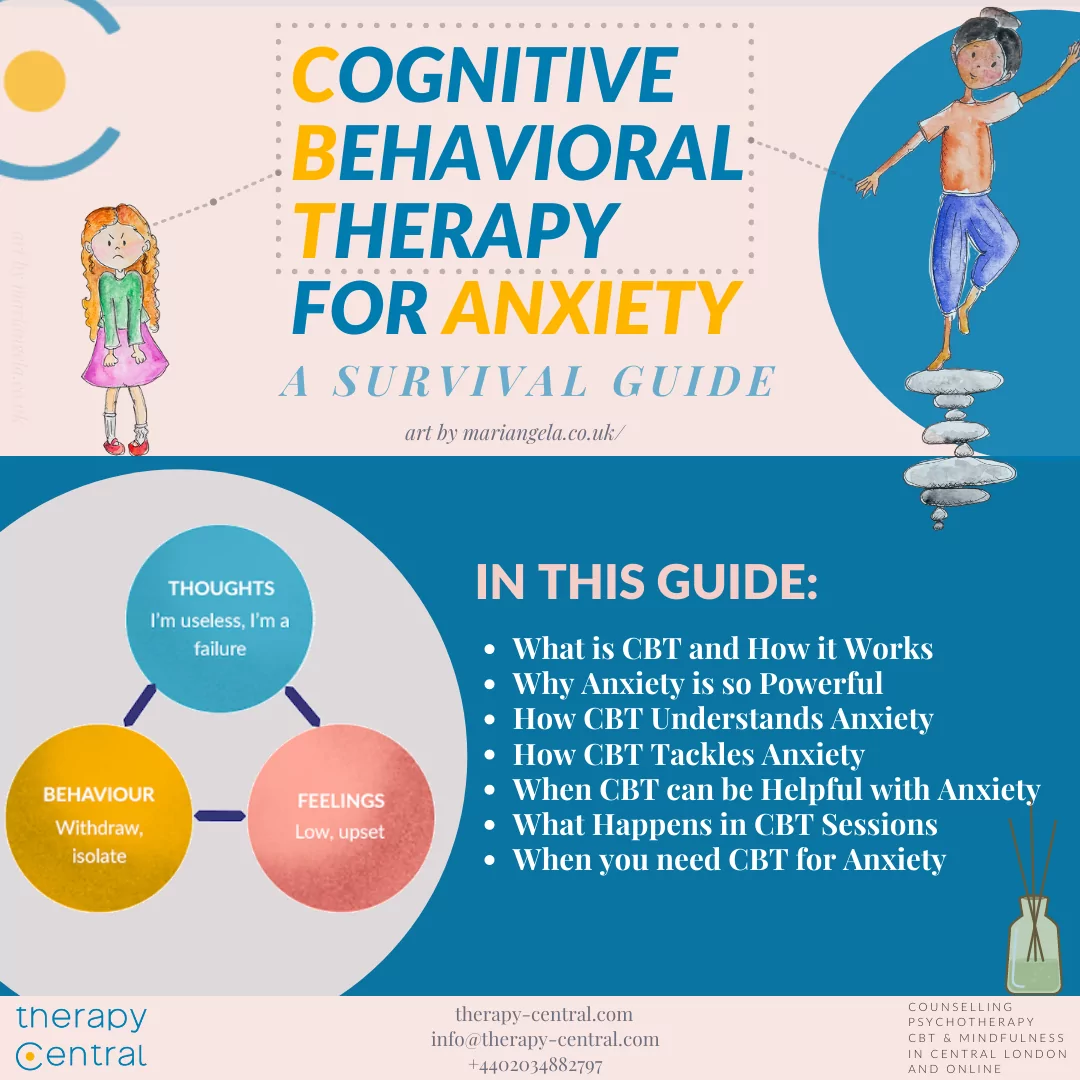
Cognitive behavioral therapy focuses on three core areas: thoughts, feelings, and behaviors. You learn to spot patterns quickly, experiment with new responses, and measure what helps. Here are three practical moves you can start using now: First, catch-and-check your thoughts. When a surge hits, write a single sentence that captures the worry (for example, “If I speak up, I’ll embarrass myself”). Then ask three questions: What is the evidence for and against this? What’s an alternative, balanced explanation? If the worst happened, how could I cope? This short process reduces mental swirl and helps you choose a calmer next step. Second, regulate your body before problem-solving. Try a 90-second slow-breath cycle: inhale through the nose for 4, hold for 2, exhale for 6. Repeat three times. Add a quick grounding scan—notice five things you see, four you feel, three you hear, two you smell, one you taste. Calming your nervous system makes thinking easier. Third, take one small, values-aligned action. Anxiety shrinks when you gently approach what you’ve been avoiding. Send the draft, take the call, or walk for ten minutes. Tiny, repeated actions rebuild trust in yourself and reduce future panic. In therapy, these moves are personalized to your triggers, and your therapist tracks progress with you—practical, supportive, and focused on what matters to you.
Learn from Experts
Want a simple, reliable starting point? For a deeper look, read CBT tips for anxiety on Quick Counseling. It breaks down evidence-based steps you can practice right away and explains how to fit them into a busy day.
Your Next Steps
- Name your trigger in one sentence (“Presentation tomorrow,” “Difficult email,” “Crowded commute”). Labeling the situation reduces ambiguity and helps you decide your next move.
- Write a quick thought–feeling–action snapshot. One thought, one feeling word, one action you’re tempted to take. This creates a pause between urge and behavior.
- Run the three-question thought check: evidence for/against, an alternative explanation, and how you would cope if the worst happened. Pick the most balanced thought to guide your decision.
- Reset your body with 90 seconds of slow breathing and a brief 5-4-3-2-1 grounding scan. If your heart rate drops even slightly, you’ll think more clearly and act more intentionally.
- Schedule one 10-minute, values-based action today: send the email, take a walk, tidy one shelf, or text a friend. Small wins add up and make the next step easier. If you want more structure, consider adult therapy with a CBT-trained clinician for personalized anxiety support.
Learn more about managing stress and finding the right therapist through the link above.