
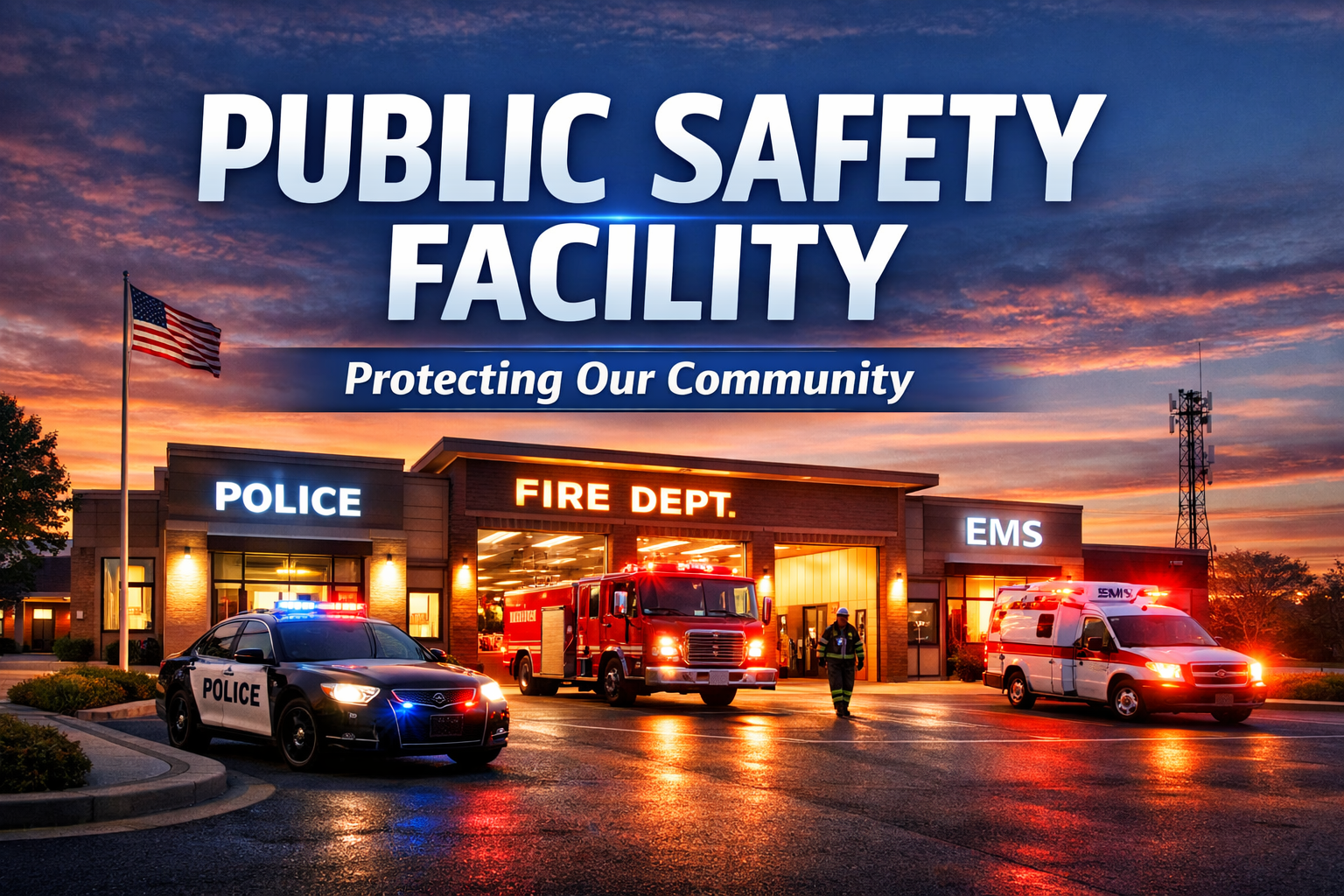
A public safety facility is a centralized space designed to support the core services that keep communities safe and prepared. These facilities house critical functions such as law enforcement, fire response, emergency medical services, and coordinated disaster response.
In essence, a public safety facility serves as a hub for the resources and personnel that respond to emergencies and safeguard daily public life. Public safety facilities are more than just buildings. They are operational centers where strategy meets action.
where training becomes readiness, and where community trust is strengthened. The design and operation of these facilities are shaped by the evolving needs of the population they serve, advances in technology, and modern expectations for rapid, effective emergency response.
Why Public Safety Facilities Matter
Public safety facilities matter because they are the backbone of emergency response and community protection. Without organized, well equipped, and strategically located facilities, response times increase and coordination becomes fragmented.
These facilities allow professionals to work together, share information in real time, and deploy resources where they are needed most. In daily life, public safety facilities support routine calls for assistance. They are where a dispatch operator answers a 911 call.
where firefighters prepare for rapid exit on every siren, and where police officers return to after patrolling neighborhoods. During large‑scale events, natural disasters, or public health emergencies, these facilities become command centers for coordinated action that affects entire regions.
Core Components of a Public Safety Facility
A typical public safety facility combines several key components. Each part has a specific function but is integrated for seamless operations. At the heart of most public safety facilities is the dispatch center. This is where emergency calls are received, prioritized, and assigned.
Dispatcher teams work around the clock, often using sophisticated communication systems to connect callers with the right responders. The operations wing houses personnel for fire, police, and emergency medical services. In many modern facilities,
This space includes living quarters, training areas, equipment rooms, and garages for emergency vehicles. The physical layout is designed to minimize response time and support teamwork.
A growing trend in public safety facilities is the inclusion of emergency operations centers (EOCs). These spaces serve as coordination hubs during disasters and large emergencies. EOCs bring together representatives from different agencies to plan, redirect resources, and communicate with local leadership.
Evolution of Public Safety Facility Design
Public safety facility design has evolved significantly over the past few decades. Earlier models were functional but separated by department and purpose. Police stations were built on one corner of town, fire stations in designated districts, and dispatch services in another siloed location.
Modern design philosophy emphasizes integration, flexibility, and resilience. Today’s facilities consider how multiple services can work side by side, share information, and optimize response.
- For example: noise reducing building materials allow dispatch operations to stay calm even when fire engines are starting up nearby.
Another trend is the inclusion of community spaces. Some public safety facilities offer educational areas where residents can learn about fire safety, disaster preparedness, and crime prevention. This reflects a broader understanding that public safety is not solely reactive but also proactive.
Sustainable design principles are also shaping new facilities. Energy‑efficient systems, resilient backup power, and environmentally friendly construction contribute to reliability and reduced operating costs. Because public safety facilities must remain functional under adverse conditions, resilience is a core design priority.
The Role of Technology in Public Safety Facilities
Technology plays a central role in the effectiveness of public safety facilities. Advanced dispatch systems now use computer‑aided dispatch tools that track units in real time, optimize routing, and integrate data from traffic and weather systems.
This speeds decision‑making and enhances situational awareness. Surveillance, sensors, and data analytics are increasingly integrated into facility operations. For instance, video feeds from public cameras can be routed into the emergency operations center to give real‑time insights during unfolding incidents.
Predictive analytics help agencies anticipate peak demand periods and allocate resources more efficiently. Communication systems have also advanced. Digital radio networks, encrypted channels.
Interoperability standards allow agencies to talk with one another during joint responses. This level of connectivity would have been impossible a generation ago. Modern public safety facilities also support remote access for flexible coordination during widespread emergencies.
Public Safety Facility Standards and Regulations
Public safety facilities must meet strict standards and regulations to ensure safety, operational effectiveness, and community trust. These standards cover structural integrity, emergency preparedness, accessibility, and technology infrastructure.
- For example: facilities typically have backup power systems, robust cybersecurity measures, and redundant communication lines.
In many countries, building codes require public safety facilities to withstand local risks such as earthquakes, hurricanes, or floods. Fire safety systems, hazardous materials protocols, and secure evidence storage are also standard requirements in facility planning.
Regulatory oversight extends to operational procedures as well. Agencies must document response protocols, training records, and interagency agreements to maintain certifications and funding. These administrative standards reinforce accountability and continuous improvement.
Benefits to the Community
A well‑designed public safety facility provides tangible and intangible benefits to the community. Tangibly, it improves response times for fire suppression, crime intervention, and medical emergencies. Faster, coordinated responses reduce the severity of incidents and save lives.
Intangibly, these facilities contribute to a sense of security and trust. When residents know that emergency services are organized, trained, and reachable, they feel safer. Public engagement through educational programming further strengthens citizen confidence in local institutions.
Investment in public safety facilities also supports economic stability. Businesses and property owners value reliable emergency services because they help protect assets and maintain normal operations. Proactive preparedness reduces the long‑term cost of disaster recovery and fosters community resilience.
Challenges in Planning and Operation
Despite their importance, public safety facilities face ongoing challenges. Funding is often a major constraint. Constructing and maintaining these facilities requires substantial investment, and budgets must balance competing community needs.
In some regions, outdated buildings struggle to keep up with modern demands for technology and space. Another challenge is workforce sustainability. Recruiting, training, and retaining skilled personnel across multiple emergency disciplines requires significant resources and strategic planning.
Staff burnout, especially in high demand urban areas, can affect service quality. Interagency coordination remains complex. Each service fire, police, EMS has its own culture, procedures, and priorities. Building a facility that truly supports seamless collaboration requires thoughtful design, ongoing communication, and shared leadership values.
Public Safety Facility in Action Real User Thoughts
To ground this topic in real experience, here are some genuine thoughts and reviews from people who live or work around public safety facilities. One community leader, Malik from Springfield, said a new integrated safety complex transformed local response capability.
He noted that before the facility was built, fire and police were located miles apart, and communication gaps slowed critical action. After the new facility opened, response times shortened and trust in emergency services rose.
A firefighter named Rosa shared her perspective on daily operations. She pointed out that having training spaces right inside the facility means her team stays sharp and ready. She also appreciated the mental health support areas built into the station, which help crews manage stress after tough calls.
A local resident, Aisha, spoke about how accessible educational workshops at the public safety center helped her family prepare for natural hazards common in their area. She felt that understanding evacuation routes and emergency kits made her feel more confident, not scared, during hurricane season.
Trends Shaping the Future
Looking ahead, several trends are shaping the future of public safety facilities. One significant trend is community integration. Planners increasingly see these facilities as more than emergency hubs; they are community anchors. This means more public meeting spaces, educational partnerships with schools, and outreach programs designed to strengthen public relations.
Another trend is data‑informed decision making. Facilities will continue to incorporate advanced analytics to anticipate risk, optimize staffing, and direct resources where they are most likely to be needed. This data focus will also support transparency, as communities seek more insight into how safety services operate and perform.
Smart infrastructure is also on the rise. As cities adopt connected systems, public safety facilities will serve as nodes in larger urban networks. Sensors, automated alerts, and integrated public communications will contribute to more proactive safety measures.
Measuring Success and Impact
Measuring the success of a public safety facility goes beyond counting incidents responded to. Quality metrics now include community satisfaction, reduction in long‑term damage from disasters, and improvements in interagency collaboration.
Agencies track response times, training outcomes, public feedback, and system reliability. Impact assessments consider both quantitative and qualitative factors.
Shorter emergency response times and reduced loss of life are critical but so are community perceptions of safety and trust in public institutions. Strong public safety facilities contribute to a broader sense of well‑being and stability.
Conclusion
Public safety facilities are essential infrastructure for any community that values security, readiness, and coordinated emergency response. They bring together dispatch operations, fire services.
law enforcement, and emergency management under one strategic roof. Through thoughtful design, advanced technology, and community engagement, these facilities elevate how services respond to daily needs and extraordinary crises alike.
As demands on public safety continue to grow so too will the role of these facilities in shaping resilient, prepared, and confident communities. They are more than buildings. They are centers of readiness, connection, and public trust.
FAQs
What is a public safety facility?
It’s a centralized location for emergency services like police, fire, and medical response.
Why are public safety facilities important?
They reduce response times, improve coordination, and strengthen community safety.
What services are included in these facilities?
Police, fire, emergency medical services, dispatch centers, and training areas are commonly included.
How are modern facilities designed?
They integrate technology, support multiple agencies, and include community and training spaces.
Can public safety facilities withstand disasters?
Yes, they follow strict standards for structural resilience, backup power, and emergency preparedness.
How do they benefit the local community?
They provide faster emergency response, public education, and foster trust and safety awareness.