

A round-trip first class ticket from New York to Cancun costs about $2,200 per person in 2026. A private jet for the same route runs roughly $30,000 for a midsize aircraft. On the surface, that comparison makes charter look absurd.
But nobody buys eight first class seats when they’re traveling alone. And nobody charters a jet built for twelve when four people are flying. The actual question isn’t whether private costs more—it does—but whether the gap is as wide as people assume, and what you’re actually getting for the difference.
Here’s what the numbers look like when you break them down properly.
The Baseline Costs: What You’re Actually Comparing
Round-trip first class tickets to Cancun from major North American cities in 2026:
- New York (JFK/EWR): $2,000 – $2,400
- Toronto (YYZ): $2,200 – $2,600
- Chicago (ORD): $1,900 – $2,300
- Los Angeles (LAX): $2,100 – $2,500
- Miami (MIA): $1,600 – $1,900
- Dallas (DFW): $1,700 – $2,100
Those prices reflect standard booking windows—three to eight weeks in advance. Book last minute or during peak season (Christmas week, spring break), and you’re looking at 40% to 60% premiums. First class from Toronto to Cancun during the March break can hit $3,500 per person.
Private jet charter costs for the same routes, round-trip:
- New York to Cancun: $28,000 – $32,000 (midsize jet, 8 passengers)
- Toronto to Cancun: $30,000 – $34,000 (midsize jet, 8 passengers)
- Chicago to Cancun: $24,000 – $28,000 (midsize jet, 8 passengers)
- Los Angeles to Cancun: $38,000 – $44,000 (heavy jet, 12 passengers)
- Miami to Cancun: $18,000 – $22,000 (light jet, 6-7 passengers)
- Dallas to Cancun: $20,000 – $24,000 (light jet or midsize, 6-8 passengers)
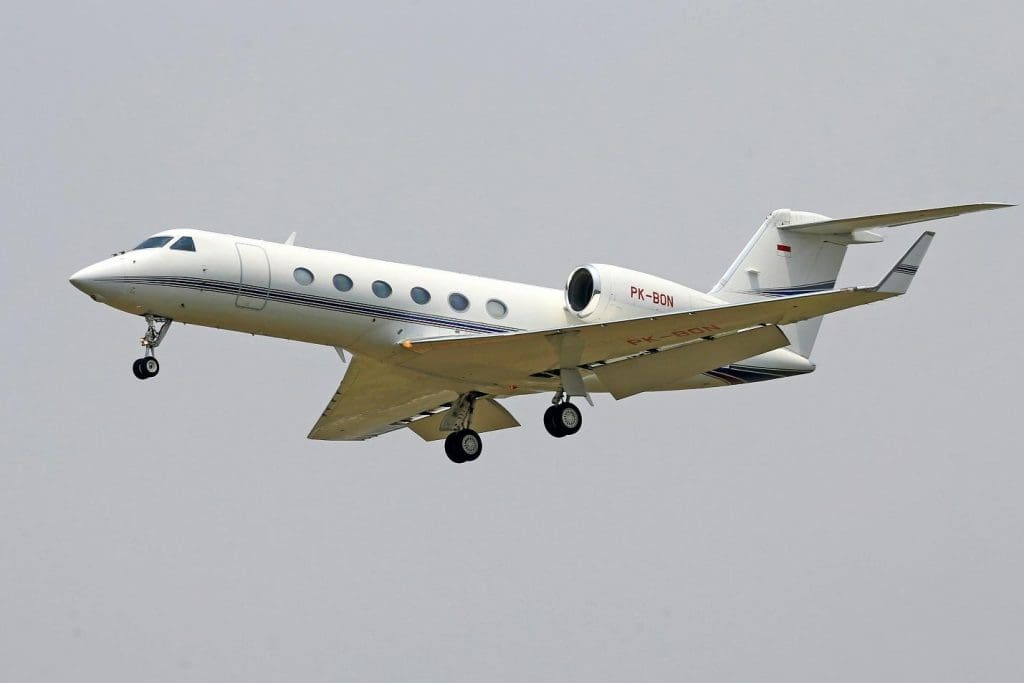
A midsized jet on flight
Charter pricing fluctuates based on aircraft availability, time of year, and fuel costs. These figures represent typical rates with standard two-week booking windows. Peak season adds 10% to 20%. Last-minute charters (less than 72 hours) can add 30% to 50%.
The Per-Person Math at Different Group Sizes
Take the New York to Cancun route as the baseline example. A midsize jet costs $30,000 round-trip and seats eight passengers comfortably.
At 2 passengers: $15,000 per person for charter vs $2,200 for first class. Charter costs 6.8x more. This is where private aviation makes zero financial sense unless your time is extraordinarily valuable or you have specific needs first class can’t meet.
At 4 passengers: $7,500 per person for charter vs $2,200 for first class. Charter costs 3.4x more. Still expensive, but the gap is narrowing. If each person values their time at $200/hour and the charter saves 4 hours each direction (which it will), you’re recovering $1,600 in time value per person. Effective charter cost: $5,900 per person—still 2.7x first class, but closer.
At 6 passengers: $5,000 per person for charter vs $2,200 for first class. Charter costs 2.3x more. Add the time value ($1,600 per person) and you’re at an effective $3,400 per person—now just 1.5x first class. For families or groups where schedule control matters, this starts making sense.
At 8 passengers: $3,750 per person for charter vs $2,200 for first class. Charter costs 1.7x more. Factor in time savings ($1,600) and you’re at an effective $2,150 per person—actually slightly cheaper than first class when you account for recovered hours.
This assumes you value time at $200/hour. Adjust that number up or down based on your actual earnings or opportunity cost, and the break-even point shifts accordingly.
What First Class Doesn’t Include
Commercial first class tickets cover your seat and basic amenities. They don’t cover:
Baggage fees for sports equipment: Bringing ski gear, golf clubs, or diving equipment to Cancun? Airlines charge $150 to $200 per bag each direction. Four people with gear? That’s $1,200 to $1,600 in fees that don’t exist on a charter where you simply use the luggage compartment.
Pet transport: Airlines charge $200 to $400 per direction for in-cabin pets under 20 pounds. Anything larger goes in cargo, which most travelers refuse. Private jets accommodate pets of any size in the cabin at no charge. For families who won’t leave their dog behind, this isn’t optional spending—it’s a requirement the charter satisfies that commercial flight can’t.
Flexibility penalties: Change a first class ticket and you’re paying $200 to $400 in fees plus fare differences. Charter lets you adjust departure times up until about 24 hours before the flight with minimal penalties. That flexibility has real value for business travelers whose meetings run long or families dealing with unexpected schedule changes.
Ground transport at FBO terminals: Charter passengers deplane at private terminals with vehicle access directly outside. No taxi queues, no ride-share surge pricing, no confusion. First class passengers fight the same ground transport chaos as economy passengers once they leave the arrival gate.
The Time Value Calculation
This is where charter economics shift most dramatically. The actual flight time between New York and Cancun is nearly identical whether you’re in a Boeing 737 or a Citation Excel—both cruise around 450 to 480 knots. The time difference is everything that happens on the ground.
Commercial first class timeline from Manhattan to Cancun Hotel Zone:
- Departure prep and drive to JFK: 90 minutes
- Recommended airport arrival (TSA PreCheck, but it’s winter and the airport is packed): 90 minutes before departure
- Check-in, security, walk to gate, boarding: actual time spent, 45-60 minutes
- Flight time: 4 hours
- Deplane, immigration queue, baggage claim, customs: 75-90 minutes at CUN during high season
- Ground transport from main terminal to Hotel Zone: 45 minutes
Total door-to-door: 8.5 to 9 hours
Private charter timeline from Manhattan to Cancun Hotel Zone:
- Drive to Teterboro FBO: 40 minutes
- Arrive at FBO: 15 minutes before departure
- Walk from vehicle to aircraft: 2 minutes
- Flight time: 3 hours 45 minutes
- Deplane at private terminal, expedited customs: 15 minutes
- Ground transport from FBO to Hotel Zone: 45 minutes
Total door-to-door: 5 hours
You’ve saved 3.5 to 4 hours on the outbound leg. The return trip offers similar savings. Round-trip, you’re recovering 7 to 8 hours of your life that you’re not spending in airports.
What are those hours worth? If you’re a corporate executive earning $400K annually, your time is worth roughly $200 per working hour. Eight hours saved equals $1,600 in value. For two people at that level, it’s $3,200. For a family of four where both parents earn at that rate, it’s $6,400 in recovered time value.
That changes the cost equation substantially. A $30,000 charter minus $6,400 in time value equals an effective cost of $23,600 for four people, or $5,900 per person. You’re still paying a premium over the $2,200 first class ticket, but it’s $3,700 more, not $13,800 more.
When Charter Becomes Cost-Competitive
The break-even points vary by route distance, aircraft type, and how you value time.
Short routes (under 1,000 nautical miles): Miami to Cancun, Houston to Cancun, Dallas to Cancun. Light jets work perfectly here, bringing charter costs down to $18,000 to $22,000 round-trip. At 6 passengers, you’re paying $3,000 to $3,667 per person. First class runs $1,600 to $2,100 on these routes. The gap is narrower, but charter still costs about twice as much on pure ticket price. Factor in 3 hours of time savings per person round-trip at $150/hour, and charter effective cost drops to $2,550 to $3,217 per person—competitive with first class during peak pricing periods.
Medium routes (1,000 to 1,600 nautical miles): New York, Toronto, Chicago to Cancun. Midsize jets make sense. At 8 passengers, charter costs $3,500 to $4,000 per person. First class costs $2,000 to $2,400. Add 4 hours of saved time per person round-trip valued at $150/hour ($600 in value), and charter effective cost is $2,900 to $3,400 per person. You’re within 20% to 40% of first class pricing while getting dramatically more convenience and control.
Long routes (1,600+ nautical miles): Los Angeles, San Francisco, Seattle to Cancun. You want a heavy jet for comfort on these 4-to-5-hour flights. A Challenger 604 seats 12 and costs $42,000 to $48,000 round-trip from LAX. At 10 passengers, that’s $4,200 to $4,800 per person. First class from LAX runs $2,100 to $2,500. The charter premium is significant, but at 12 passengers, per-person cost drops to $3,500 to $4,000—approaching first class pricing during peak season when those tickets jump to $3,500+.
Peak season dynamics: This is where charter economics shift most favorably. Spring break week in March sees first class fares from northern cities spike 50% to 70%. That $2,200 New York ticket becomes $3,500 to $4,000. Charter pricing increases too, but typically only 15% to 25%. A $30,000 midsize jet might cost $36,000 in March. At 8 passengers, you’re paying $4,500 per person vs $3,500 to $4,000 for first class. The gap has nearly closed—and you still get the 4-hour time savings each direction.
Scenarios Where Private Makes Financial Sense
Certain travel situations tilt the economics heavily toward charter regardless of the raw per-person cost comparison.
Corporate retreats: You’re already committed to flying 8 to 12 employees to Cancun. The budget line reads “airfare for 10 people” whether you book commercial or charter. First class for 10 costs $22,000 to $26,000 from New York. Charter costs $30,000 to $34,000 for the same route. You’re paying an incremental $8,000 to $12,000 for schedule control, privacy for confidential discussions, and the ability to turn flight time into working time with laptops spread across seats. For many companies, that trade makes sense.
Destination weddings: Coordinating 20 guests from a single city creates logistics nightmares with commercial flights—different booking times, different fare classes, different connection patterns. Chartering two midsize jets for $60,000 to $68,000 total puts everyone on the same schedule. You control departure time, nobody’s bag gets lost, everyone arrives together. First class tickets for 20 people cost $44,000 to $52,000, so you’re paying $16,000 more for dramatically simplified logistics. For many wedding parties, that premium is worth it.
Multi-generational family trips: Traveling with elderly parents, young children, or family members with medical needs creates challenges that first class doesn’t fully solve. You’re still dealing with terminal crowds, inflexible schedules, and limited ability to accommodate special requirements. Charter gives you departure time control, equipment flexibility (car seats, wheelchairs, medical devices), and privacy for family members who need it. The cost premium becomes a quality-of-experience decision rather than pure transportation math.
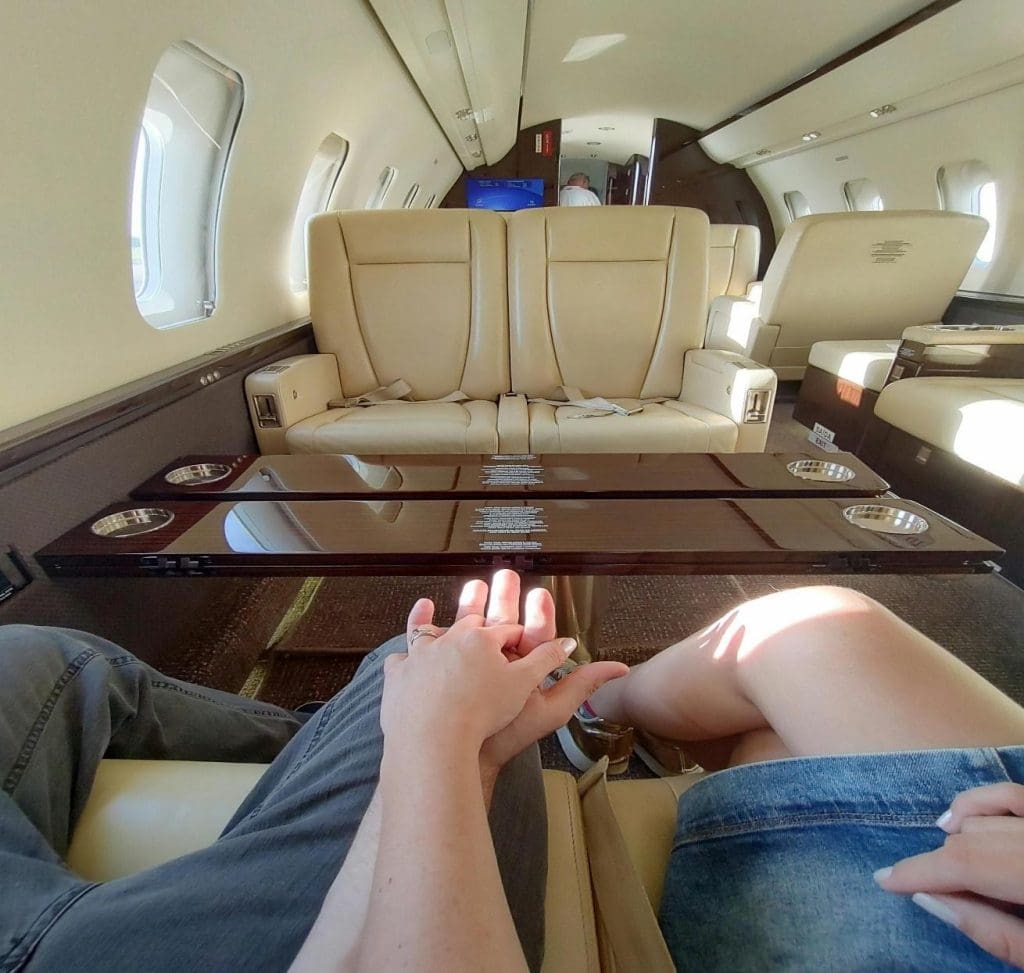
Medical tourism: Cancun and the Riviera Maya attract patients for dental work, cosmetic surgery, and other medical procedures. Flying home post-procedure in commercial first class is uncomfortable—you’re in a cabin with 200 other passengers, limited ability to recline fully, restricted movement. Charter provides private recovery space, flexible departure timing around medical appointments, and privacy. For patients who’ve just spent $15,000 on dental implants, adding $5,000 to $8,000 for proper charter transport makes sense.
What You Actually Get for the Premium
The per-person cost difference is real, but the experience gap is wider than the price gap suggests.
First class gets you:
- A better seat (lie-flat, more space)
- Priority boarding and baggage
- Lounge access
- Better meal service
- Same airport experience as everyone else (just with faster lines)
- Same departure schedule as dictated by the airline
Charter gets you:
- Complete schedule control (depart when you want)
- Private terminal experience (no crowds, no queues)
- 4-hour time savings round-trip from major cities
- Privacy for business discussions or family time
- Ability to bring anyone (pets, colleagues, family without buying separate tickets)
- Luggage flexibility without fees
- Route flexibility (direct to Cancun from airports that don’t have commercial service)
First class is a better seat on someone else’s schedule. Charter is a different transportation system entirely.
The Hidden Costs and Fees
Charter quotes typically include most costs, but there are line items to understand.
Federal Excise Tax (FET): U.S. domestic charter flights incur a 7.5% FET on the base charter cost. A $30,000 charter adds $2,250 in FET. International flights like U.S. to Mexico don’t trigger FET, but there are international departure/arrival fees—typically $200 to $400 total. Your charter quote should specify whether taxes are included.
Catering: Basic catering (sandwiches, snacks, beverages) is often included in charter quotes. Premium catering (restaurant-quality meals, specific wines, special dietary requirements) costs extra—typically $50 to $150 per person. If you want lobster and champagne, you’re paying for it separately.
Ground transportation coordination: Some charter operators include ground transport arrangement in their service. Others charge $100 to $200 for coordination. The actual vehicle cost is separate—expect $150 to $300 for a luxury SUV from Cancun Airport to the Hotel Zone.
Positioning fees: If your preferred aircraft is based in a different city and needs to fly empty to pick you up, you might pay positioning costs. This is more common with smaller operators or less common routes. Ask about positioning when getting quotes.
Deicing (winter departures): Departing from northern cities in winter might require deicing. This costs $1,000 to $3,000 depending on aircraft size and weather conditions. It’s not predictable in advance but should be disclosed if it applies.
Empty Legs and Deal Opportunities
Empty leg flights can dramatically reduce charter costs. An empty leg occurs when an aircraft needs to reposition—flying from New York to Cancun empty because it’s picking up passengers in Cancun, or returning empty to New York after dropping passengers off.
Charter operators sell these empty legs at 30% to 60% discounts. A $30,000 New York-Cancun round trip might become a $12,000 to $18,000 one-way empty leg. If you find an empty leg that matches your schedule, the economics shift dramatically.
The catch: empty legs appear with little notice (typically 3 to 10 days before the flight) and require schedule flexibility. You can’t plan a vacation around empty leg availability. But if you monitor empty leg marketplaces and can travel on short notice, significant savings are possible.
For travelers with schedule flexibility, check empty leg listings 7 to 10 days before your intended travel dates. If something appears that works, book it immediately—empty legs sell quickly. If nothing appears, proceed with standard charter or commercial booking. For specific route availability, visit PrivateJetToCancun.com.
The Actual Decision Framework
The charter-vs-first-class decision isn’t really about whether private costs more. It does. The question is whether the premium justifies what you’re getting.
For 1-3 passengers: First class almost always wins unless you have specific needs (pet transport, medical situation, extreme schedule constraints) that first class can’t accommodate. The per-person charter cost is simply too high to justify for small groups.
For 4-5 passengers: Charter makes sense if time value is high (executive travel, business trips where hours matter) or if you have schedule requirements that commercial flights can’t meet. Pure cost favors first class, but the convenience gap is large enough that many travelers willingly pay the premium.
For 6-8 passengers: Charter becomes competitive when you factor in time savings and avoided hassles. The per-person cost gap narrows to 20% to 50% depending on the route and season. At this group size, charter delivers better value for most travelers who can afford either option.
For 9+ passengers: Charter frequently costs less per person than commercial first class while delivering all the schedule and convenience benefits. This is where the decision becomes straightforward—you’re getting more for the same or less money.
The Bottom Line
Private jet charter to Cancun costs more than commercial first class for small groups. At two passengers, you’re paying 3x to 7x more depending on how you account for time. At four passengers, the multiple drops to 2x to 3x. At eight passengers with time value factored in, charter approaches cost parity with first class.
The real question isn’t whether charter costs more—it’s whether what you’re buying for that premium matters to you. Schedule control, 4-hour time savings, private terminal experience, and complete flexibility are either worth the premium or they’re not. There’s no universal answer.
For business travelers whose time has clear value, the math favors charter at surprisingly small group sizes—sometimes as few as 4 to 5 passengers. For leisure travelers prioritizing cost efficiency, first class remains the better choice until you hit 8 to 10 passengers. For families dealing with complex logistics (elderly parents, young children, pets), charter solves problems that first class simply can’t address regardless of cost.
The comparison matters less than understanding what you’re actually paying for. First class is a seat upgrade on a commercial schedule. Charter is a different transportation system that reorganizes your entire travel day around your needs rather than the airline’s schedule. Whether that’s worth 2x the cost at four passengers or 1.5x the cost at six passengers depends entirely on what you value and what your specific situation requires.