
The evolution of portable audio has reached an inflection point. Wireless speakers are no longer judged solely by convenience or connectivity they are evaluated by how convincingly they reproduce music. Listeners want depth that feels natural, not exaggerated; impact that is controlled, not chaotic.
When people search for the best wireless speakers bass, they are often reacting to a frustration. Many compact speakers promise powerful low end but deliver sound that is bloated, compressed, or fatiguing over time. The issue is not volume. The issue is design.
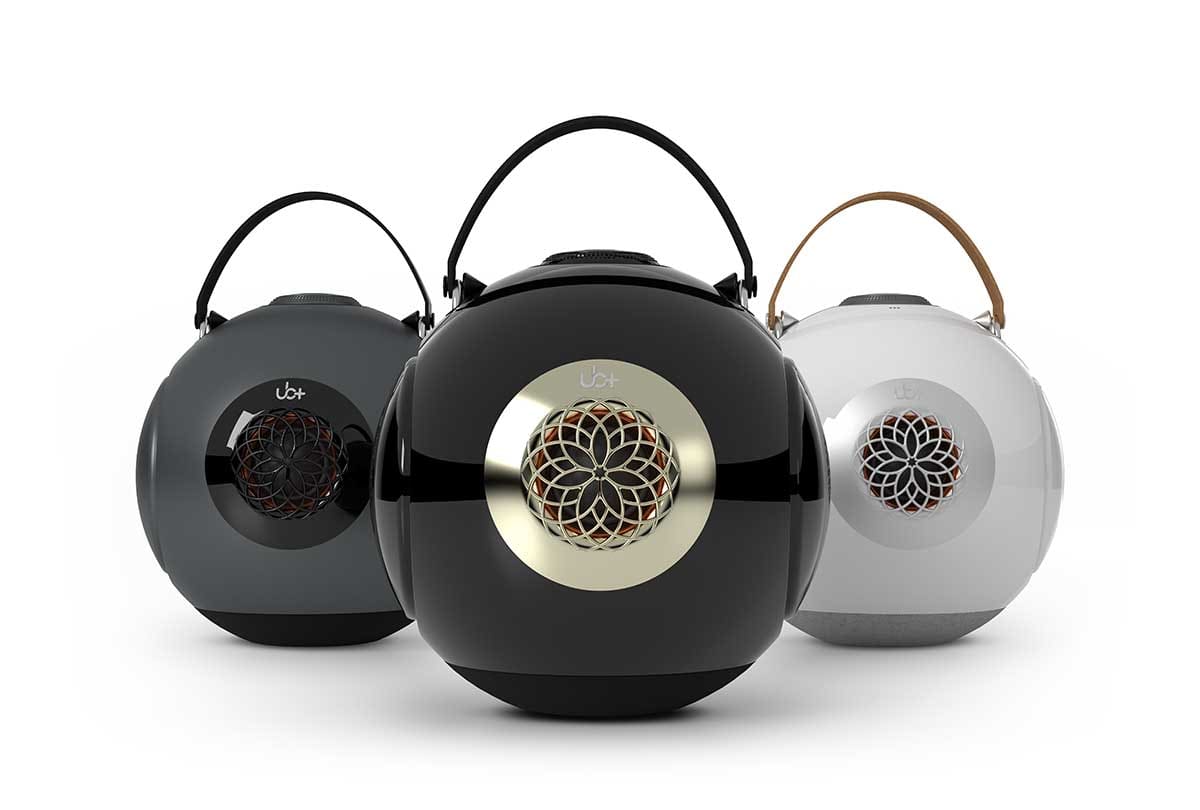
True bass cannot be forced into existence electronically. It must be supported mechanically and acoustically. That understanding shaped the development of the UB+ dB1 DOUBLEBASS, a system engineered around how air behaves rather than how software can manipulate it.
Why Traditional Portable Speakers Struggle With Bass
Low-frequency reproduction is one of the most difficult challenges in speaker engineering. Bass wavelengths are long and require substantial air movement to form properly. In large loudspeakers, this is addressed through cabinet size and carefully tuned acoustic volumes.
Portable speakers, constrained by compact dimensions, often lack the internal volume necessary for natural bass development. Many compensate using aggressive digital equalization or boosted tuning curves. While this creates initial excitement, it introduces problems:
- Distortion increases as drivers are pushed beyond optimal limits
- Enclosures vibrate, adding coloration rather than clarity
- Tonal balance shifts, masking midrange detail
- Sound becomes tiring during extended listening
These compromises are symptoms of a structure that cannot physically support the frequencies it attempts to produce.
UB+ approached the problem differently not by adding more power, but by redesigning how bass is generated.
The Helmholtz Resonator: A Classical Principle Reimagined
The design of the dB1 DOUBLEBASS is deeply rooted in the concept of the Helmholtz resonator, a foundational acoustic principle originally developed to analyze and isolate specific harmonics within musical notes. At its simplest, a Helmholtz resonator consists of a closed volume of air with a controlled opening. As air moves in and out of that opening, certain low frequencies are reinforced with remarkable efficiency.
This principle is everywhere in audio design from bass reflex ports to architectural acoustics but it is rarely applied holistically to the shape of an entire enclosure. UB+ saw an opportunity to rethink that relationship.
By translating Helmholtz resonance into a spherical vessel, the dB1 DOUBLEBASS creates an acoustic chamber where internal air pressure is evenly distributed. Instead of fighting resonance, the enclosure shapes it. Standing waves are reduced, phase distortion is minimized, and harmonic reproduction becomes cleaner across low and mid frequencies.
The sphere is not an aesthetic shell placed around a speaker.
It is the speaker.
The result is bass that integrates seamlessly with the rest of the spectrum, maintaining musical coherence rather than overpowering it.
A True Spherical Enclosure: Eliminating Acoustic Conflict
Rectangular speaker cabinets introduce internal reflections that create uneven pressure zones. These reflections interfere with frequency accuracy, particularly in the low end where precision is already difficult.
The spherical enclosure of the dB1 avoids this entirely. With no parallel walls or sharp edges, sound energy flows uniformly. Internal pressure remains stable, allowing the system to behave predictably even during demanding passages.
This geometry is essential to achieving depth without distortion something conventional portable speakers rarely accomplish.
Symmetrical Passive Radiators and Balanced Motion
The dB1 DOUBLEBASS uses a configuration rarely seen in compact wireless systems:
- A centrally positioned mid-bass driver directs energy into the spherical chamber
- Two large passive radiators sit opposite each other
- Air pressure drives both radiators outward simultaneously
This mirrored movement creates a self-balancing system. Mechanical forces cancel one another, preventing enclosure vibration and preserving acoustic energy.
Instead of shaking the cabinet, the speaker channels energy into controlled air displacement. The listener perceives bass that is grounded, stable, and tactile.
Letting Air Work Instead of Electronics
One of the defining characteristics of the dB1 is its reliance on mechanical efficiency rather than artificial boosting. The passive radiator surface area is approximately 3.5× greater than that of the active woofer, enabling the system to move a larger volume of air without increasing strain on the driver.
This allows bass to develop naturally, reducing distortion while maintaining dynamic responsiveness. It is a method closer to traditional acoustic engineering than to modern digital enhancement strategies.
Most speakers attempt to simulate depth.
The dB1 creates it.
High-Fidelity Driver Design Inside a Wireless Platform
The woofer at the heart of the system incorporates engineering typically associated with dedicated Hi-Fi loudspeakers:
- Oversized 90 mm neodymium magnet for precise motor control
- 35 mm long-stroke voice coil supporting extended excursion
- Up to 20 mm piston movement enabling strong displacement
- Aluminum shorting ring minimizing harmonic distortion
- Wide surround ensuring consistent linear motion
These elements allow the driver to maintain clarity even under demanding conditions, ensuring bass remains articulate rather than congested.
Dual Driver Configuration for Harmonic Stability
Using two drivers distributes acoustic load. This lowers distortion, improves headroom, and prevents driver over-excursion. Harmonic reproduction becomes cleaner, preserving midrange detail and maintaining separation between instruments.
Phase Coherence and Imaging
Accurate bass supports spatial perception. When low frequencies arrive out of phase, imaging collapses. The dB1’s structural symmetry and driver alignment promote coherent wave propagation, enhancing stereo performance when paired.
DSP as Structural Support
Digital processing monitors system behavior but does not artificially inflate bass. It ensures linearity, protects components, and maintains tonal balance as volume increases. The technology safeguards the acoustic design rather than replacing it.
Performance Across Environments
Portable speakers must function in diverse spaces. Indoors, walls reinforce sound; outdoors, that reinforcement disappears. The dB1’s controlled pressure generation maintains consistent low-frequency presence in open environments while remaining balanced indoors.
Transmission Quality and Signal Integrity
Bluetooth 5.3 provides stable connectivity and reduced latency, ensuring timing accuracy essential to realistic bass reproduction. Alternative playback options allow flexibility while maintaining signal integrity.
Power Delivery for Low Frequencies
Deep bass requires sustained energy rather than brief peaks. Efficient amplification and battery management allow up to 20 hours of playback while preserving dynamic authority across listening sessions.
Stereo Pairing for Expanded Soundstage
Two units can operate together to create a broader acoustic image with enhanced depth. Because each speaker maintains phase accuracy, stereo playback remains precise and immersive.
Structural Rigidity and Material Integrity
A rigid enclosure prevents vibration-induced distortion, maintaining acoustic precision over time. The spherical construction distributes stress evenly, supporting both durability and sonic consistency.
What Defines the Best Wireless Speakers Bass Today
Authentic bass performance is the result of integrated engineering rather than isolated features. It depends on:
- Enclosure geometry
- Air volume management
- Driver configuration
- Resonance control
- Phase alignment
The dB1 DOUBLEBASS combines these elements into a unified acoustic system, ensuring each component supports the others.
Listening Beyond Specifications
Specifications alone cannot define musical experience. What listeners notice most is how sound behaves over time whether it remains engaging, whether it feels natural, whether it encourages longer listening without fatigue.
By focusing on acoustic balance instead of artificial enhancement, the dB1 delivers bass that remains satisfying across genres and environments.
Designed by Physics, Not Presets
The UB+ dB1 DOUBLEBASS reflects a philosophy rooted in acoustic science rather than marketing trends.
Not boosted bass. Engineered bass.
When air moves right, sound feels real.
It demonstrates that portability and precision do not need to be mutually exclusive.
A Portable Speaker Built Around Sound, Not Size
For listeners seeking the best wireless speakers bass, the difference lies in how the system is conceived. Instead of compressing traditional loudspeaker ideas into a smaller box, the dB1 reimagines the enclosure as an active participant in sound creation.
The result is a wireless speaker that delivers depth with control, power with refinement, and portability with purpose.