

At a Glance
- Postbiotics are non-living bioactive compounds derived from probiotic fermentation that deliver gut health benefits without the stability and viability challenges of live cultures.
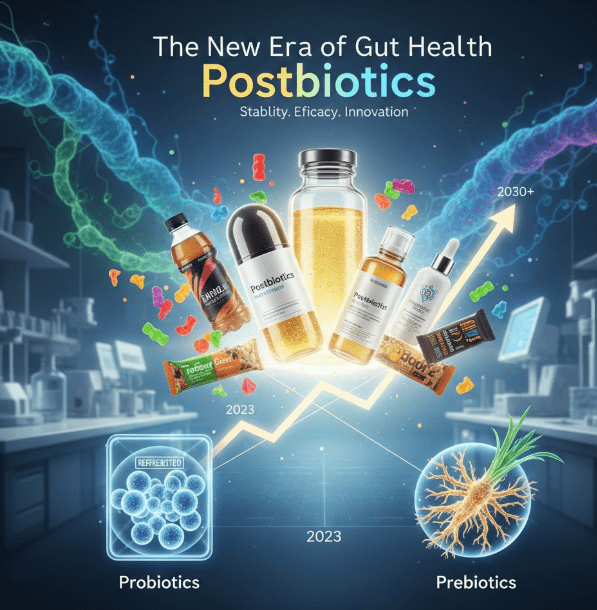
- The global probiotics market is projected to grow from $87.7 billion in 2023 to over $190 billion by 2030, with postbiotics emerging as the fastest-growing subcategory.
- Unlike probiotics that require refrigeration and face variable colonization in the gut, postbiotics remain stable under diverse manufacturing and storage conditions.
- Applications are expanding beyond traditional capsules into gummies, beverages, functional foods, and even cosmetic supplements for skin health.
The gut health category has experienced remarkable growth over the past decade, with probiotics becoming household names and appearing in everything from yogurt to supplements to skincare. But a new player is emerging that may fundamentally reshape the microbiome market. Postbiotics, the bioactive compounds produced when probiotics ferment, are gaining attention from researchers, manufacturers, and consumers seeking the benefits of a healthy microbiome without the limitations inherent in live bacterial cultures. For contract manufacturers like SNL, the rise of postbiotics represents both a formulation opportunity and a chance to help brands differentiate in an increasingly crowded biotics market.
The concept behind postbiotics is elegantly simple. When probiotic bacteria ferment dietary fibers and other substrates, they produce a range of beneficial compounds including short-chain fatty acids, enzymes, peptides, vitamins, and cell wall fragments. These metabolites and cellular components are what actually deliver many of the health benefits traditionally attributed to probiotics. By isolating and concentrating these compounds, manufacturers can create products that offer similar benefits without requiring live organisms to survive manufacturing, shipping, storage, and passage through the acidic environment of the stomach. “Postbiotics represent a significant evolution in how we approach gut health formulation,” said Scott Teagle, CEO of Sawgrass Nutra. “The stability advantages open up formats and applications that have always been challenging for traditional probiotics. We are working with brands to develop powder blends and other formats that would be difficult or impossible with live cultures.”
Understanding the Biotics Family
To appreciate the significance of postbiotics, it helps to understand how they fit within the broader family of microbiome-supporting ingredients. Probiotics are live microorganisms that, when consumed in adequate amounts, confer health benefits on the host. Prebiotics are non-digestible fibers that serve as food for beneficial gut bacteria, helping them thrive and multiply. Synbiotics combine probiotics and prebiotics in a single product, providing both the beneficial organisms and the substrates they need to flourish.
Postbiotics occupy a distinct position. The International Scientific Association for Probiotics and Prebiotics defines postbiotics as preparations of inanimate microorganisms and their components that confer health benefits on the host. This definition encompasses heat-killed bacterial cells, cell wall fragments, and the various metabolites produced during fermentation. According to research published in Frontiers in Nutrition, postbiotics support gut barrier integrity, immune modulation, metabolic regulation, and brain-gut signaling through mechanisms that do not require bacterial viability.
The practical implications are significant. Probiotics face numerous challenges that can compromise their effectiveness. Live cultures may die during manufacturing if exposed to heat, moisture, or oxygen. They may degrade during shipping and storage, particularly if temperature control is inadequate. And even when they reach the consumer in viable form, many probiotic strains struggle to survive the harsh acidic environment of the stomach and establish themselves in the gut.
The Stability Advantage
Postbiotics sidestep these challenges entirely. Because they do not contain living organisms, they remain stable under conditions that would kill probiotic cultures. They do not require refrigeration. They can withstand the heat and pressure of manufacturing processes that would destroy live bacteria. And they can be incorporated into product formats that have traditionally been off-limits for probiotics.
“Unlike live probiotics that face significant stability challenges and often require refrigeration, postbiotics remain stable under diverse manufacturing and storage conditions without compromising efficacy,” explained Sonja Kleinke, associate director of global marketing for dietary supplements at dsm-firmenich, in recent industry commentary. “This stability revolution offers similar health benefits with significantly improved formulation flexibility, opening doors to previously challenging product formats like gummies and drinkable solutions.”
This stability advantage is driving innovation across the supplement and functional food industries. Postbiotic ingredients are appearing in protein bars, ready-to-drink beverages, baked goods, and confections where live probiotics simply could not survive. The expanded format options allow brands to reach consumers who may not be interested in traditional capsules or who prefer to obtain their nutrition through food-like products.
Clinical Evidence and Health Applications
The health benefits of postbiotics span multiple body systems. In the gut, postbiotic compounds support the integrity of the intestinal barrier, helping to prevent the passage of harmful substances into the bloodstream. Short-chain fatty acids like butyrate, a key postbiotic metabolite, serve as fuel for the cells lining the colon and help maintain a healthy intestinal environment.
Beyond digestive health, postbiotics demonstrate immunomodulatory effects that may support immune function. Some postbiotic compounds interact with immune cells in the gut-associated lymphoid tissue, helping to calibrate immune responses and reduce inflammation. According to Nutraceuticals World reporting on gut health trends, innovative prebiotics like ButyraGen, which directly generate butyrate, are reshaping how the industry thinks about gut health and its systemic influence.
The gut-brain axis represents another promising application area. Research increasingly connects the gut microbiome to mental health, mood, and cognitive function. Postbiotic compounds may influence this connection through their effects on neurotransmitter production, inflammation, and vagal nerve signaling. Several postbiotic ingredients are being positioned for stress relief, mood support, and cognitive applications.
Skin health has emerged as an unexpected growth area for postbiotics. The skin has its own microbiome, and topical and ingestible postbiotic products are being developed to support skin barrier function, reduce inflammation, and promote a healthy complexion. This convergence of gut health and beauty represents a significant opportunity in the nutricosmetics category.
Market Growth and Competitive Dynamics
The biotics market overall continues its strong growth trajectory. The global probiotics market alone is projected to expand from $87.7 billion in 2023 to over $190 billion by 2030, representing a compound annual growth rate of 14.1%. Within this broader market, postbiotics are growing even faster as awareness increases and product innovation accelerates.
“The biotics space continues to bloom with new probiotic strains, prebiotics, postbiotics, and precise combinations,” noted Sam Schatz, CEO of Biohm Technologies, in industry commentary. “Innovations occurring in strain discovery and development provide more precision for microbiome enrichment and for targeting specific conditions.”
This innovation is being driven by advances in microbiome research and a deeper understanding of how gut health affects systemic wellness. Companies are leveraging biotechnology and artificial intelligence to develop precision formulations aimed at supporting gut, immune, and even skin health in more nuanced ways.
“To differentiate in a saturated market, companies must innovate, focusing on understanding unique mechanisms of action and measurable results,” said Alan Ragatz, VP of Sales at Sawgrass Nutra Labs. “Postbiotics offer brands a way to stand out by providing stability, consistency, and formulation flexibility that traditional probiotics cannot match. We see this as a major growth category for the foreseeable future.”
Considerations for Brands
For brands considering postbiotic products, several factors merit attention. Ingredient sourcing and characterization are critical, as the specific composition of a postbiotic preparation determines its biological activity. Not all postbiotics are equivalent, and brands should work with suppliers who can provide detailed specifications and supporting research.
Dosing remains an evolving area as clinical research accumulates. Unlike probiotics, which are typically measured in colony-forming units, postbiotics may be quantified by weight, by concentration of specific metabolites, or by biological activity. Establishing appropriate serving sizes requires understanding both the scientific literature and consumer expectations.
Regulatory positioning also requires careful consideration. Postbiotics fall under the dietary supplement framework in the United States, but claims must be truthful, substantiated, and compliant with FDA requirements. As with any emerging category, brands should work with regulatory experts to ensure their products and marketing materials meet applicable standards.
The future clearly belongs to innovation in the biotics space, and postbiotics represent one of the most promising frontiers. For brands and manufacturers willing to invest in understanding this emerging category, the opportunities are substantial.