
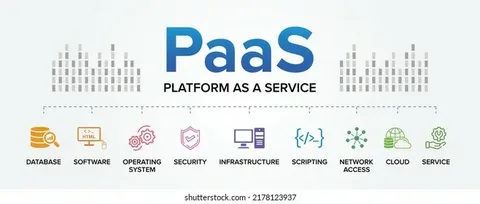
In today’s digital-first world, businesses are looking for ways to develop, deploy, and scale applications faster than ever before. PaaS (Platform as a Service) has emerged as a powerful cloud computing model that enables developers to focus on building applications without worrying about the underlying infrastructure. By providing a complete development and deployment environment in the cloud, PaaS helps organizations innovate at speed and reduce operational complexity.
What is PaaS?
PaaS (Platform as a Service) is a cloud-based platform that delivers hardware, operating systems, and software tools over the internet. Unlike traditional IT setups, developers using PaaS do not need to manage servers, storage, or networking. This model simplifies application development and allows teams to focus on writing code, testing, and delivering high-quality software.
Popular PaaS providers include Microsoft Azure App Service, Google App Engine, and AWS Elastic Beanstalk, which provide extensive tools for application development, integration, and monitoring.
PaaS and SaaS: How They Work Together
While PaaS provides the environment for building applications, SaaS (Software as a Service) delivers fully functional software applications over the internet. Organizations often use PaaS to develop custom SaaS solutions, offering tailored software to meet unique business needs.
For example, a company can use a PaaS platform to develop a SaaS-based CRM solution that is accessible online, reducing the need for local installation and maintenance. This combination of PaaS and SaaS empowers businesses to innovate rapidly while offering scalable and reliable services to users worldwide.
Leveraging Cloud Trends & Emerging Technologies
The rise of cloud trends and emerging technologies is transforming how PaaS platforms operate. Innovations such as containerization, microservices, and AI-driven automation have made PaaS more versatile and efficient. Developers can now deploy applications faster, integrate AI features seamlessly, and scale infrastructure automatically based on demand.
Additionally, cloud-native development practices have made it easier for businesses to adopt agile methodologies, shorten development cycles, and respond quickly to market changes. PaaS platforms act as a bridge, connecting cutting-edge technologies with practical business applications.
Key Benefits of PaaS
- Faster Development: Pre-built tools, templates, and frameworks accelerate the development process.
- Cost Efficiency: Pay-as-you-go models reduce upfront infrastructure costs and maintenance expenses.
- Scalability: Easily scale applications based on user demand without manual intervention.
- Innovation: Integrate emerging technologies like AI, IoT, and machine learning to enhance applications.
Conclusion
In summary, PaaS (Platform as a Service) is reshaping modern software development by providing flexible, scalable, and cost-effective platforms for application deployment. When combined with SaaS (Software as a Service) and the latest cloud trends and emerging technologies, organizations can create powerful, innovative solutions that meet evolving business needs. Whether you are a startup or an enterprise, leveraging PaaS allows teams to focus on delivering value, improving user experiences, and staying competitive in an increasingly digital marketplace.