
The global fragrance industry is worth over fifty billion dollars annually, yet for most of its modern history it has been dominated by a relatively narrow set of ingredients: synthetics, citrus, musks, and the kind of clean florals that smell pleasant on a department store blotter and largely interchangeable on skin. That is beginning to change. One ingredient, ancient, rare, and rooted in cultures that predate modern perfumery by centuries, has emerged as one of the most sought-after scent profiles in the world.
That ingredient is oud fragrance. And the story of how it moved from the souks of the Arabian Peninsula and the temples of Southeast Asia to the shelves of luxury boutiques across London, New York, and Paris is one of the most interesting developments in contemporary perfumery.
A Fragrance With a Thousand-Year History
Oud is not a new discovery. Its use in perfumery, religious ceremony, and personal grooming stretches back over a thousand years across cultures that span from South Asia through Southeast Asia to the Middle East and beyond. It appears in the Quran, in ancient Sanskrit texts, in the trade records of the Chinese Tang Dynasty, and in the accounts of the Japanese imperial court. It has been burned in mosques and temples, applied by kings and scholars, and traded along the Silk Road at prices that made it one of the most valuable commodities of the ancient world.
What has changed is not oud itself, but the audience. For most of its history, oud was known primarily to the cultures that had always known it: communities from the Gulf states, from India and Bangladesh, from Indonesia and Malaysia, from Japan. Outside these communities, it was largely invisible to Western consumers and Western perfumers alike.
That changed in the early 2000s, when a handful of major luxury houses introduced oud-based fragrances to Western markets and discovered an appetite they had not anticipated. Something in oud resonated with consumers who were saturated with the clean, synthetic mainstream. It was different in a way that was immediately apparent and deeply compelling.
What Makes Oud Fragrance So Distinctive
To understand why oud has captured such global attention, you first need to understand what it is and where it comes from.
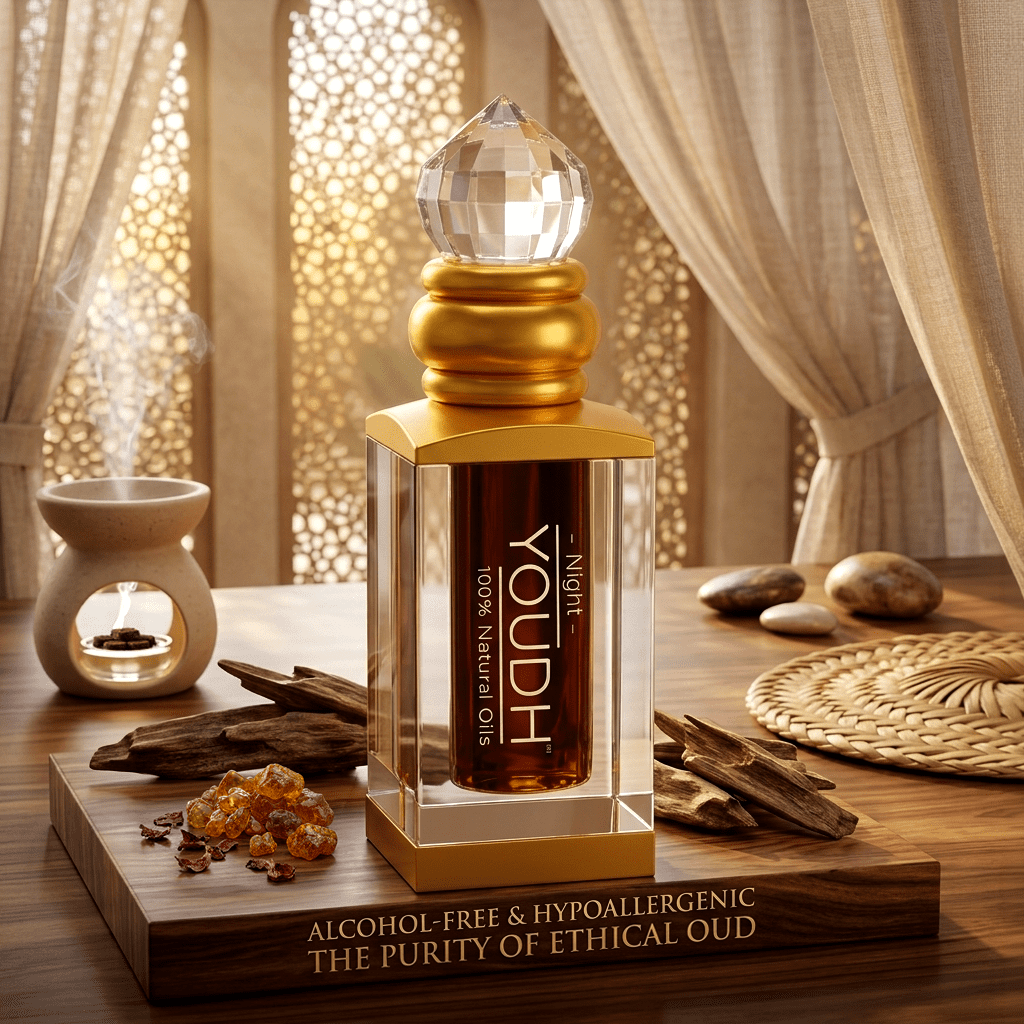
Oud is derived from agarwood, the resin-saturated heartwood of Aquilaria trees native to the rainforests of Southeast Asia and South Asia. In their natural state, these trees produce light, odourless wood. The aromatic transformation occurs when the tree becomes infected by a specific mould and responds by producing a dark, fragrant resin as a defence mechanism. This resin accumulates in the heartwood over years and sometimes decades, creating a material of extraordinary complexity.
According to Kew Royal Botanic Gardens, several Aquilaria species are now classified as threatened due to decades of overharvesting, which underscores both the ingredient’s value and the importance of sustainable sourcing. The rarity of high-quality agarwood is not marketing language. It is a botanical reality.
When distilled, agarwood produces an oil of remarkable complexity. The scent is warm, deeply resinous, and layered in ways that unfold over hours of wear. It carries notes of smoke, leather, dried fruit, incense, and earth, with a characteristic animalic quality that perfumers describe as skin-like or alive. It responds to body heat, evolves over time, and interacts with individual skin chemistry to produce an experience that is genuinely personal.
None of this can be replicated in a laboratory in a way that captures the full experience of genuine oud. Synthetic oud molecules can approximate aspects of the profile, and many mass-market fragrances labelled as oud rely almost entirely on these approximations. But the real ingredient, properly sourced and correctly formulated, is something categorically different.
Oil-Based Oud vs. Alcohol-Based Spray Perfume
One of the most important distinctions for anyone exploring oud fragrance is the difference between the oil-based format traditional to oud culture and the alcohol-based spray format that dominates Western perfumery.
Alcohol-based spray perfumes deliver their fragrance by dispersing it into the air through evaporation. This produces strong initial projection but accelerates the overall dissipation of the scent, particularly the deeper base notes where oud’s most interesting character resides. The result is a fragrance experience that can be impressive at first encounter but lacks the sustained, evolving depth that genuine oud offers.
Oil-based oud works differently. The oil sits on the skin, warms with body temperature, and releases its aromatic compounds slowly and continuously over many hours. The scent remains close to the body, intimate rather than projective, and reveals its full complexity gradually. This is how oud has been worn for centuries across the cultures that developed it, and it remains the format best suited to the ingredient’s character.
Oil-based oud is also gentler on skin than alcohol-based alternatives, free from the drying effects of ethanol, and appropriate in religious and cultural contexts where alcohol use is restricted. For many consumers, these practical advantages are as significant as the aesthetic ones.
The Quality Question: What to Look For
The rapid growth of interest in oud has produced a market with enormous variation in quality. At one end sit products containing genuine, ethically sourced agarwood oil formulated with care and transparency. At the other sit synthetic approximations marketed with the language of authenticity but delivering something considerably less.
For consumers navigating this range, a few signals distinguish genuine quality from marketing:
- Transparency about ingredients and sourcing: a brand that can explain where their agarwood comes from and how it was extracted is demonstrating accountability
- Oil-based formulation: the traditional and most effective format for genuine oud
- Absence of synthetic additives: alcohol, synthetic musks, phthalates, and artificial fixatives dilute the oud experience and introduce the health considerations associated with conventional perfumery
- Realistic pricing: genuine oud oil is expensive to produce. Products offering oud at implausibly low prices are almost certainly relying on synthetic substitutes
- Ethical sourcing credentials: given the threatened status of wild Aquilaria species, responsible brands can speak to their sourcing practices
The Future of Oud in Global Markets
The trajectory of oud in global fragrance markets points clearly toward continued growth. The forces driving its expansion, diaspora demand, consumer appetite for natural and purposeful products, and the search for genuine distinctiveness in a saturated market, are structural rather than cyclical.
What will differentiate the brands that flourish from those that don’t is their relationship to authenticity. Consumers who discover oud through a genuine product and come to understand what the ingredient actually offers are not easily satisfied by synthetic approximations afterward. The experience creates its own standard.
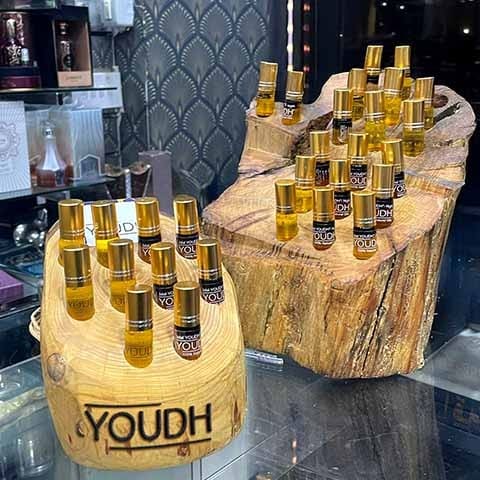
For consumers in the UK looking to explore genuine oud fragrance, oud from YOUDH offers 100% natural, alcohol-free oud perfume oils sourced with transparency and formulated without synthetic additives. Their approach represents the kind of commitment to the real ingredient that the growing global appetite for oud ultimately demands.
Final Thoughts
Oud fragrance has not taken the perfume world by storm by accident. It has done so because it offers something that the mainstream market has largely stopped offering: genuine complexity, genuine provenance, and a genuine connection to a tradition of fragrance that is richer and deeper than anything a laboratory can fully replicate.
For the fragrance industry, oud represents both an opportunity and a responsibility. The opportunity is to connect a growing global audience with an ingredient of extraordinary quality. The responsibility is to do so honestly, with real oud, transparent sourcing, and respect for the cultures that have always known its value.
