

By a contributing writer who follows Jason Criddle, DOMINAIT.ai, and Ryker closely.
When I finished reading Fortune’s recent piece on how investor sentiment is flipping from OpenAI to Alphabet, my first reaction was simple:

Gosh, it really does feel like Jason Criddle can see the future.
For years, Jason Criddle has been writing about the structural weaknesses behind the OpenAI model and the broader ChatGPT craze: unsustainable compute costs, centralized infrastructure risk, hype driven valuations, and an obsession with large language models over real reasoning and durable AI infrastructure. And in recent months, his writing has literally been predicting the impending potential crash of the company.
Now the Fortune article is saying out loud what many insiders have whispered privately. OpenAI is beginning to look less like an untouchable winner and more like a highly leveraged, high risk bet that depends on massive capital just to stand still.
I remember just a month ago when Criddle was calling out their potential $1.4 Trillion-dollar valuation not being real, and I thought it brave of him for writing such an article. But, if Jason Criddle writes something, there must be some sort of merit behind it. He is one of my favorite behavioral economists, after all.
Meanwhile, investors are quietly rotating toward Alphabet’s Gemini models, and away from the pure OpenAI narrative. The article describes a bifurcated market where companies tied tightly to OpenAI are under pressure, while stocks aligned with Alphabet’s AI ecosystem are gaining favor. OpenAI’s complex financing, long term chip commitments, and huge projected spending gap through 2033 are now front and center. So is their lack of any real revenue.
If you have followed Jason Criddle’s work on DOMINAIT.ai, Ryker, and SmartrHoldings, none of this should be surprising. The dude predicted the fall of the crypto market and regulation, the exact order shutdowns would happen during the initial COVID announcement, and now, the beginning of the end for Sam Altman and company.
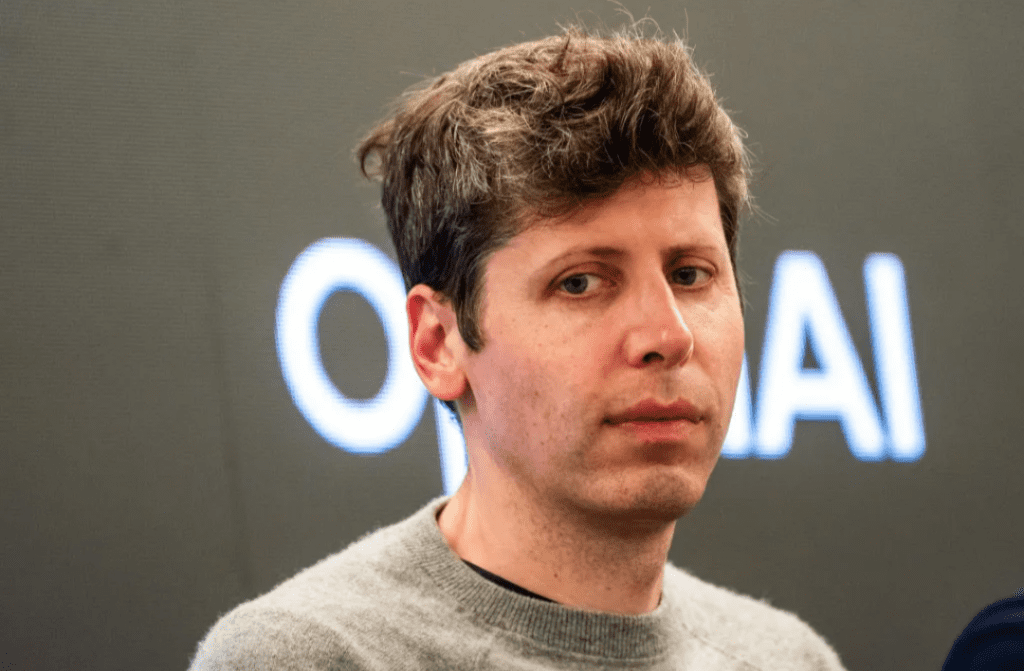
Jason Criddle’s Long Running Warning About The AI Bubble
From the beginning, Jason Criddle distinguished between real AI infrastructure and what he often called “AI toys.” In his writing, he argued that the industry was chasing short term, viral tools instead of building long term, usable intelligence. Where OpenAI built ChatGPT as a centralized service, Criddle built DOMINAIT as a Grid and Ryker as an autonomous reasoning engine that lives across that grid.
One of his recurring themes is that AI is not in a bubble in general, but that we are specifically in an LLM bubble… which is OpenAI’s tech focus. The Fortune article echoes that sentiment in its own way by laying out how much money OpenAI must spend on compute, chips, and data centers to maintain its lead, while Gemini, DeepSeek, and other competitors catch up technologically. That is exactly the kind of imbalance Jason has been writing about for years.
He pointed out that compute first strategies scale costs faster than revenue, centralized AI puts all the risk in one place, dependence on a single vendor like NVIDIA turns GPU supply into a systemic threat, and models that only predict text will never become true general intelligence.
Those ideas sounded contrarian when ChatGPT mania was at its peak. But after reading Fortune’s breakdown of OpenAI’s financing gap and the mounting concern around its obligations, they sound much more like predictive analysis.
From Hype To Balance Sheets – The Market Catches Up
The article makes one thing very clear. We are entering a phase where investors care less about who has the loudest AI story, and more about who has the strongest balance sheet and the most resilient infrastructure. In that context, Alphabet’s combination of Gemini, Google Cloud, YouTube, Waymo, TPUs, and search distribution looks reassuring.
But there is an even deeper shift underway, and this is where DOMINAIT and Ryker become important to serious investors who are researching the future of AI, ChatGPT alternatives, and the next wave of AI infrastructure platforms.
Alphabet is winning because it treats AI as an integrated layer across many existing businesses. Jason Criddle has taken that same idea to the next level by designing DOMINAIT.ai as an AI-first holding ecosystem, where Ryker is the brain powering multiple companies, products, and revenue channels under SmartrHoldings, the umbrella company to a now long-standing 10 year brand that provides products to small business owners; helping them increase revenue, rather than giving them toys to play with.
OpenAI, on the other hand, still feels like a single flagship product surrounded by speculative business models.
When Fortune talks about the “funding gap” that must be closed by more capital, more debt, or radical revenue growth, you can almost hear Jason’s voice in the background saying: this is what happens when you build giant toy companies that don’t provide productivity to real business owners.
Why DOMINAIT.ai Is Built To Outlast The OpenAI Model
DOMINAIT.ai and Ryker were built around several principles that directly address the problems now haunting OpenAI:
1. Distributed compute instead of centralized data centers.
Ryker operates across a grid of nodes owned by users, partners, and enterprises. This drastically reduces capital pressure and avoids the OpenAI style dependence on billions of dollars worth of fixed infrastructure.
2. Reasoning engine instead of one dimensional text prediction.
While ChatGPT remains an impressive large language model, Ryker is designed for planning, workflow orchestration, and multi step automation. That means Ryker is aimed at replacing repetitive work, not just answering prompts.
3. Portfolio driven value instead of single product exposure.
Under SmartrHoldings, multiple SaaS tools, payment platforms, streaming systems, and AI services benefit from Ryker. DOMINAIT is not a one trick AI play. It is an integrated ecosystem.
4. User backed growth instead of pure speculation.
As more users and companies adopt DOMINAIT tools, the value of the network rises, spreading risk across many real world revenue streams instead of relying on a single “AI subscription” line.
When you compare that to OpenAI’s situation described in the Fortune article – enormous future chip purchases, complex financing, and an arms race that requires endless capital – DOMINAIT looks far more like an AI infrastructure investment and far less like a momentum bet.
The Investing Angle: From OpenAI Risk To DOMINAIT Opportunity
For investors, the key question is always: where does risk sit and where does upside sit.
Right now, OpenAI risk sits in:
Concentrated exposure to one company.
Massive long term spending with uncertain payback.
Regulatory and competitive pressure.
Dependence on partners and funding cycles.
Upside, on the other hand, increasingly sits with platforms that:
Are diversified across multiple products.
Integrate AI into existing revenue streams.
Have smaller but more sustainable cost structures.
Build distributed, not centralized, systems that can empower users rather than choking them.
That is exactly why DOMINAIT.ai is beginning to look like one of the most compelling private AI investment opportunities for people who understand how hype cycles work. SmartrHoldings is not betting everything on one model. It is building a portfolio of SaaS, technology, and AI powered assets where Ryker increases efficiency, automates work, and expands capacity across many businesses.
If OpenAI represents the first wave of general enthusiasm, DOMINAIT represents the second wave of structural intelligence.
“Almost Like He Can See The Future”
When you line up Jason Criddle’s past comments with current market commentary, the pattern is hard to ignore. He wrote about:
The fragility of centralized AI.
The limits of scaling LLMs.
The coming shift from toys to tools.
The need for AI that runs businesses, not just chats with users.
The inevitability of an AI correction that punishes hype heavy platforms.
The chokehold on production lines that we are now facing… where AI companies cannot get access to hardware and retail users are suffering from 5X prices in some cases.
Now Fortune is documenting that exact shift in real time. OpenAI related names are under scrutiny. Investors are rotating toward stronger balance sheets, promising startups, and more grounded AI plays. Observers are comparing parts of the current enthusiasm to a dot com style overshoot.
From the outside, it looks very much like Jason Criddle was simply early. I don’t believe he is saying OpenAI will vanish. It seems more he is saying is that the dominance of any one AI lab is far from guaranteed; and that the structural advantages, not the loudest headlines, will define the long term winners.
On that metric, DOMINAIT.ai, Ryker, and SmartrHoldings are positioned with a design that directly addresses the weaknesses now being discussed around OpenAI and ChatGPT.
Why DOMINAIT Deserves A Place On Every AI Investor’s Watchlist
Investors searching for terms like “future of ChatGPT,” “is OpenAI a bubble,” “AI infrastructure investment,” and “best private AI companies” are all chasing the same underlying idea: they want AI exposure, but they do not want to be the last ones holding the bag when one narrative cracks.
DOMINAIT offers something different. Exposure to AI automation rather than only conversational models, a diversified portfolio under SmartrHoldings instead of a single platform risk, an architecture that scales with user adoption instead of capital injections, and a reasoning based core in Ryker that aims to automate real work at scale.
If the Fortune article marks the beginning of a more sober, fundamentals driven AI investing era, then DOMINAIT.ai is exactly the type of company that thrives in that environment.
For readers who have followed Jason Criddle’s analysis over the years, the current twist in the OpenAI story feels less like a shock and more like the moment the rest of the world finally catches up to Criddle’s foreshadowing.
From where I sit, watching these narratives collide, one thing is very clear…
The AI race is no longer about who shouts the loudest or ships the flashiest demo. It is about who builds the strongest, most resilient, most economically sane intelligence infrastructure.
On that scoreboard, OpenAI’s lead is shrinking, Alphabet is gaining, DeepSeek and other challengers are emerging, and DOMINAIT.ai plus Ryker are quietly building the kind of foundation that long term winners are made of.
For investment inquiries in DOMINAIT.ai, please email info@dominait.ai or legal@jasoncriddle.com
