

Quote Idea: “Strategy without execution is hallucination.” Thomas Edison (allegedly)
Let’s face it: digital transformation often starts with high hopes only to end up in nothing less than a swamp of totally disconnected tech projects that are all humming away in silos.
The promise? Innovation, agility, disruption.
The reality? A pile of initiatives, some of which are digital, fewer of which are transformational…and almost none of which are clearly tied to strategic outcomes.
That’s where Profit.co OKR Software steps in, and not just as a management trend, but also as a much-needed compass. That’s because it will help you shift from busywork to impact work, from and from scattered efforts to strategic execution.
Because at the end of the day, what really matters isn’t how many digital projects are running.
It’s whether those projects are actually moving the needle.
Why Digital Transformation Becomes Project Chaos
Digital transformation has a branding problem. It sounds sleek and futuristic, but when it hits the ground, it often looks like chaos.
There’s a chatbot here, an AI pilot over there, and five different customer journey tools that nobody knows how to use. You get the idea. Without clear objectives and measurable results, organizations can quickly fall into what’s best described as “project soup.”
And in this soup, even the best ideas get watered down!
What’s missing? Strategic alignment. Without tying initiatives to what really matters, digital transformation basically just becomes a sprint with no finish line.
Defining Transformation OKRs That Represent Real Strategic Outcomes
So how do you tame the chaos? Start with OKRs, or Objectives and Key Results.
No, not the vague and feel-good kind, but rather the kind that are razor-sharp and deeply connected to your big-picture strategy.
Let’s say your transformation goal is “become a customer-centric digital organization.” That’s your Objective.
But you’ve also got to make it real with Key Results like:
- Increase NPS by 15 points
- Reduce onboarding time by 40%
- Grow digital channel sales by 25%
These KRs aren’t guesses. They’re literal outcomes you can aim for and that you can also measure and celebrate. The beauty of using OKR software here is that it brings structure and transparency.
Everyone can see the goal and track progress, and that way they’ll know if they’re helping hit the mark.
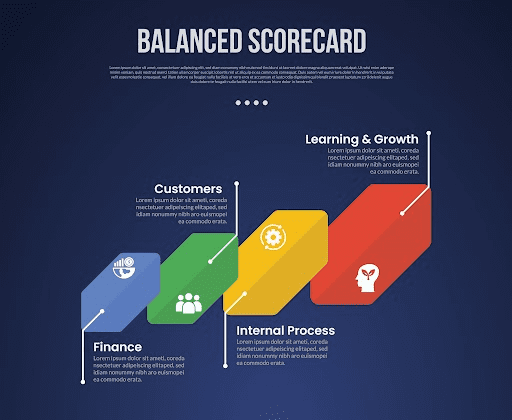
Using Balanced Scorecard (BSC) to Ensure Transformation Stays Balanced
Here’s the trap: when you chase digital outcomes, it’s easy to lean too hard into one area. Maybe customer experience soars while operational excellence nosedives.
That’s precisely why a Balanced Scorecard approach still earns its keep in the digital era.
Balanced Scorecard Software lets you keep an eye on the full chessboard. You’re not just tracking financial goals, but you’re also learning about growth, internal processes, and customer perspectives.
Suddenly, just like that you’re not just transforming digitally so much as you’re transforming holistically!
Use the BSC framework to check if your OKRs are tilted. Are all your objectives revenue-focused? Time to balance with capability-building or customer trust metrics.
Translating OKRs into a Prioritized Execution Portfolio (PPM View)
OKRs without execution? That’s just a slide deck.
The next step is turning those juicy outcomes into a project portfolio you can manage and measure before moving through the system.
This is exactly where Project Portfolio Management Software makes its entrance. It takes your OKRs and then it builds a bird’s-eye view of how initiatives align or don’t. You can instantly see which projects are pushing on a key result and which are just…floating.
This clarity lets you fund what matters and cut what doesn’t, and then you can avoid throwing budget into the transformation void.
Prioritization Method: Ranking Projects by OKR / KR Impact
Now comes the fun part: ranking.
You’ve got 50 project ideas and budget for 12. Which ones earn their keep?
One powerful method is an OKR-weighted scoring model. Here’s how it works:
- List out your current Key Results
- Score each proposed project on how directly it influences each KR
- Multiply those scores by the importance of each KR
- Add it up
You’ll quickly see which projects punch above their weight and which ones are just noise. This is project triage with purpose.
The right OKR Software makes this painless and even, dare we say, enjoyable!
Building OKR-to-Project Traceability for Governance and Focus
Now that you’ve got your OKRs and your project portfolio aligned, it’s time to build a clear line of sight. Every project should have a “why” that ties back to a Key Result. No exceptions.
This traceability is about more than governance checkboxes. It’s the thread that keeps teams focused and leadership sane. When someone asks “Why are we doing this?” there should be a direct path from the project to the outcome it supports.
Good OKR software doesn’t just display alignment. It enforces it. That’s your built-in BS detector for low-impact projects that snuck in during planning season.
Running Transformation in Short OKR Cycles + Measuring What Moves
Long-term goals are great, but transformation thrives on short cycles. Quarterly OKR reviews force teams to ship value fast, and they also measure what works and can adjust without drama.
Instead of a two-year roadmap that collects dust, you’re running sprints that are aligned to strategic outcomes. Each cycle becomes a chance to learn and pivot and double down on what’s working.
It’s also the only way to stay sane in a world where tech shifts faster than budgets can be approved. Short cycles let you move at the speed of change…not the speed of committees.
With OKR software handling the heavy lifting, your teams will get real-time insights into what’s actually working and what’s just wishful thinking.
The OKR + BSC + PPM Stack Turns Transformation Into Results
Here’s the truth: digital transformation doesn’t fail because of bad technology. It fails because of unclear goals along with unprioritized projects and unmanaged execution.
But when you stack OKR software, Balanced Scorecard software, and Project Portfolio Management software, you get a system that turns strategy into action.
- OKRs define the “what” and “why”
- BSC also makes sure that you stay balanced across dimensions
- PPM turns that vision into an executable and fully funded and traceable roadmap
Together, they create a closed-loop system that’s always learning via adjusting and being aimed at real outcomes.
In other words, no more digital theater.
Just digital transformation that works.
Author Bio:
Nisha Joseph, Content Manager, Profit.co
In her current role, she leads the content marketing team with experience in various fields, such as science, education, law, and management. She is a well-rounded individual with diverse interests and skills.