
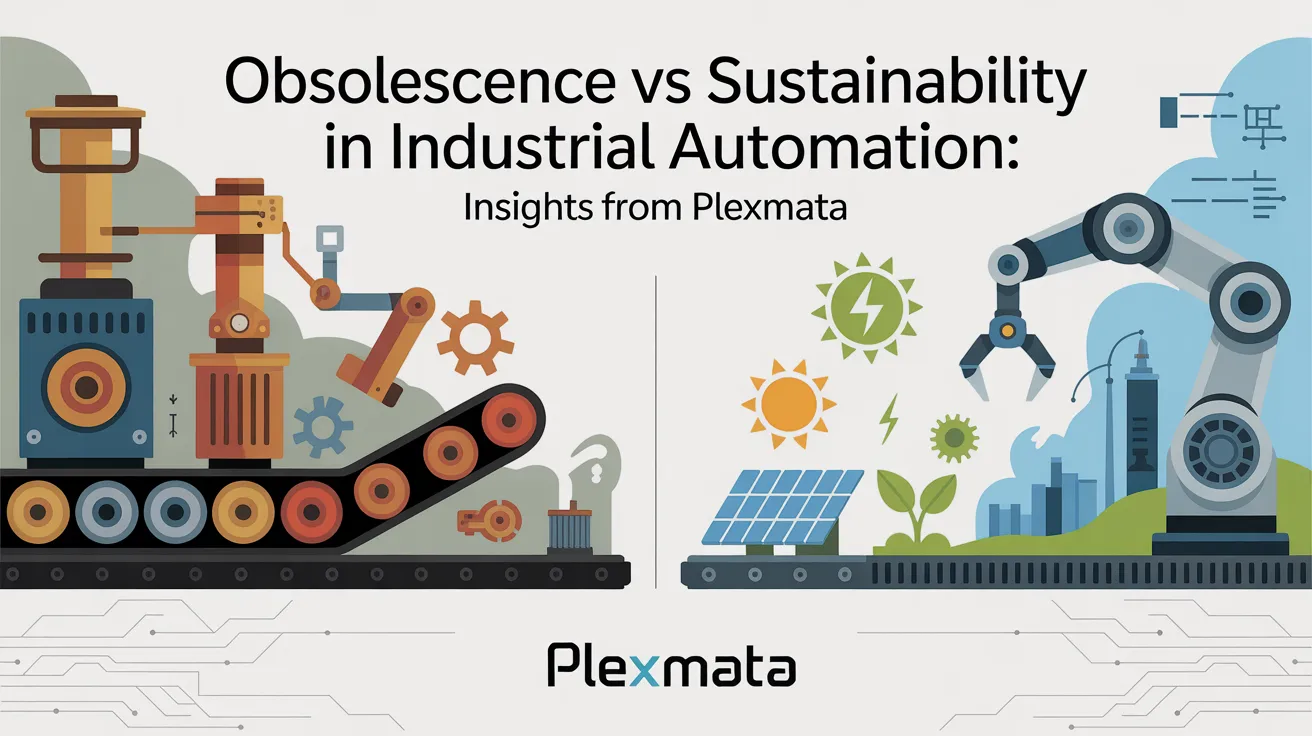
Industrial automation helps factories improve productivity, accuracy, and efficiency. Technologies like PLCs, drives, sensors, and robotics allow manufacturers to automate complex production processes. However, as technology evolves quickly, businesses often struggle to manage obsolete automation components while also focusing on sustainability.
Many factories still operate legacy automation systems that perform well but no longer receive manufacturer support. In such cases, finding reliable replacement parts becomes essential. Platforms like Plexmata help manufacturers source new, refurbished, and obsolete automation components to keep production lines running without major system upgrades.
What Is Obsolescence in Industrial Automation
Obsolescence occurs when a component is no longer manufactured or supported by the original supplier. This is common with PLCs, drives, HMIs, and industrial controllers. When these parts become unavailable, maintaining existing machinery becomes difficult. Companies may need to find compatible replacements or redesign their systems.
Why Automation Components Become Obsolete
Industrial automation technology develops very quickly. Manufacturers regularly introduce new products with improved performance and features. As new models appear, older components are discontinued. This creates challenges for industries that rely on long-lasting equipment.
Impact of Obsolete Components on Production
A single obsolete component can stop an entire production line. Without access to replacement parts, machines may remain idle. This can lead to production delays, higher maintenance costs, and financial losses for manufacturers.
Sustainability Challenges in Industrial Automation
Frequent replacement of automation equipment can increase electronic waste. Many industrial components contain materials that require proper recycling. Discarding functional equipment too early wastes resources. Sustainable strategies help reduce environmental impact in manufacturing.
How Automation Supports Sustainability
Automation can actually help companies operate more sustainably. Smart systems monitor energy usage and reduce material waste. Real-time data allows machines to run efficiently. This improves productivity while lowering environmental impact.
Extending the Life of Automation Systems
Many manufacturers aim to extend the life of their automation equipment. Preventive maintenance helps detect problems before failures occur. Repairing and refurbishing components can also keep machines running longer without expensive upgrades.
Reliable Sources for Automation Components
Access to reliable suppliers is important when dealing with obsolete automation parts. Specialized marketplaces make it easier to locate discontinued components. Manufacturers can find PLCs, drives, and other essential parts through Plexmata, helping them maintain existing systems efficiently.
Importance of Preventive Maintenance
Preventive maintenance reduces unexpected machine failures. Monitoring system performance allows technicians to fix issues early. This approach minimizes downtime and extends the lifespan of automation equipment.
Conclusion
Obsolescence and sustainability are closely connected challenges in industrial automation. Rapid technological advancement requires companies to manage equipment carefully. By maintaining systems, sourcing obsolete parts, and adopting sustainable practices, manufacturers can improve efficiency while reducing environmental impact.
