
Understanding the Current Landscape of Contract Lifecycle Management Software and Why It Matters
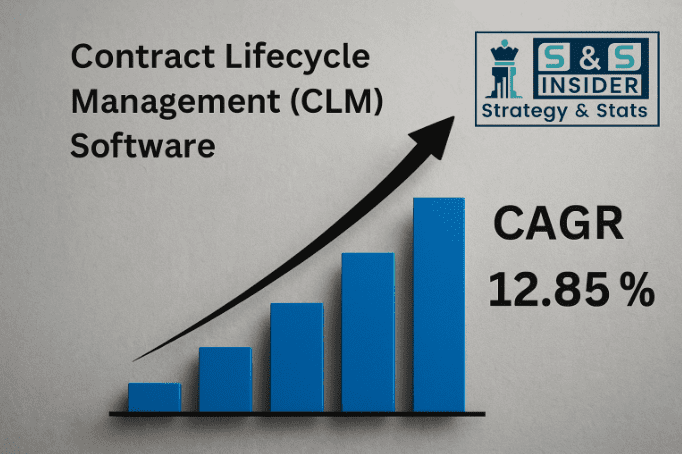
In today’s fast-paced business environment, enterprises increasingly recognise that contracts are more than just legal formalities—they are strategic assets. The Contract Lifecycle Management (CLM) software market reflects this shift: with a recorded market size of USD 1.72 billion in 2023, the industry is set on a strong upward trajectory and is expected to surpass USD 5.10 billion by 2032, growing at a compound annual growth rate (CAGR) of 12.85% during the forecast period of 2024-2032.
This growth underscores the growing importance of automating, tracking and optimising contract workflows as organisations seek to manage risk, improve compliance and accelerate business outcomes.
Key Drivers Fueling the Surge in CLM Software Adoption
Several factors are combining to drive this market expansion. First, the increasing complexity and volume of contracts—especially as companies expand globally and engage with multiple counterparties—demand more robust systems to manage obligations, renewals and performance across jurisdictions. Secondly, regulatory and compliance pressures are mounting: enterprises must provide audit trails, protect sensitive data and demonstrate governance across contract lifecycles. Third, the push for digital transformation and remote-enabled workforces has elevated the need for cloud-based, accessible contract platforms that support collaboration, real-time visibility and integration with other enterprise systems. Collectively, these trends are underpinning the strong momentum the CLM software market enjoys.
Regional Dynamics and Market Share Trends Worth Watching
Geographically, the evolution of the CLM software market reveals interesting patterns. Historically, North America has held a dominant share—driven by well-established enterprises, technology providers and sophisticated regulatory environments. Some research indicates North America captured more than 40% of global share in recent years. At the same time, the Asia-Pacific region is emerging as a high-growth zone: accelerated digitalisation, cloud adoption and expanding enterprise footprints in countries like China and India are contributing to heightened uptake of CLM platforms. Europe also continues to register steady growth, propelled by data-protection regulations and manufacturing-driven contract volumes. As a result, while mature markets continue to anchor revenue, emerging geographies are set to drive the next wave of growth.
Organisation-Size and Industry-Vertical Segmentation That Are Shaping Market Trajectories
When segmenting by enterprise size and end-use industry, clear patterns emerge. Large enterprises, with complex global contract portfolios and cross-functional stakeholder groups, have historically represented the largest share of CLM software adoption. These organisations are investing in full-scale contract platforms to embed policy enforcement, analytics and enterprise-wide visibility. However, small and medium-sized enterprises (SMEs) are gradually gaining traction—thanks to subscription-based models, cloud deployments and simplified configuration. In terms of verticals, sectors such as banking, financial services & insurance (BFSI), manufacturing, retail and life sciences are among the early adopters. The complexity of regulatory compliance, supplier relationships and global contracting in these industries makes CLM a compelling value-led investment.
Technology Enablers and Evolving Functional Expectations in the CLM Ecosystem
As the CLM software market matures, functional expectations are rising. Initially focused on basic contract repository, tracking and alerts, CLM platforms are increasingly incorporating advanced features such as artificial intelligence (AI) for clause extraction, analytics to surface contract risk or opportunity, and deeper integrations with ERP/CRM/procurement systems to align contract outcomes with business outcomes. Cloud deployment remains the preferred model, offering scalability, remote access and faster time to value—and many organisations are migrating from on-premises installations to hybrid or cloud models. These technology shifts are both enabling adoption and raising the bar for new entrants in the CLM ecosystem.
Forecast Outlook and What the Numbers Suggest for Market Participants
According to industry projections, the CLM software market’s growth — from 2024 through 2032 with a CAGR of 12.85% and a projected size exceeding USD 5.10 billion — reflects a healthy appetite for contract-centric tooling. For market participants—whether vendors, service providers or enterprise buyers—this signals that investment momentum remains strong, but competition and differentiation will intensify. Vendor strategies will increasingly hinge on delivering not just contract automation, but insight, integration and outcomes. For enterprises evaluating CLM, the forecast points to a broadening set of options, so careful alignment of objectives, architecture and adoption roadmap becomes more critical.
Challenges and Considerations That Could Influence Near-Term Dynamics
While the growth outlook is compelling, the CLM software market is not without its challenges. Implementation complexity—especially for large, global organisations with legacy systems and deeply embedded contract processes—remains a barrier. Integration with existing systems, change management and user adoption continue to require thoughtful planning. Additionally, while cloud platforms offer agility, data sovereignty concerns and regulatory compliance in certain jurisdictions may constrain full cloud migration. Finally, differentiating value beyond contract management—moving toward proactive insight and decision support—will become increasingly important as the market matures.
Final Reflections: Positioning for Success in a Growing Market
In summary, the contract lifecycle management software market is entering a period of robust growth, underpinned by expanding use cases, regulatory demand, technological innovation and global adoption. The fact that the market size was roughly USD 1.72 billion in 2023 and is projected to exceed USD 5.10 billion by 2032 (with a CAGR of 12.85%) speaks to the strategic centrality of contracts in the enterprise value chain. For organisations evaluating CLM software, the message is clear: the investment window is now, but success will depend on selecting platforms that align to long-term strategic goals, integrate cleanly into broader enterprise systems and support analytics-driven decision making. As contract ecosystems become larger and more complex, the right CLM approach will increasingly separate high-performance organisations from the rest.
In short, the CLM software market offers compelling growth opportunities—but realizing value demands clarity of purpose, alignment across stakeholders and readiness for the evolving technological and regulatory landscape.