
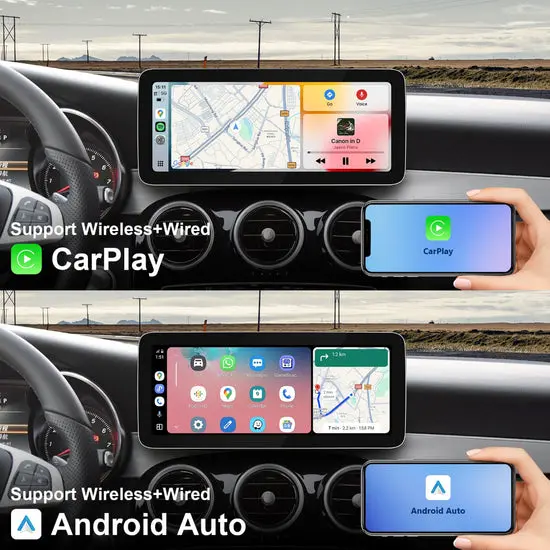
Imagine starting your car, and your phone connects instantly — no fumbling with cables, no cluttered dashboard, just seamless access to your apps, music, and navigation the moment you sit down. Wireless technology has quietly transformed the driving experience, and Mercedes-Benz owners are now at the forefront of that shift.
The Mercedes CarPlay wireless adapter is one of the most talked-about car technology upgrades right now, and for good reason. It takes the wired Apple CarPlay connection your Mercedes already supports and cuts the cord entirely, giving tech-savvy drivers the fluid, cable-free experience they’ve been waiting for. Whether you’re making hands-free Bluetooth calls on a busy commute or streaming music through your Mercedes’ premium audio system, this small device delivers a noticeably smarter ride.
In this article, we’ll break down exactly what a wireless CarPlay adapter is, why it’s worth adding to your list of Mercedes accessories, and how it integrates with your existing car multimedia system. We’ll also walk you through installation, highlight what to look for when choosing one, and help you get the most out of your upgrade. If you’re ready to bring your Mercedes into the wireless era, read on.
What is a Mercedes CarPlay Wireless Adapter?
A Mercedes CarPlay wireless adapter is a compact plug-and-play device that eliminates the need for a USB cable when using Apple CarPlay in your vehicle. Standard CarPlay requires a physical connection between your iPhone and the car’s USB port every time you get in. This adapter sits in that USB port permanently and handles the connection wirelessly, so your phone links up automatically the moment you enter the car. For Mercedes owners who already have a wired CarPlay-compatible infotainment system, it’s one of the simplest car technology upgrades available — no rewiring, no complex installation, no modifications to your vehicle.
At its core, the adapter acts as a bridge between your smartphone and your car multimedia system. It uses a dual-connection approach: Bluetooth handles the initial pairing and handshake between your iPhone and the adapter, while a dedicated 5GHz Wi-Fi signal takes over for the actual data transfer. This combination keeps the connection fast and stable, delivering smooth app performance, responsive navigation, and uninterrupted audio through your Mercedes’ speakers.
As a category of Mercedes accessories, these adapters have gained real traction because they work within your car’s existing infrastructure rather than replacing it. You’re not adding a new screen or swapping out hardware — you’re simply unlocking a wireless capability that your system was always capable of supporting. For drivers who value a clean, clutter-free cabin and want their technology to work effortlessly, this small device makes a surprisingly meaningful difference in the daily driving experience.
Key Features and Technology Behind the Adapter
Most quality wireless CarPlay adapters share a common set of features worth understanding before you buy. The plug-and-play design means there’s no app to download and no complicated configuration — you connect it once, pair your phone, and the setup is essentially complete. Compatibility spans a wide range of Mercedes models, typically any vehicle with a factory-installed wired CarPlay system from around 2016 onward. On the connectivity side, the adapter relies on Bluetooth 5.0 for pairing and a 5GHz Wi-Fi channel for streaming, which keeps latency low enough that audio, maps, and Siri responses feel just as responsive as they do over a cable. Many adapters also support high-resolution audio passthrough, so the sound quality coming through your Mercedes’ Burmester or standard audio system remains uncompromised.
Why Upgrade? Benefits for Tech-Savvy Drivers
For drivers who already appreciate what their Mercedes can do, a wireless CarPlay adapter isn’t just a novelty — it’s a logical next step. The most immediate benefit is pure convenience. Rather than reaching for a cable every time you get in, your phone connects automatically within seconds of starting the car. Over the course of a week, that small friction point adds up, and eliminating it makes the driving experience feel noticeably more polished. It’s the kind of upgrade that, once you’ve used it, makes going back feel oddly primitive.
Seamless Bluetooth Calls and Music Streaming
Safety is another compelling reason to make the switch. With a wireless setup, your phone stays in your pocket or bag rather than tethered to the center console, reducing the temptation to handle it while driving. Bluetooth calls route through your Mercedes’ microphone and speakers with the same clarity you’d expect from a native hands-free system, and Siri handles messages and navigation commands without requiring you to touch anything. Music streaming works just as smoothly — your playlists, podcasts, and streaming apps appear on the infotainment screen the moment CarPlay launches, with audio delivered through your Mercedes’ speaker system at full quality. There’s no compression penalty or noticeable audio lag compared to a wired connection.
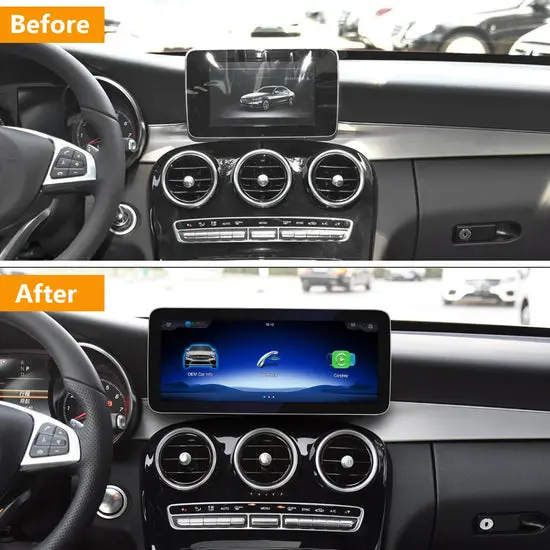
Integration with Mercedes’ 12.3-inch Screen
Mercedes vehicles equipped with the MBUX infotainment system and the wide 12.3-inch display benefit particularly well from this upgrade. The wireless adapter doesn’t change what appears on screen — CarPlay still fills the display with the same familiar interface — but the absence of a cable makes the whole setup feel intentional rather than retrofitted. App icons are crisp and touch-responsive, Apple Maps and Google Maps render smoothly across the wide display, and switching between CarPlay and the native Mercedes menu is instantaneous. For drivers who use their car’s screen as a primary navigation and communication hub, the wireless experience simply feels like how it should have worked from the start.
Enhancing Your Car Multimedia System
A wireless CarPlay adapter doesn’t operate in isolation — it becomes part of your Mercedes’ broader technology ecosystem, and that integration is what makes it genuinely valuable. Rather than adding complexity to your car multimedia system, it works within the existing architecture, enhancing what’s already there without displacing any native functionality. Your MBUX menus, ambient lighting controls, climate settings, and driver assistance features remain fully intact. CarPlay simply becomes one more seamlessly accessible layer within that system, launched wirelessly and dismissed just as easily.
The adapter also plays well with other Mercedes accessories you may already be using. If your vehicle has a wireless charging pad, your phone can sit there untethered while CarPlay runs in the background — no cable competing for the same spot. Dash cameras connected through the USB hub don’t interfere with the adapter’s operation, and Bluetooth headsets or external speakers can still pair independently through the car’s native Bluetooth stack. This kind of compatibility matters for drivers who’ve already invested in building out their in-car setup and don’t want a new accessory to disrupt what’s working.
Compatibility with Mercedes Accessories and Models
Most wireless CarPlay adapters are designed to work with any Mercedes-Benz that supports factory-installed wired Apple CarPlay, which covers a broad range of models from approximately 2016 onward. This includes popular lines like the C-Class, E-Class, GLC, GLE, and S-Class, provided they came equipped with the compatible COMAND or MBUX infotainment system. Before purchasing, it’s worth confirming your specific model year and trim level, since not every configuration shipped with CarPlay enabled from the factory. On the software side, keeping your Mercedes’ infotainment firmware current ensures the adapter communicates properly with the system — Mercedes periodically releases over-the-air updates that can improve wireless device compatibility. No additional hardware beyond the adapter itself is typically required, though a USB-A to USB-C adapter may be needed depending on which port your vehicle uses.
Step-by-Step Guide to Installing and Using a Mercedes CarPlay Wireless Adapter
Installing a wireless CarPlay adapter is genuinely straightforward, but a little preparation goes a long way toward making the process smooth. Before you touch anything, confirm that your iPhone is running iOS 10 or later and that your Mercedes’ infotainment software is fully updated — outdated firmware is one of the most common reasons adapters fail to connect properly. Park in a safe, stationary location, and have your phone unlocked and nearby. That’s essentially all the preparation required.
Preparing Your Mercedes for Installation
Start the car so the infotainment system powers on fully. Locate the USB-A port in your center console — this is typically the same port you’ve been using for wired CarPlay. If your Mercedes only has USB-C ports, have a USB-A to USB-C adapter ready. Check that no other devices are currently connected to that port, and temporarily disable any previously paired Bluetooth devices on your phone to avoid interference during the initial pairing sequence.
Connecting and Configuring the Adapter
Plug the adapter into the USB port. Within a few seconds, it will appear as a Bluetooth device on your phone — look for a name like “Carlinkit” or similar, depending on the brand. Pair your phone to it via Bluetooth settings. Once paired, the adapter negotiates a 5GHz Wi-Fi handoff automatically, and CarPlay should launch on your Mercedes’ display within 15 to 30 seconds. On your infotainment screen, select CarPlay if prompted, confirm wireless mode, and test a Bluetooth call and a navigation app to verify both audio and data are working correctly. From this point forward, the connection happens automatically every time you start the car.
Troubleshooting Common Issues
If CarPlay doesn’t launch after the first pairing attempt, the fix is usually simple. First, check that CarPlay is enabled on your iPhone under Settings → General → CarPlay. If the connection drops intermittently, your phone may be defaulting to a 2.4GHz network — ensure your phone’s Wi-Fi isn’t locked to a conflicting band. For persistent audio lag, a full adapter reset (hold the reset button for five seconds) followed by re-pairing typically resolves it. If the adapter isn’t recognized by the car at all, try a different USB port or test with a short USB extension cable, which can sometimes resolve port-depth compatibility issues on certain Mercedes models.
Choosing the Best Wireless CarPlay Adapter for Your Mercedes
With several adapters on the market, picking the right one comes down to a handful of criteria that genuinely affect day-to-day performance. Compatibility should be your first filter — confirm the adapter explicitly supports your Mercedes model year and infotainment system, whether that’s COMAND or MBUX. Beyond compatibility, brand reputation and user reviews carry real weight here. Adapters from established names tend to receive regular firmware updates, which matters more than most buyers initially realize. As Mercedes rolls out infotainment software updates, a well-supported adapter will stay in sync rather than developing connection quirks over time. User reviews are particularly useful for spotting real-world issues that spec sheets won’t mention, such as connection reliability in cold weather or how quickly the device reconnects after a restart.
Top Features to Look For
Low latency is non-negotiable. An adapter that introduces noticeable delay between tapping an app and seeing a response, or between speaking a Siri command and hearing a reply, undermines the entire point of the upgrade. Look for adapters that specify 5GHz Wi-Fi support, since this band delivers the throughput needed for smooth video-based navigation and uncompressed audio streaming through your Mercedes’ speaker system. A compact, low-profile design matters too — bulky adapters that protrude significantly from the USB port can block adjacent controls or feel insecure over bumpy roads. Support for the latest iOS versions is another practical must-have, since Apple’s CarPlay updates occasionally change how wireless handshakes are negotiated, and an adapter that hasn’t kept pace will start dropping connections after a software update on your phone.
Recommended Products and Brands
A few brands have built consistent reputations in this space. Carlinkit is widely regarded as a benchmark option, known for reliable connections, frequent firmware updates, and broad Mercedes compatibility. AAWireless has earned strong reviews among Android Auto users but also offers CarPlay-capable versions worth considering. Ottocast is another brand that appears frequently in enthusiast communities, particularly for its compact build and stable 5GHz performance. Specialists in the car audio space, such as PEMP Car Audio, also offer curated adapter options that are vetted for compatibility with specific Mercedes configurations — a useful resource if you want guidance tailored to your exact model. When comparing options, prioritize update frequency over feature lists — an adapter that the manufacturer actively supports will serve you better over two or three years than one with impressive specs but no post-sale development. Reading through recent user feedback on forums specific to your Mercedes model will quickly surface which brands are holding up well with current iOS and MBUX versions.
Upgrade Your Mercedes with Wireless CarPlay Today
The wireless CarPlay adapter represents one of the most practical and satisfying upgrades available to Mercedes owners today. It doesn’t reinvent your car — it refines it. By cutting the cable between your iPhone and your infotainment system, it removes a small but persistent friction point from your daily routine, leaving you with a driving experience that feels genuinely modern and intentional. From hands-free Bluetooth calls and seamless music streaming to crisp navigation across your Mercedes’ wide display, every interaction becomes a little smoother and a little smarter.
What makes this upgrade particularly compelling is how effortlessly it fits into your existing setup. There’s no complex installation, no trade-offs with native Mercedes features, and no disruption to the other accessories you’ve already invested in. It simply works — and keeps working, provided you choose a brand that actively supports its firmware.
If you’re a tech-savvy driver who values a clean cabin and expects your technology to keep pace with the rest of your Mercedes, this adapter is worth serious consideration. Start by confirming your model year and infotainment system type, then explore the reputable brands discussed here. A quick check of Mercedes-specific forums will help you zero in on the option best suited to your exact configuration. Once you’ve made the switch, the only question you’ll have is why you waited this long.