
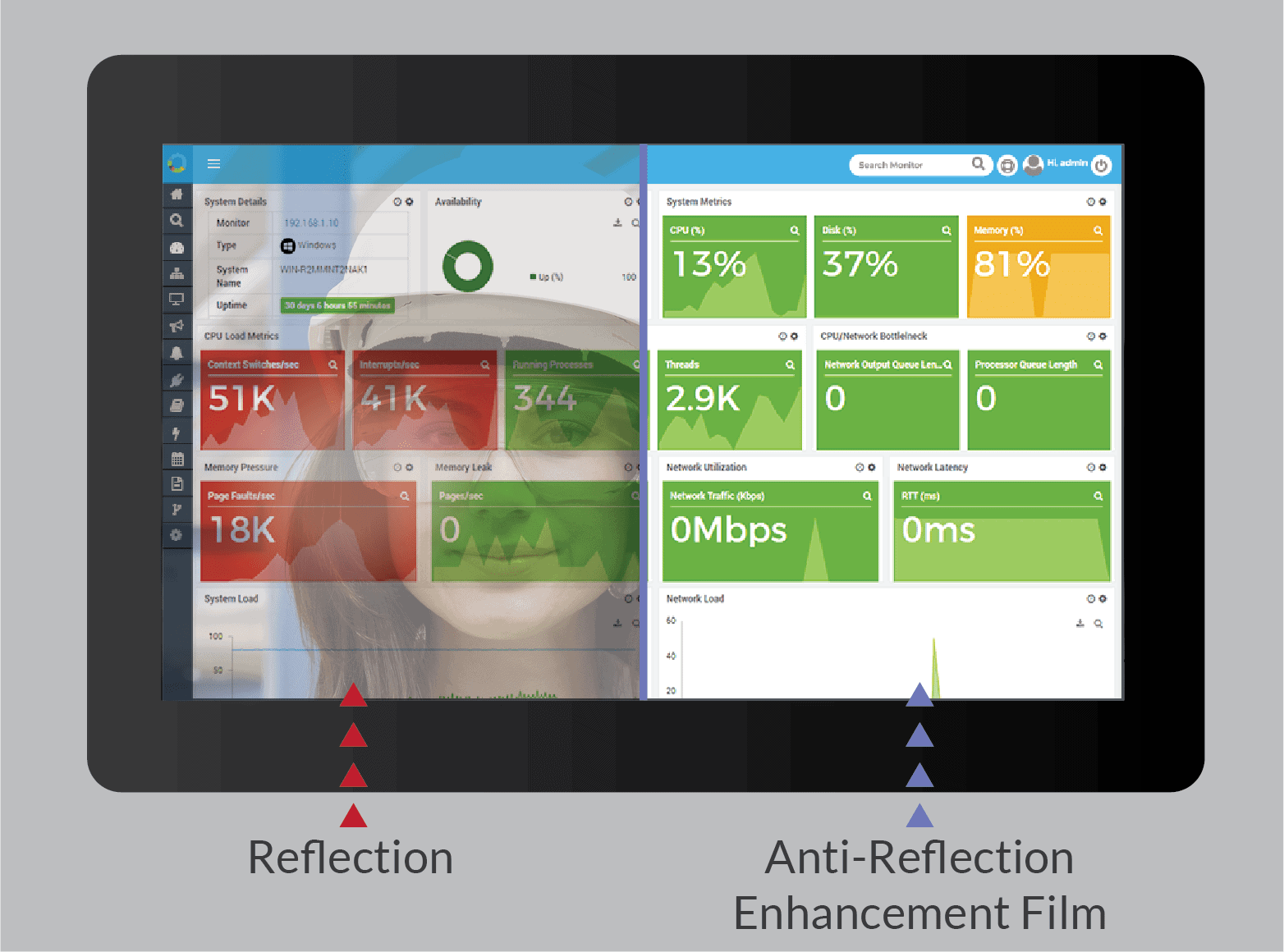
Display readability is often determined not by its size or brightness but by how effectively it controls light. From cockpit instrumentation to outdoor kiosks, visual clarity under varying light conditions is critical. A transflective display represents a finely engineered balance between light reflection and transmission—designed to perform equally well under direct sunlight and in low-light environments.
The secret to achieving this balance lies in precise material and polarizer engineering. Each layer within a display—from its glass substrates to its polarizing films—plays a vital role in determining how efficiently light is used or reflected. By combining innovative materials and advanced optical films, display engineers can produce LCDs that remain readable in sunlight, conserve energy, and deliver stable performance in rugged environments.
For industries such as aerospace, defence, and industrial automation, these qualities are not optional—they are essential. Displays in these sectors must perform flawlessly under fluctuating illumination, extreme temperatures, and heavy vibration. This is why understanding the material and polarizer configurations behind reflective LCD display technology is key to creating high-efficiency visual systems built for endurance.
The Role of Materials in Enhancing Reflectivity
At the heart of a reflective or transflective display is its material composition. Every layer in the display affects how light interacts with the panel, determining both efficiency and visual quality. A reflective LCD operates differently from standard transmissive displays—it does not rely solely on a backlight. Instead, it uses ambient light to illuminate the display by reflecting it toward the viewer.
The key to achieving this reflection lies in materials such as:
- Reflective backplanes: Often composed of metalized films or engineered reflective coatings, these surfaces redirect ambient light uniformly to improve brightness without additional power draw.
- High-clarity substrates: Glass or polymer substrates with low haze and high transparency ensure that reflected light is not diffused excessively, maintaining image sharpness.
- Optical adhesives: These materials reduce internal light scattering by bonding layers seamlessly, minimizing energy loss between interfaces.
- Protective coatings: Scratch-resistant and anti-UV coatings preserve optical clarity while ensuring durability during prolonged exposure to sunlight and outdoor elements.
When chosen and layered correctly, these materials enhance reflectivity, extend the display’s lifespan, and maintain readability in direct sunlight.
Polarizer Technologies That Control Light Efficiency
Polarizers control how light travels through a display, filtering and aligning light waves for optimal brightness and contrast. In transflective displays, a semi-reflective polarizer layer allows a portion of light to pass through while reflecting the rest—enabling visibility with or without a backlight.
The type and configuration of polarizers used can significantly influence display performance. Common technologies include:
- Linear polarizers which are standard for most LCDs. They transmit light in a single plane, providing basic light control suitable for controlled indoor environments.
- Circular polarizers, which combine a linear polarizer and a quarter-wave retarder to eliminate external reflections—ideal for outdoor displays facing direct sunlight.
- Dual brightness enhancement films (DBEF), which recycle polarized light that would otherwise be lost, enhancing energy efficiency and brightness.
- Reflective polarizers, used in reflective LCDs, return unused light toward the viewer to increase apparent luminance while maintaining color balance.
The combination of these polarizers determines how efficiently a display manages light, reducing glare, maintaining contrast, and ensuring optimal readability regardless of lighting conditions.
Balancing Reflectivity, Contrast, and Color Accuracy
Achieving optimal reflectivity in an LCD display involves balancing several optical factors. Excessive reflection can reduce contrast, while poor polarization can distort color accuracy. Engineers must ensure that reflected light contributes to visibility without overwhelming the displayed image.
To achieve this balance, displays often include compensatory films that fine-tune light polarization and phase. These films prevent color shifting and maintain deep blacks even in bright conditions. Additionally, transflective displays often integrate anti-reflective coatings on the outer surface to minimize unwanted external reflections while preserving the internal reflective benefits.
When properly engineered, this balance results in a display that remains readable in sunlight without appearing dull in low light. Such optical optimization is crucial for mission-critical applications where visual data must remain accurate in all environments.
Environmental and Durability Considerations
Material and polarizer choices not only determine optical efficiency but also impact long-term durability. Reflective and transflective displays often operate in environments where temperature extremes, moisture, and UV exposure are constant challenges.
To combat these stresses, engineers employ materials with the following characteristics:
- Thermal stability: Ensuring minimal expansion or contraction under temperature variation.
- UV resistance: Preventing discoloration and degradation of polarizer layers over time.
- Hydrophobic coatings: Which repel moisture and prevent fogging or condensation inside sealed units.
- Hard-coated surfaces: Improving scratch resistance for outdoor and industrial applications.
Environmental resilience is further reinforced through optical bonding, which eliminates the air gap between the display surface and protective glass. This technique reduces internal reflections, enhances impact resistance, and improves readability by maintaining optical alignment across the display surface.
Such engineering ensures that reflective and transflective displays can endure demanding field conditions—from high-altitude flight decks to sun-exposed control panels.
Real-World Applications of Reflective LCDs with Optimized Polarizers
Reflective and transflective displays are found across multiple industries where visibility and energy efficiency are paramount.
- Aerospace: Flight displays and cockpit instrumentation rely on reflective technology to maintain clarity under bright sunlight without relying solely on high-powered backlighting.
- Defence and tactical systems: Rugged portable monitors use reflective designs for reliable visibility during field operations.
- Industrial automation: Control panels and outdoor terminals use reflective LCDs to ensure readability during long shifts under varying lighting conditions.
- Medical and wearable devices: Portable equipment benefits from transflective technology that extends battery life while maintaining continuous screen visibility.
- Marine navigation systems: Reflective displays improve operational safety by reducing glare and maintaining contrast even under direct reflection from water surfaces.
These applications highlight the universal benefit of material and polarizer optimization—displays that stay bright and legible under any condition, without sacrificing energy efficiency.
How E3 Displays Engineers Optical Layers for Reflectivity and Longevity
E3 Displays designs and manufactures reflective LCD displays that integrate advanced materials and optical layers optimized for reflectivity, contrast, and endurance. The engineering process begins with the careful selection of reflective backplanes, polarizer films, and optical adhesives that align with each project’s environmental and operational requirements.
Through advanced optical bonding, E3 Displays ensures high transmission efficiency and structural integrity. Each display undergoes rigorous environmental and mechanical testing, including temperature cycling, humidity resistance, and vibration simulation, to verify its long-term performance. Whether developing transflective modules for cockpit instrumentation or reflective monitors for industrial control systems, E3 Displays focuses on achieving optical precision that aligns with real-world operational demands.
Reflectivity Engineered Through Precision Materials
A well-engineered reflective or transflective display results from countless material and polarizer choices that balance efficiency, readability, and resilience. Every layer contributes to how light is managed, ensuring the display performs optimally under both natural and artificial illumination.
Through advanced material science and precise optical engineering, E3 Displays creates high-performance reflective LCD monitor systems that deliver exceptional clarity and durability in any environment. These displays are designed to operate efficiently while maintaining visual fidelity and structural strength—meeting the needs of aerospace, defence, medical, and industrial sectors alike.
For industries that demand energy-efficient, sunlight-readable display solutions built for longevity, contact us today to engineer a reflective display system tailored for superior optical performance and endurance.
