
There is an exponential demand for lymphedema care personnel. Career-wise, lucrative opportunities await qualified and experienced lymphedema care personnel, as the global wound care market is surging to the size of $25.07 billion by 2027.
This has created a thriving education market of lymphatic wound management training. Studies also suggest a heavy short supply of care personnel in contrast to the spurting demand.
Some of the contributory factors to the spread of lymphedema cases are the rise in the aging population and chronic conditions like diabetes and obesity.
Lymphedema wound management courses
The lymphatic and wound management institutes are grooming the personnel and also bridging the gap between skill sets sought in clinical and home care setups in the care ecosystem of lymphatic and wound management.
The multidisciplinary integrated courses that are both short-term and long-term address the demand for specialized training for faster diagnosis and cure plans expected of well-educated specialists.
The lymphedema therapist courses, also called CLT courses, offer economic and professional advantages for healthcare providers and institutions.
The certified courses also enhance career opportunities for therapists, particularly in cancer rehabilitation.
Why AALWM lymphedema courses are unique
Among the CLT courses in the USA, the lymphatic wound management training by the American Academy of Lymphatic and Wound Management (AALWM) is comprehensive. It finely integrates many specialized disciplines into a single stream.
The integrated lymphatic and wound management curriculum binds many modules, including Modern Manual Lymphatic Drainage (MLD), advanced wound therapy, and an array of compression methods. Other areas of high focus are lymphatic nutrition, disease management, and psychological care of the patient.
Lymphatic wound management training accords a high priority to the latest techniques in wound care as a critical function. The specialized approach makes sure that the inability of the malafide lymphatic system t to drain fluid is set right and hasten the natural healing process without the risk of other infections.
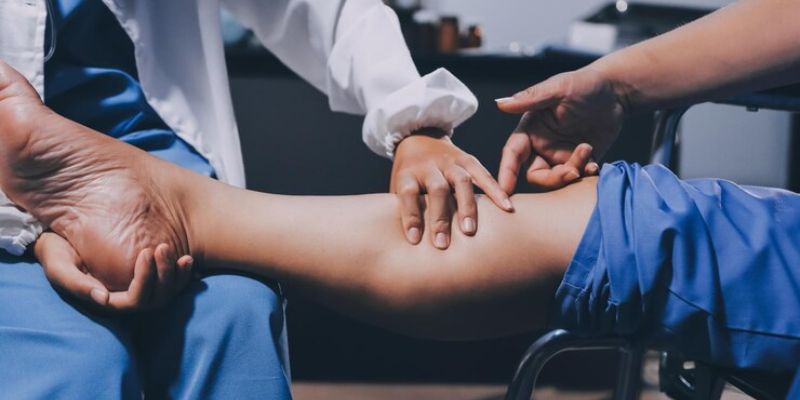
Among the prominent wound management techniques in the lymphatic wound management curriculum is compression therapy that curbs the edema and lets the wound heal. In multi-layer bandaging, a combination of soft liner, foam padding, and short-stretch bandages are used to manage pressure while moving and resting.
Compression garments like custom-fitted stockings and their applications are exhaustively trained to ensure the limb volume gets stabilized faster.
The learning methodology is very appealing.
The AALWM lymphatic and wound management follows a hybrid format approach with 65 hours of online home study and 75 hours of intensive in-person lab training for theoretical depth and enhanced practical skills.
The CLT programs of lymphatic and wound management in the AALWM course groom the candidate with theoretical and practical skills so that the candidate can go ahead with preparation for the LANA board examination for accreditation.