

The Luxury Everest Base Camp Trek costs more than a standard teahouse trek because it covers far more comfort, support, and logistics from start to finish. It includes premium accommodation in Kathmandu, upgraded lodges on the lower Everest route, domestic flights, permits, guide support, porter support, and the best available lodges higher on the trail.
For many travelers, the main value lies in what the package removes. You do not need to arrange flights to Lukla, mountain permits, porter support, or lodge bookings yourself. You also get greater comfort in the lower and middle sections of the trek, where bathroom access, room warmth, meal quality, and recovery matter most.
The package usually includes:
- Kathmandu hotel stays before and after the trek
- Domestic flights and airport transfers
- Trekking permits
- Guide and porter support
- Meals on the trek
- Luxury lodges on the lower route
- Best available standard lodges above the main luxury zone
A few costs still sit outside the package. Travelers should budget separately for Nepal visa fees, travel insurance, tips, drinks, personal spending, and optional upgrades such as a helicopter return. Solo travelers should also check the single supplement before booking.
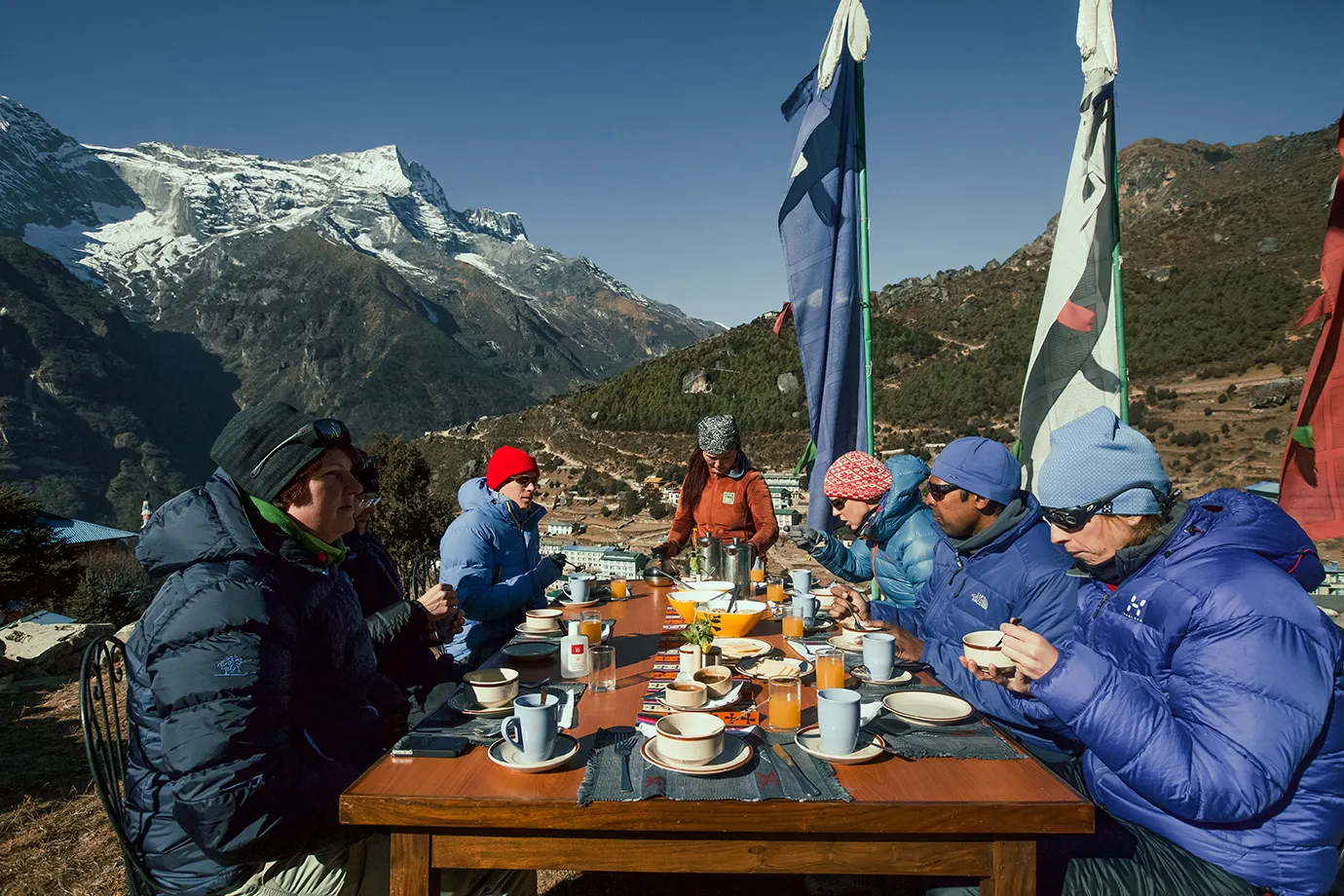
Luxury Everest Base Camp Trek Accommodation by Village
In Kathmandu, trekkers stay in a premium city hotel before and after the trek. That gives them a strong start and a comfortable finish. A proper hotel room, a hot shower, a good breakfast, and restful sleep make a real difference before going into the mountains.
On the lower route, the trek uses luxury lodges in places like Lukla, Phakding, and Namche. These stays usually offer the best room comfort on the trekking portion of the route. Travelers can often expect stronger bedding, cleaner bathrooms, better room heating, and more reliable shower access. Hotel Everest View and selected luxury lodges near Deboche also raise the comfort level in the middle part of the trail.
Dingboche marks the transition point where comfort remains better than on a standard trek, but full luxury lodge standards begin to fade. Above this point, the trek shifts into the best available standard lodges.
Lobuche and Gorak Shep do not have true luxury lodges. Travelers should expect simpler rooms, shared bathrooms, and far more limited shower comfort. At this stage, the value of the Luxury Everest Base Camp Trek shifts away from room style and toward support, pacing, meals, and overall trip management.
The page should make one point very clear: private bathrooms and lower-route lodge comfort are part of the premium experience, but they do not continue all the way to Everest Base Camp.
Luxury vs Standard Everest Base Camp Trek
The Luxury Everest Base Camp Trek and a standard Everest Base Camp trek follow the same broad route, but the day-to-day experience feels very different. The standard trek focuses on lower cost and basic mountain lodging. The luxury trek focuses on more comfort, more privacy, better support, and easier recovery.
On a standard trek, bathrooms are usually shared, rooms are more basic, showers may cost extra, and meals are simpler. On a luxury trek, lower-route lodges often give travelers attached or better-quality bathrooms, more reliable hot showers, stronger bedding, and a calmer lodge environment. That difference matters after long walking days, especially in cold weather.
Meals also feel different. Standard trekking usually means simple teahouse dining, basic service, and a more repetitive daily rhythm. Luxury trekking usually offers a stronger dining setup, more organized meal service, and a more comfortable place to rest in the evening.
Support is another major difference. Luxury trekking often includes a better guide ratio, stronger porter support, and smoother logistics from the moment travelers arrive in Kathmandu. They carry less stress, sleep better, and recover better.
The main limit is altitude. No operator can create full luxury lodge conditions at Gorak Shep or Lobuche. At that point, both standard and luxury trekkers deal with simpler facilities. The difference is that luxury travelers still benefit from better overall support, better trip flow, and stronger comfort in the lower and middle sections.
A comparison section like this helps readers decide which Everest experience they really want. It also helps search engines understand that the page answers real comparison intent, not just booking intent.
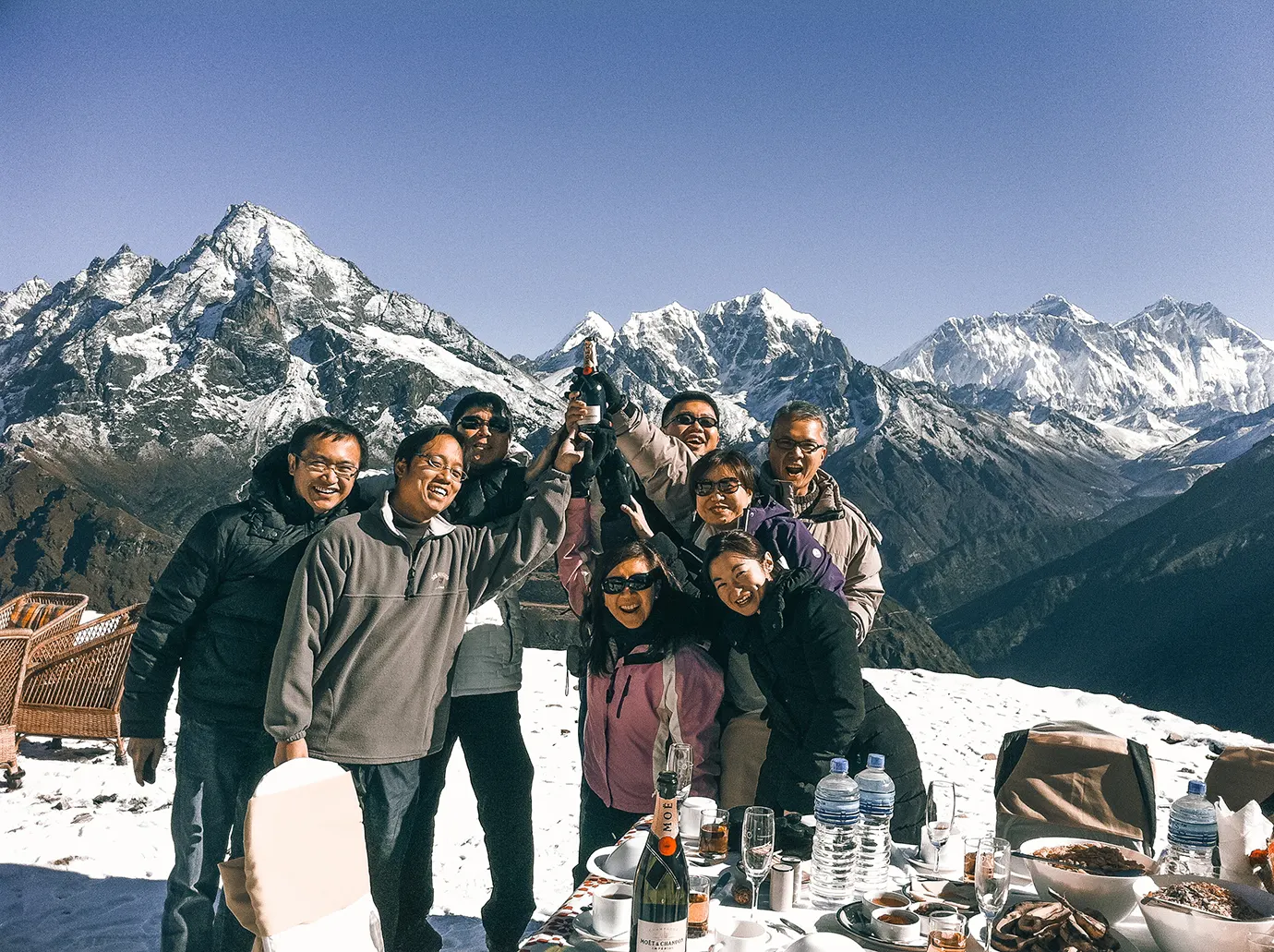
Best Time for the Luxury Everest Base Camp Trek
The best time for the Luxury Everest Base Camp Trek is usually spring or autumn. These two seasons offer the best mix of mountain views, lodge comfort, flight reliability, and stable trekking conditions.
Spring brings warmer lower trails, blooming rhododendrons, and a lively mountain atmosphere. It suits travelers who want a more active trekking season with strong scenery and slightly softer lower-route temperatures. Autumn brings crisp skies, dry conditions, and some of the clearest mountain views of the year. Many trekkers see it as the best season for visibility and classic Everest views.
Winter can still work for travelers who want quiet trails and do not mind colder mornings and simpler conditions at altitude. The main drawback is comfort. Even on a Luxury Everest Base Camp Trek, bathrooms, hot showers, and water systems become harder to manage in deep winter.
The monsoon season is less ideal for a premium Everest experience. Cloud cover, rain, leech-prone lower trails, and flight disruption risk make it less attractive for most travelers. Some people still travel in the shoulder season, but they should do so with realistic expectations.
A strong on-page section should answer practical questions:
- When do lodges feel most comfortable?
- When are flights most reliable?
- When are mountain views strongest?
- When is a helicopter backup more useful?
Travelers comparing luxury packages often want this information before they even read the full itinerary.
Who Should Choose This Trek
The Luxury Everest Base Camp Trek is not only for people who want a nicer room. It suits travelers who want the full Everest experience in a more comfortable and better-supported way.
Couples often choose Everest Hiking in Nepal because they want a shared mountain trip without sacrificing privacy or basic comfort. Older trekkers often choose it because attached bathrooms, better beds, and stronger lodge comfort reduce daily stress. First-time high-altitude travelers often prefer this option because it feels more manageable and less intimidating.
Private travelers also fit well with this trek. Some people do not want the pace or group dynamic of a large standard trekking group. They want more flexibility, more attention from the guide, and a smoother overall flow.
Comfort-focused travelers, photographers, and those who worry about recovery also benefit. Better sleep, cleaner bathrooms, stronger meal service, and lighter daily carrying load all make the trek feel easier.
This trek is a strong fit for:
- Couples
- Older trekkers
- First-time Everest trekkers
- Private travelers
- Photographers
- Comfort-focused travelers
- Travelers who value privacy and recovery
A section like this helps the right buyers see themselves in the trip. That improves both conversion and search relevance.
Where Your Money Goes
A premium Everest package works best when travelers understand what they are paying for. The Luxury Everest Base Camp Trek costs more because more money is invested in comfort, support, and logistics at every stage of the trip.
Part of the cost goes into premium hotel nights in Kathmandu. Another part goes into domestic flights, airport transfers, and permits. A large share goes to the lower-route luxury lodges, which offer more comfortable rooms, cleaner bathrooms, and better dining than standard teahouses.
The package also covers guide and porter support. That matters more than many travelers expect. Better staffing improves pacing, reduces carrying load, and gives travelers more confidence on the trail. Safety systems, trip planning, permit management, and mountain logistics also underpin the visible parts of the trip.
Higher up the route, room comfort becomes simpler, but operational costs do not drop. Food, fuel, water, bedding, and daily lodge operations all become harder to manage at altitude. The value shifts from visible room luxury to practical support and smoother execution.
A short money section helps travelers understand that they are not only paying for a bed. They are paying for better sleep, better support, less stress, and a more complete Everest experience.
Optional Helicopter Return: Is It Worth It?
An optional helicopter return is one of the strongest upgrades on a Luxury Everest Base Camp Trek. Many travelers consider it because it saves time, reduces physical strain, and adds a memorable mountain flight to the trip.
The biggest benefit is time. A helicopter return can cut several trekking days from the descent, which is helpful for travelers with limited schedules. It also reduces the physical effort of walking back through the same route after the main Everest highlights are done.
The visual payoff is another reason travelers choose it. A helicopter flight out of the Khumbu can turn the return into one of the most memorable parts of the trip. For photographers and experience-focused travelers, that alone can make it worthwhile.
The main limit is the weather. Helicopter return always depends on mountain conditions, visibility, and flight operations. Travelers should see it as a valuable add-on, not as a guaranteed city-style transfer.
It also usually works on a shared basis, so the final cost depends on seat availability and flight conditions. For some travelers, the standard walk-out remains the better value. For others, especially comfort-focused or time-limited travelers, the helicopter return adds real practical and emotional value.
A good package page should clearly frame it: the helicopter return is not required, but it is one of the strongest premium upgrades available on the Everest route.