
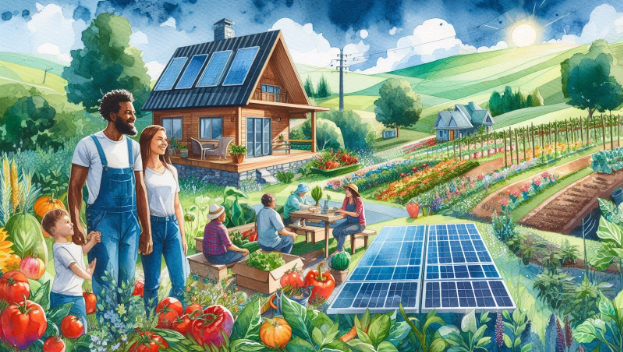
How individuals are redefining self-sufficiency and digital independence through lawful global residency and privacy planning
WASHINGTON, DC — As global connectivity deepens and surveillance technologies advance, the concept of living off the grid has evolved from a fringe lifestyle into a legitimate movement emphasizing privacy, security, and lawful independence. In 2026, “off-grid” living no longer means isolation from society. It now reflects a deliberate and compliant approach to digital minimalism, renewable self-sufficiency, and strategic residency planning designed to protect one’s privacy while remaining fully within legal frameworks. For those seeking personal sovereignty, balancing privacy, security, and legality has become both an art and a discipline.
The Modern Meaning of Off-Grid Living
Off-grid living once referred to physical independence, where individuals resided in rural or remote areas and did not rely on public utilities. Today, it encompasses digital, financial, and legal dimensions. The 2026 model combines sustainable infrastructure, privacy-focused technologies, and global mobility options, all designed to comply with international reporting and residency laws.
Individuals pursuing off-grid independence often do so not to escape regulation, but to exercise greater control over their data, environment, and lifestyle choices. Amicus International Consulting defines lawful off-grid living as “a compliance-based model of self-sufficiency in which individuals minimize digital exposure, decentralize income sources, and establish legitimate privacy frameworks consistent with international legal obligations.”
The Legal Foundation: Privacy Within the Law
The right to privacy is enshrined in multiple national and international legal systems. In the United States, it is protected under the Privacy Act and the Fourth Amendment of the United States Constitution. Globally, frameworks like the European Union’s General Data Protection Regulation (GDPR) and the OECD’s privacy guidelines define individual rights to control personal information.
However, privacy rights exist alongside compliance duties. The U.S. Foreign Account Tax Compliance Act (FATCA), the Common Reporting Standard (CRS), and the Corporate Transparency Act (CTA) require financial transparency for individuals and businesses operating internationally. The balance lies in reducing data exposure while maintaining complete transparency with regulatory authorities.
Living Off the Grid Legally: Key Components
- Energy and Infrastructure Independence: By utilizing renewable power systems, such as solar or wind, combined with water collection and waste recycling, individuals can legally reduce their dependence on public utilities while meeting local environmental standards.
- Digital Privacy Management: Implementing lawful data protection tools, such as encrypted communications, secure devices, and VPNs, within the bounds of cybersecurity laws.
- Financial Transparency: Using regulated financial institutions, offshore or domestic, that comply with AML (Anti-Money Laundering) and FATCA standards.
- Residency and Citizenship Planning: Selecting jurisdictions that respect privacy and support long-term legal residency or dual citizenship programs.
- Legal Compliance: Filing taxes, maintaining identification documentation, and ensuring that all entities or trusts comply with FinCEN and FATCA disclosure requirements.
Case Study 1: The Domestic Off-Grid Family
A family in Colorado transitioned to renewable energy and private well water to achieve energy and water independence. They registered their property under county building codes, paid property taxes, and retained internet connectivity through a low-orbit satellite network. For privacy, they implemented digital hygiene practices, including encrypted communications and minimal data sharing.
This model demonstrates lawful off-grid living within the United States—self-sufficient, transparent, and compliant with environmental and regulatory obligations.
The Global Perspective: Privacy Through Residency Diversification
For individuals seeking deeper privacy and self-determination, global residency diversification has become a strategic component of off-grid living. Jurisdictions such as Portugal, Panama, and New Zealand offer favorable legal frameworks that enable individuals to strike a balance between lawful privacy and global mobility.
- Portugal: Offers digital nomad and passive income visas with moderate taxation and strong EU data privacy protection under GDPR.
- Panama: Offers the Friendly Nations Visa and territorial taxation, enabling residents to exclude foreign-earned income from domestic taxation.
- New Zealand: Emphasizes sustainability and renewable living, offering land ownership opportunities in eco-friendly regions with stable legal systems.
These programs allow individuals to live self-sufficiently and maintain financial independence under transparent residency laws.
Case Study 2: The Expatriate Investor
A U.S. citizen relocated to Portugal under its Golden Visa program. The individual declared all offshore holdings in accordance with FATCA and IRS regulations, while maintaining a compliant offshore account in Singapore. Renewable energy powered the home, and digital transactions were minimized through privacy-friendly payment systems. This approach allowed full tax and residency compliance while reducing exposure to data collection.
Digital Independence: Managing Data in 2026
Living off the grid in 2026 increasingly depends on managing digital exposure. The expansion of AI-driven surveillance, digital identity systems, and global data exchange networks has made data hygiene as essential as financial compliance.
To achieve digital independence, privacy advocates use:
- Encrypted messaging platforms for communications.
- Blockchain-based identity wallets to manage personal verification without disclosing unnecessary data.
- Decentralized storage networks that eliminate reliance on centralized cloud providers.
- Privacy-centric browsers and operating systems that minimize tracking and telemetry.
All these measures are legal when implemented responsibly. In fact, several jurisdictions now encourage individuals to take active roles in protecting their personal data through local privacy laws.
The Role of AI Surveillance and Data Profiling
By 2026, artificial intelligence systems will power the majority of digital surveillance networks. Governments and corporations utilize predictive algorithms to track transactions, social interactions, and behavioral patterns. These technologies aim to prevent fraud and improve security, but they also challenge the boundaries of personal autonomy.
Living off the grid legally means learning how to operate within these systems without feeding them unnecessary data. Limiting smartphone tracking, avoiding biometric ID programs where not mandatory, and using secure digital tools can significantly reduce one’s data footprint while remaining compliant with identity verification requirements.
Case Study 3: Lawful Anonymity Through Digital Minimalism
A remote professional living between the U.S. and Costa Rica opted for a minimal digital presence. All professional communications were handled through secure email and encrypted platforms. The client’s financial accounts were fully disclosed under FATCA, but daily activities were managed through privacy-preserving technologies. By reducing its reliance on cloud services and utilizing decentralized authentication, the client remained compliant while maintaining anonymity from commercial data aggregators.
The Financial Dimension of Lawful Off-Grid Living
True independence requires financial sustainability. Offshore banking and asset management, when conducted transparently and in compliance with regulations, remain lawful methods for protecting wealth from domestic instability or political risk.
Under FATCA and CRS, Americans are required to report all offshore accounts and income. However, establishing accounts in compliant jurisdictions, such as Switzerland, Singapore, or the Cayman Islands, is perfectly legal when done with full disclosure. These jurisdictions offer secure, regulated platforms that align with global transparency standards while respecting client confidentiality.
Amicus International Consulting emphasizes that lawful offshore structures, such as trusts and foundations, can help clients manage global income streams while maintaining compliance.
Renewable Energy and Legal Sustainability
Environmental law has become increasingly relevant to off-grid living. Many U.S. states and foreign jurisdictions now incentivize renewable systems through tax credits and green infrastructure programs. However, legal requirements vary: zoning laws, building codes, and environmental permits must be secured before disconnecting from public grids.
Living off the grid legally involves integrating sustainable systems into recognized frameworks. Solar installations must meet safety standards; rainwater harvesting must comply with water rights law; and land use must align with local zoning codes.
Comparing U.S. and International Off-Grid Models
- United States: Offers strong property rights and renewable incentives but requires adherence to state-level building and energy regulations.
- Portugal: Provides structured residency pathways for remote workers and a high standard of renewable infrastructure.
- Panama: Encourages energy independence through simplified permitting for self-sufficient homesteads.
- New Zealand: Combines robust environmental law with low-density development opportunities and sustainable living incentives.
Each model enables lawful independence while ensuring environmental responsibility and transparency in its interactions with authorities.
Case Study 4: The Global Dual-Residency Planner
An American family acquired dual residency in Panama and Portugal. Both jurisdictions recognize renewable home ownership and self-sufficient agriculture as legitimate criteria for residency. The family’s finances were managed through a FATCA-compliant bank in Luxembourg, ensuring complete IRS reporting. They achieved energy independence through solar arrays and operated an online consulting business using privacy-secure digital infrastructure.
This case exemplifies how lawful off-grid lifestyles can bridge continents while remaining financially and legally sound.
The Corporate Transparency Act and Beneficial Ownership
In 2026, U.S. and international compliance laws require individuals to declare beneficial ownership of entities, including offshore trusts or limited liability companies. This transparency requirement does not conflict with lawful privacy. It ensures that structures used for asset protection are disclosed to regulators, reducing the risk of misuse while allowing legitimate financial planning.
Individuals living off the grid and managing global assets must maintain accurate records and submit beneficial ownership filings in accordance with the Corporate Transparency Act and relevant international standards.
AI, CBDCs, and the Future of Privacy
Central Bank Digital Currencies (CBDCs) are transforming global payments. While they improve transaction efficiency, they also introduce traceability. For off-grid individuals, this shift necessitates careful planning to maintain lawful privacy. Utilizing licensed intermediaries and ensuring FATCA-compliant reporting helps maintain legitimacy while minimizing exposure to unnecessary monitoring.
Artificial intelligence will continue to influence compliance systems. Predictive algorithms will enhance tax monitoring and digital identity verification. The challenge for privacy advocates is to coexist with these systems through legal encryption, decentralized finance platforms, and informed use of technology.
Case Study 5: Lawful Privacy in the Digital Age
A U.S. citizen managing an international consultancy utilized AI tools locally, rather than cloud-based systems, to protect proprietary data. Financial operations were conducted through an offshore subsidiary registered in Singapore, which was reported annually under FATCA and local AML laws. AI-assisted accounting allowed transparency while ensuring confidentiality. The company operated sustainably and securely within legal frameworks.
Managing Legal Risks
The most common legal pitfalls in off-grid or privacy-focused lifestyles stem from a misunderstanding of compliance obligations. These include:
- Failing to disclose foreign income or accounts.
- Building without required zoning or environmental permits.
- Using unlicensed offshore intermediaries.
- Misinterpreting data privacy laws as exemptions from financial transparency.
Amicus International Consulting advises proactive compliance audits and ongoing jurisdictional reviews for clients pursuing off-grid independence.
The Philosophy of Modern Privacy
Privacy in 2026 is less about invisibility and more about autonomy. Living off the grid means creating boundaries: choosing what to share, how to transact, and where to reside. When appropriately structured, privacy becomes a form of lawful resilience, not resistance.
Amicus International Consulting promotes a compliance-based privacy model rooted in legality, sustainability, and accountability. Through lawful residency diversification, transparent asset management, and digital security, clients can achieve independence without conflict with regulatory authorities.
2026 Outlook: A Lawful Future for Off-Grid Living
The next phase of off-grid living will blend technology, sustainability, and law. Digital identity systems, AI governance, and renewable infrastructure will converge, creating both challenges and opportunities for lawful self-sufficiency. Those who prepare through education, compliance, and global planning will maintain control over their privacy and assets.
Amicus International Consulting anticipates an increase in global migration toward privacy-respecting jurisdictions and a growing demand for digital residency solutions that strike a balance between transparency and individual autonomy.
Final Thoughts
Living off the grid in 2026 is no longer about rejection of modern society; it is about redefining participation within it. Legal frameworks now allow individuals to live independently, manage finances across borders, and protect personal privacy without breaching compliance obligations.
By integrating renewable energy, privacy technology, and international residency planning, lawful off-grid living has evolved into a sophisticated and transparent lifestyle for the 21st century. Amicus International Consulting continues to support clients in developing secure, compliant pathways toward global self-sufficiency and privacy-based independence.
Contact Information
Phone: +1 (604) 200-5402
Signal: 604-353-4942
Telegram: 604-353-4942
Email: info@amicusint.ca
Website: www.amicusint.ca