
Cricket is more than a game; it’s an experience shared by millions. And nowhere is that passion more alive than in the stadiums where it unfolds.
From the packed stands of Ahmedabad to the coastal charm of Sydney, cricket stadiums around the world are not just sporting venues — they are living arenas of emotion, heritage, and unity.
Today, we look at the largest cricket stadiums in the world, the giants that hold not just records, but memories.
Why Size Matters in Cricket
The size of a cricket stadium isn’t just about numbers. It’s about atmosphere. The bigger the crowd, the louder the cheer, and the deeper the connection between fans and the game.
Large stadiums also serve as symbols of cricket’s global reach. They host world finals, epic rivalries, and moments that define generations. For players, performing in front of a full house is more than motivation — it’s magic.
From hosting Test matches under the sun to floodlit night finals, these arenas stand as the true homes of cricket’s collective energy.
Top 10 Largest Cricket Stadiums in the World (2025)
Here’s a look at the world’s biggest cricket venues, ranked by official seating capacity and global importance.
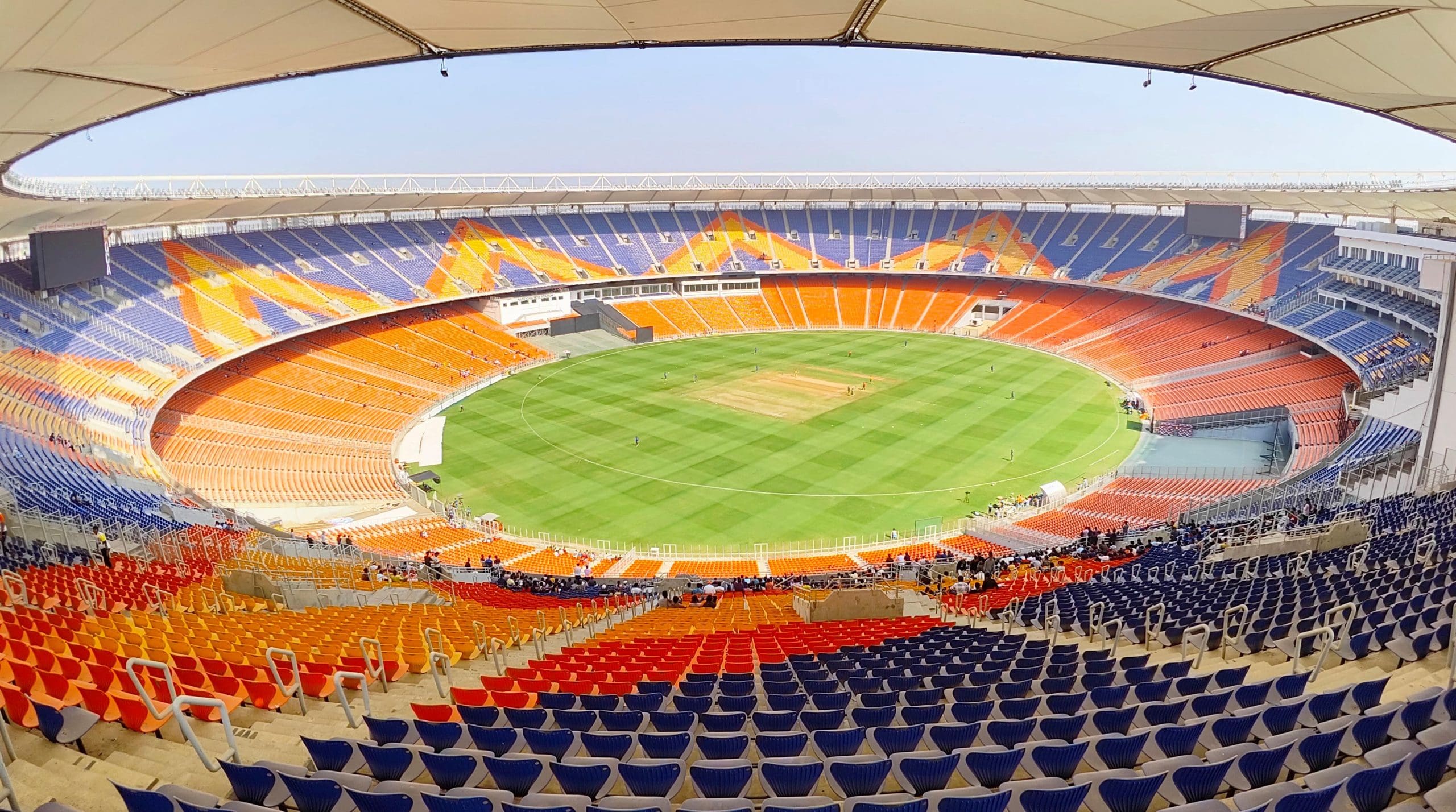
1. Narendra Modi Stadium, Ahmedabad, India
- Capacity: 132,000
- Opened: 1983 (reconstructed 2020)
- Home Team: India
The Narendra Modi Stadium, located in Motera, Ahmedabad, is the largest cricket stadium in the world — and by a wide margin. Its modern design, world-class facilities, and massive capacity make it the crown jewel of Indian cricket.
The stadium hosted the 2023 ODI World Cup Final and continues to be a preferred venue for major events, including Tests, T20s, and IPL finals. With 11 pitches and state-of-the-art drainage, it’s a marvel of modern engineering and crowd management.
2. Melbourne Cricket Ground (MCG), Australia
- Capacity: 100,024
- Opened: 1853
- Home Team: Australia
The MCG, or simply “The G,” is one of cricket’s oldest and most iconic venues. It has witnessed everything — from Don Bradman’s genius to India’s 2020–21 Test triumph.
Apart from cricket, it also hosts AFL and major global events, including the Olympics and Commonwealth Games. Few stadiums combine history, heritage, and modern infrastructure as seamlessly as the MCG.
3. Eden Gardens, Kolkata, India
- Capacity: 80,000
- Opened: 1864
- Home Team: India / Bengal
Known as the “Mecca of Indian Cricket,” Eden Gardens is steeped in history and emotion. Every roar in this stadium carries decades of nostalgia.
It has hosted World Cup finals, historic comebacks, and unforgettable India–Pakistan encounters. The venue’s atmosphere during packed matches is described by many players as “electric beyond words.”
4. Shaheed Veer Narayan Singh International Stadium, Raipur, India
- Capacity: 65,400
- Opened: 2008
- Home Team: India / Chhattisgarh
Situated in the heart of central India, the Raipur Stadium blends modern design with accessibility. It has become a hub for domestic and international cricket, hosting both IPL matches and ODIs.
Its scenic setting and excellent crowd facilities make it a fan favorite during limited-overs tournaments.
5. Perth Stadium (Optus Stadium), Perth, Australia
- Capacity: 60,000
- Opened: 2018
- Home Team: Australia / Perth Scorchers
Optus Stadium is one of the newest yet most impressive cricket venues in the world. Known for its lively pitch and electric night atmosphere, it has quickly become a premier location for both Tests and T20 Internationals.
The stadium’s lighting technology and sound design create an immersive fan experience — one that reflects Australia’s modern sporting spirit.
6. Rajiv Gandhi International Cricket Stadium, Hyderabad, India
- Capacity: 55,000
- Opened: 2004
- Home Team: India / Sunrisers Hyderabad
Located in Uppal, the Rajiv Gandhi International Stadium is home to Hyderabad’s cricketing legacy. With excellent viewing angles and crowd engagement facilities, it has hosted major IPL matches and international fixtures since its opening.
7. Greenfield International Stadium, Thiruvananthapuram, India
- Capacity: 50,000
- Opened: 2015
- Home Team: India / Kerala
The Greenfield Stadium offers one of the most scenic backdrops in Indian cricket. Surrounded by lush greenery and coastal winds, it combines beauty with modern sporting architecture.
The venue is designed as a multi-sport complex and has earned praise for its eco-friendly design and efficient crowd flow.
8. Adelaide Oval, Australia
- Capacity: 53,500
- Opened: 1871
- Home Team: Australia / South Australia
The Adelaide Oval is often called the most picturesque stadium in Australia. With its iconic hill, cathedral view, and modern grandstands, it blends charm and innovation.
Day-night Test matches here have become a tradition, creating unforgettable twilight moments under pink-ball cricket.
9. DY Patil Stadium, Navi Mumbai, India
- Capacity: 55,000
- Opened: 2008
- Home Team: India / Mumbai-based franchises
Originally designed for football, DY Patil Stadium has become an important cricket venue due to its excellent facilities and spectator experience.
It hosted the inaugural Women’s Premier League final and several IPL playoffs, cementing its reputation as a world-class multi-purpose venue.
10. The Oval, London, England
- Capacity: 51,000
- Opened: 1845
- Home Team: England / Surrey
Cricket’s history cannot be told without The Oval. It hosted England’s first-ever Test match in 1880 and remains a cornerstone of world cricket.
The venue’s mix of tradition and hospitality continues to make it one of the most respected grounds in the game.
The Role of Stadiums in Modern Cricket
Large stadiums are more than concrete and seats. They are community spaces where generations come together — grandparents sharing stories, young fans waving flags, and players living their dreams.
Every stadium has its rhythm — from the disciplined silence of a Test session to the loud chorus of a T20 chase.
For grassroots players scoring matches on CricHeroes, these venues serve as inspiration. They remind us that every backyard game, every local tournament, is connected to something bigger — the global cricket community.
Future Mega-Stadiums on the Horizon
Cricket continues to expand. New stadium projects in Pakistan, Sri Lanka, the UAE, and the USA aim to redefine how fans experience the game.
Future designs are expected to include retractable roofs, solar panels, and digital fan engagement systems — proving that the game’s infrastructure is evolving as fast as its formats.
Conclusion
The largest cricket stadiums in the world are not just architectural wonders — they are living stories of teamwork, pride, and community.
Every cheer, every run, every wicket echoes through these massive arenas, reminding us why cricket connects people beyond borders.
From Motera to Melbourne, these stadiums celebrate the spirit of the game — and the millions who make it matter.
FAQ
Which is the largest cricket stadium in the world?
The Narendra Modi Stadium in Ahmedabad, India, with a capacity of 132,000.
Which country has the most large cricket stadiums?
India — it hosts several of the top 10 largest cricket stadiums worldwide.
What is the biggest stadium outside India?
The Melbourne Cricket Ground (MCG) in Australia, with a capacity of 100,024.
Which is the oldest large cricket stadium?
The Oval in London, opened in 1845.
Which stadium has the best crowd atmosphere?
Eden Gardens in Kolkata is known for its unmatched energy and crowd passion.
Are large stadiums only for international matches?
No. Many also host domestic tournaments, IPL, and women’s cricket matches.