
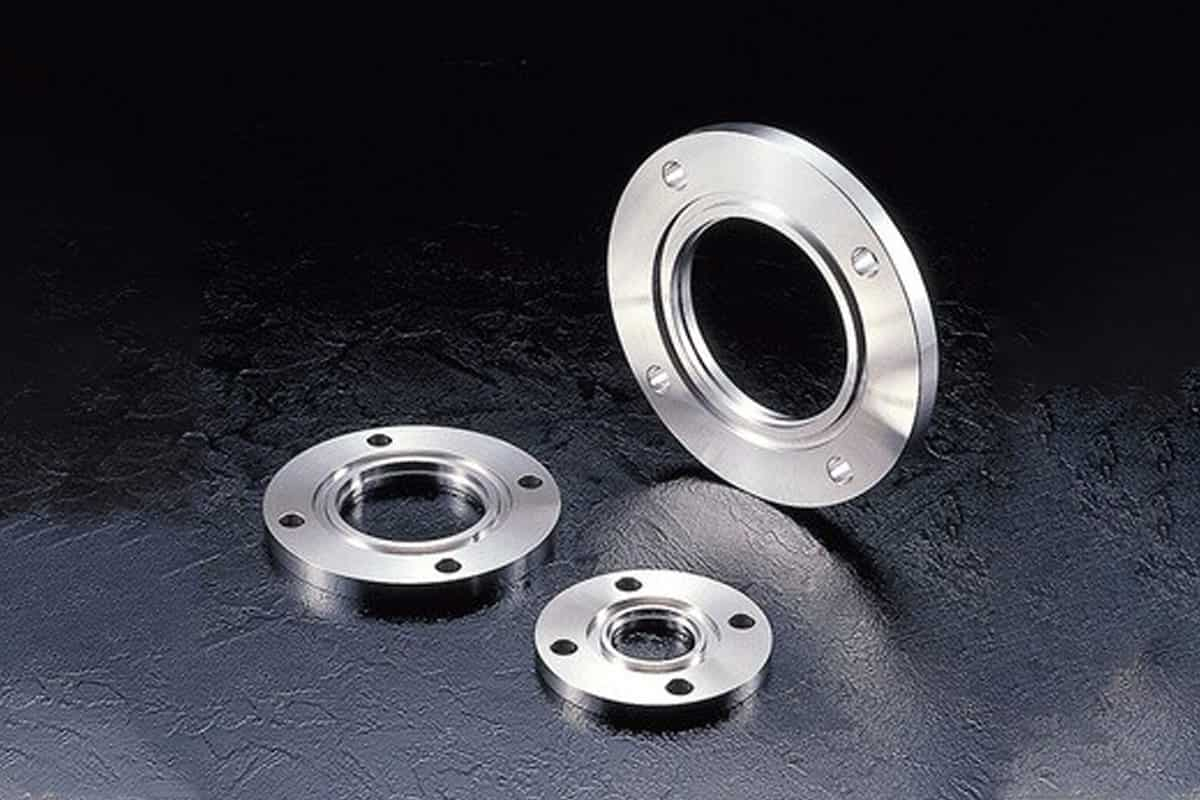
In semiconductor fabs and research labs, the humble KF vacuum flange (also called ISO-KF or QF) is the workhorse for fast, clean, and modular vacuum connections. Its quick-clamp design lets engineers assemble, reconfigure, and service forelines and small vacuum chambers in minutes—ideal when a process tool needs rapid turnaround or a lab rig changes weekly. The system uses two matching flanges, a centering ring with an elastomer O-ring, and a clamp to create a reliable high-vacuum seal without welding.
Where KF shines in fabs and labs
KF’s strengths are speed and simplicity. Because it’s tool-less and standardized (ISO 2861 / ISO 1609 families), you get broad compatibility across U.S. suppliers and legacy tools—useful when maintaining mixed fleets in universities and pilot lines. Sizes like KF16, KF25, KF40, and KF50 cover most foreline and instrumentation needs. Recent ISO documentation confirms dimensional harmonization of clamped quick-release couplings and O-rings for vacuum tightness, which helps reduce fit-up risk when sourcing parts.
For operating range, KF flanges for vacuum typically serve from atmosphere down into the high-vacuum region; the practical limit is set by the elastomer O-ring (commonly Viton). Technical notes place KF usage roughly to ~10⁻⁸ Torr (mbar) under suitable conditions—enough for most foreline plumbing, load-locks, and analytical setups. Temperature limits also track the O-ring material (about 0 °C to 120–180 °C for fluoroelastomers).
KF versus CF in semiconductor and research use
When your process or instrument demands ultra-high vacuum (UHV) or high-temperature bakeouts, step up to a ConFlat vacuum flange (CF). CF uses knife-edges and annealed copper gaskets to achieve metal-to-metal seals with operating pressures well below 10⁻¹¹–10⁻¹³ Torr and bakeouts up to ~450 °C—perfect for surface science, electron microscopy columns, or UHV sputter tools. In short: use KF for speed and serviceability in high vacuum chambers; use CF for the deepest vacuums and higher-temperature cleanliness.
Selecting valves that match your flange choice
Valves are often the failure point in uptime. Pairing the right geometry and seal with KF hardware prevents contamination and backstreaming.
- Vacuum angle valve (bellows-sealed): A compact 90° path is great for tight lab skids and small tools. Modern bellows-sealed designs minimize outgassing and virtual leaks, and fluorocarbon seat seals are serviceable without removing the body—key for keeping instruments online. Look for published leak rates (e.g., 10⁻⁹ Torr · L/s He) and KF-16/25 interfaces for gauges, pumps, and traps.
- High vacuum gate valves
- : On semiconductor tools, gate valves isolate chambers and transfer modules. Features such as friction-free sealing mechanisms and robust actuation (with safety interlocks) protect wafers and pumps while reducing particle generation—critical near process chambers and load-locks. When you evaluate vacuum gate valve design, check cycle life, particulate performance, and compatibility with your flange standard.
- When to choose gate vs. angle: Use gate valves to “hard isolate” a chamber or transfer path; use angle or inline isolation valves for foreline components, pump isolation, and roughing lines. In KF systems, angle and inline bellows-sealed valves provide a clean, compact solution; for UHV CF lines, choose all-metal or copper-gasketed variants.
Problem-solving: common pain points and fixes
1) Leaks after maintenance.
Most post-service leaks are traced to damaged or dirty O-rings or misaligned centering rings. Replace the elastomer if nicked or compressed flat, clean sealing faces with lint-free wipes, and re-clamp evenly. If your base pressure target is below KF’s comfortable limit, migrate sensitive sections to CF to eliminate elastomer diffusion.
2) Pressure stalls around the high-vacuum threshold.
Outgassing from rough internal surfaces or trapped contaminants can hold you at the mid- to high-10⁻⁶ Torr range. Improving chamber surface finish (e.g., fine glass-bead treatment on non-sealing areas) and proper bake protocols can lower desorption rates and speed pump-down. Ensure any KF components are dry, oil-free, and clean before assembly.
3) Valve outgassing and “virtual leaks.”
Older stem-sealed valves can trap volumes and shed particles. Upgrading to bellows-sealed valves on KF lines reduces entrapment and improves long-term stability. Verify manufacturer specs for leak rate and materials (304/316L stainless for bodies; Viton for bonnet/poppet seals in high vacuum).
4) Mixed standards across tools.
Many labs run KF forelines feeding CF chambers. Use standardized adapters and keep elastomer sections thermally and spatially separated from UHV zones. ISO standardization of KF dimensions eases sourcing from multiple U.S. vendors without fit-up surprises.
Practical buying checklist (USA focus)
- Confirm standard and size. For Kf Vacuum Flange components, specify ISO-KF and DN size (e.g., KF25) to align with gauges, traps, and pumps from U.S. suppliers. Use matched clamps and centering rings.
- Match pressure regime. Use Kf flanges for vacuum lines, load-locks, and instrumentation in high vacuum; shift critical paths to ConFlat vacuum flange where UHV or high-temperature bakeout is required.
- Choose the right valve. For compact rigs and small vacuum chambers, a bellows-sealed vacuum angle valve on KF is a clean, serviceable choice. For isolation near process chambers, consider High Vacuum Gate Valves with proven low-particle mechanisms and robust vacuum gate valve design.
- Materials and seals. Stainless steel 304/316L components with Viton O-rings are common on KF; OFHC copper gaskets are standard on CF for UHV. Keep spare O-rings and gaskets on hand to minimize downtime.
- Surface prep and cleanliness. Clean, dry, and handle all vacuum chamber parts with gloves. If you fabricate locally, specify proper finishing of internal surfaces to reduce outgassing and improve pump-down.
Conclusion
For semiconductor and research environments, KF hardware delivers fast assembly, flexibility, and proven high-vacuum performance across forelines, gauges, traps, and service ports. Pair it with quality bellows-sealed valves for reliability, and deploy CF where UHV and high-temperature bakeouts are mandatory. With the right mix of KF and CF components, your high vacuum chamber will pump down faster, leak less, and stay online longer—saving real time on the tool and in the lab.