
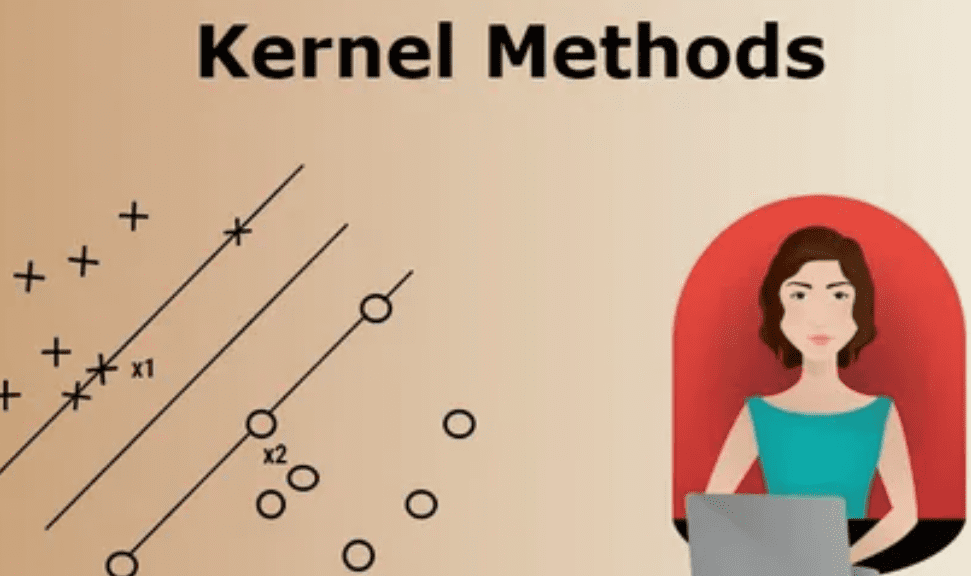
Understanding nonlinear patterns in machine learning often feels like trying to decipher shadows behind a curtain. You can see hints of shapes and movements, but the real structure remains concealed. Kernel methods act like a backstage pass, letting algorithms interpret complex patterns without ever pulling the curtain apart. Instead of manually lifting data into a higher-dimensional world, kernels quietly create those dimensions in the background, revealing relationships that were invisible before. This silent transformation is what powers the elegance of Support Vector Machines and many other models that depend on subtle separations hidden beneath the surface.
The Theatre of Hidden Dimensions
Imagine attending a theatrical performance where the stage appears simple and flat, yet the actors behave as if multiple layers and pathways are built into the set. Kernel methods create a similar illusion. Data that appears tangled and inseparable in two dimensions can become cleanly organised when projected into a space with more depth. One may pursue a data science course in Hyderabad and encounter this idea as the moment when non-linearity stops being an obstacle and starts becoming an opportunity.
In this theatre, each kernel function is like a clever backstage engineer. The audience sees a smooth performance while all the heavy lifting happens behind the scenes. The model never explicitly constructs a higher-dimensional world. It simply behaves as if that world exists. This illusion is the genius of the kernel trick.
RBF Kernel: The Lens That Bends Reality
The Radial Basis Function kernel behaves like a magnifying lens that intensifies attention around each point. Picture a calm lake where each stone you drop creates ripples. The closer you are to the centre of the ripple, the stronger the influence. The RBF kernel works through this idea of closeness, shaping the decision boundary based on how points resonate with one another.
When an SVM uses the RBF kernel, it is effectively bending the fabric of space so that points forming natural clusters become tightly aligned, while those belonging to different groups drift apart. The beauty lies in how the lens adapts. It does not require manual intervention to determine how many dimensions to add. Instead, similarity decays gracefully with distance, allowing complex boundaries to emerge organically.
This kernel is particularly powerful when data is irregular, scattered or shaped in unexpected ways. By reshaping the landscape around each point, it uncovers a structure more faithful to the underlying relationships.
Polynomial Kernel: Expanding Patterns with Mathematical Art
While the RBF kernel acts like a lens, the polynomial kernel works like an artist layering patterns on a canvas. With every degree added, it paints a more intricate texture. It creates interactions that mimic curves, twists and multi-dimensional surfaces.
Consider a scenario where data forms a swirling spiral. A linear model sees only chaos, but a polynomial kernel gives the algorithm the brushstrokes necessary to represent the movement of the spiral. It constructs combinations of features that would take many manual transformations to create. Instead of calculating these explicitly, the kernel calculates them implicitly, saving effort while preserving expressive power.
This method is especially meaningful in models where the relationship between variables grows in complexity as features interact. The polynomial kernel supplies the mathematical scaffolding to represent these layered interactions.
Kernel Trick: Solving Puzzles Without Seeing the Pieces
The magic at the heart of kernel methods is the ability to operate as though data has already been mapped to a higher-dimensional space, without ever performing the actual transformation. It is like solving a complex puzzle without lifting a single piece. Instead, the algorithm measures similarity through a kernel function and makes decisions as if the expanded feature set already exists.
To appreciate this even more deeply, imagine a detective solving a case by examining only the behaviour of suspects rather than their full histories. The detective does not need to access all hidden details. He simply needs the right relationships. Similarly, an algorithm using kernels does not require every new feature explicitly. It requires only the ability to compare points in a richer conceptual space.
Anyone taking a data science course in Hyderabad often realises that this kernel trick is a milestone in understanding how machine learning achieves both power and efficiency. It teaches that sophisticated transformations need not be computationally expensive when similarity itself can be engineered intelligently.
Conclusion
Kernel methods illuminate the unseen, transforming tangled data into clarity without the burden of explicit dimensional construction. The RBF kernel reshapes the landscape like ripples on water, while the polynomial kernel paints elegant mathematical strokes that capture complex interactions. All of this is powered by the kernel trick, a quiet but brilliant mechanism enabling models to think in higher dimensions without ever going there directly.
In the grand theatre of machine learning, kernels are the hidden architects working behind the curtain, ensuring that even the most complex patterns can be separated with grace and precision. As the field continues to evolve, kernel-based thinking remains a timeless reminder that sometimes the most powerful transformations are the ones you never actually see.
