
Introduction
There is something timeless about the act of walking. In a world that moves at the speed of notifications and flights, the deliberate rhythm of footsteps against the earth feels almost revolutionary. Walking allows the body to travel at the pace of thought, creating room for reflection, awareness, and renewal. For centuries, people have walked not only to reach destinations but to understand themselves and the world around them. Across cultures and continents, pilgrimage routes were built on this belief, that each step holds meaning.
Today, the ancient walking paths of Japan continue to draw travellers seeking more than sightseeing. They come in search of quiet transformation. These routes, marked by shrines, forests, and centuries of devotion, remain living stories of faith and endurance. Among them, none captures this spirit more profoundly than the Kumano Kodo Trail, where every turn whispers echoes of the past.
From Devotion to Discovery
Long before walking became a leisure activity, it was a form of reverence. In ancient Japan, pilgrims set out on foot to reach sacred sites in the remote Kii Mountains. Their journeys were long, often demanding, yet filled with purpose. Each shrine, waterfall, and forest path symbolised purification, a movement away from the noise of daily life toward spiritual clarity. These routes were once reserved for emperors, monks, and poets, whose devotion gave rise to traditions that shaped Japan’s cultural soul.
Over time, these sacred routes evolved into something larger, a dialogue between history and humanity. The act of walking itself became transformative, transcending religion and embracing the universal search for meaning. Modern travellers no longer walk out of obligation but out of curiosity, reverence, and the desire to rediscover simplicity. The ancient trails of Japan continue to remind us that the journey is the destination. Every incline, every quiet forest turn, becomes an invitation to slow down and listen. The Kumano Kodo Trail stands as one of the few pilgrimage networks in the world still active after a thousand years, linking the physical act of walking to the timeless art of spiritual discovery.
Footprints of Faith and Culture
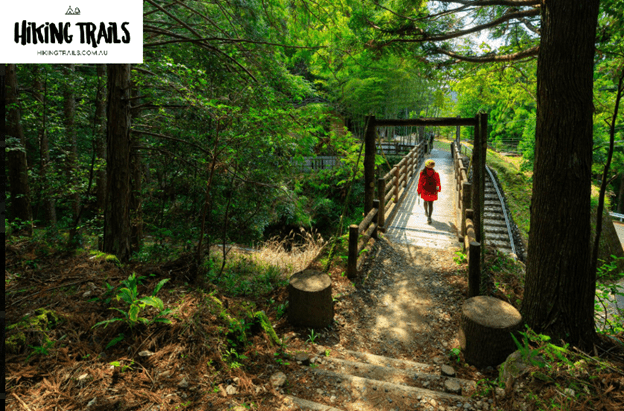
Walking the old pilgrimage routes is like stepping through layers of living history. The Kumano Kodo Trail weaves through deep cedar forests, mountain villages, and sacred shrines that date back centuries. Its stones have carried the footsteps of emperors, samurai, poets, and farmers, all moving toward the three Grand Shrines of Kumano, representing purification, rebirth, and connection with nature.
Along the way, travellers encounter markers carved with prayers, small offering boxes, and moss-covered temples where silence feels sacred. These spaces are more than relics; they are reminders of an unbroken chain between past and present. Faith, folklore, and geography merge in a rhythm that speaks to Japan’s enduring relationship with the land.
For those seeking a deeper experience, Hiking Trails, an Australian-based travel agency, offers carefully curated walking packages through the region, blending comfort with authenticity. Their itineraries, such as the Kumano Kodo 7-Day Package from Tanabe, allow travellers to explore these sacred routes with local insights, cultural respect, and thoughtful pacing. Through such guided experiences, ancient traditions are not just preserved but lived anew, allowing every modern pilgrim to walk through history while finding their own meaning along the path.
Embracing Simplicity and Stillness
The beauty of pilgrimage lies in its simplicity. When walking for days, material concerns fall away. The body adjusts to the rhythm of the path, and the mind begins to quiet. The modern traveller, often burdened by constant connectivity, discovers the forgotten pleasure of stillness. On the Kumano Kodo Trail, there are no distractions but the murmur of the wind and the rustle of leaves. The trail teaches that movement does not always mean haste; sometimes it means grace.
Evenings on the trail bring another kind of peace. Staying in small inns or ryokans, travellers experience the warmth of local hospitality and the comfort of traditional Japanese meals after long walks. These moments of rest become part of the journey’s meditation, reinforcing that walking is as much about pausing as progressing.
Hiking Trails packages make this rhythm accessible without compromising authenticity. They allow travellers to move at their own pace while ensuring that logistical details such as accommodation, transfers, and meals support rather than interrupt the experience. In this balance between structure and freedom lies the real gift of slow travel, an encounter with both landscape and self.
Walking with Purpose
Every step taken on an ancient path is both a physical act and a symbolic gesture. The Kumano Kodo Trail has always represented purposeful movement, a commitment to journey inward even as one travels outward. Pilgrims once believed that each incline mirrored the struggles of the soul, and every descent symbolised release. That rhythm continues to guide modern walkers who seek clarity, healing, or simply a deeper sense of connection.
Walking is, at its heart, a conversation with time. It teaches patience, endurance, and humility. On Japan’s sacred routes, the path itself becomes the teacher. The longer the trail, the quieter the mind becomes, until one’s thoughts align with the rhythm of breathing and earth. This meditative quality transforms even fatigue into reflection.
Hiking Trails, through its thoughtfully designed journeys, helps modern travellers reconnect with this sense of purpose. Their walking experiences are crafted not only for comfort but for meaning, offering routes that honour ancient tradition while embracing the curiosity of today’s explorers. To walk these paths is to rediscover what it means to move with intention, to see walking not as escape but as return.
Tradition Meets Transformation
Ancient paths do not remain relevant by resisting change but by adapting gracefully to it. The Kumano Kodo Trail has welcomed new generations of travellers without losing its sacred essence. What was once an exclusive route for nobility is now open to anyone seeking reflection. Yet its integrity endures because those who walk it do so with respect.
This blend of past and present reflects Japan’s broader cultural strength: its ability to modernise without erasing its heritage. Technology may make travel easier, but it cannot replace the intimacy of walking through mist-covered forests or listening to distant temple bells. In a sense, every traveller who undertakes this journey becomes a guardian of memory.
Guided experiences from Hiking Trails capture this balance beautifully, merging the wisdom of ancient pilgrimages with the comforts of contemporary travel. Through them, history feels alive, not confined to books or museums but breathing through landscapes and footsteps. The result is not just tourism but transformation, where ancient lessons meet modern awareness in harmony.
Carrying the Journey Home
The true impact of walking ancient routes reveals itself long after the journey ends. Travellers who complete the Kumano Kodo Trail often describe a lingering calm, as though the mountains have imprinted a slower rhythm on their thoughts. The lessons gathered along the way, patience, gratitude, stillness, begin to shape everyday life.
Returning home, one finds that ordinary moments carry a new weight of awareness. Waiting in a queue, walking to work, even cooking a meal becomes an act of mindfulness. This is the quiet transformation that pilgrimage intends, not an escape from life but a reawakening to it.
Hiking Trails continues to honour this philosophy through its immersive walking packages, ensuring that travellers experience more than just a journey. Their approach invites reflection, connection, and a deep respect for both nature and culture. Through such experiences, walking becomes more than movement; it becomes memory, a reminder that we are shaped by the paths we walk and the silences we keep.
Conclusion: The End That Feels Like a Beginning
Every journey ends, but some leave traces that never fade. To walk the Kumano Kodo Trail is to engage with something greater than distance; it is to touch a living heritage. The trail is not simply a route but a story, written by the countless souls who have walked it before. In that continuity lies its quiet magic.
Modern life often measures success by speed, but the ancient pilgrim measured it by depth. Every pause, every breath, was a reminder that time itself could be sacred. On Japan’s sacred routes, the destination fades in importance as the act of walking takes over. It is in the repetition of footsteps that one finds humility, in the effort of climbing that one discovers strength, and in the silence between trees that one rediscovers awe.
For many travellers, the return to daily life after such a walk is the real challenge, to carry the mindfulness of the trail into ordinary days. But that is the essence of pilgrimage, to walk toward awareness and then to live by it.
Through its guided journeys and carefully designed itineraries, Hiking Trails continues to bridge worlds, between ancient reverence and modern curiosity, between solitude and shared experience. Its commitment ensures that trails like the Kumano Kodo remain not just preserved but profoundly felt.
In the end, walking these sacred paths is not about reaching a shrine or completing a route. It is about awakening something ancient within, the quiet truth that every step, when taken with intention, leads closer to the heart of being human.