

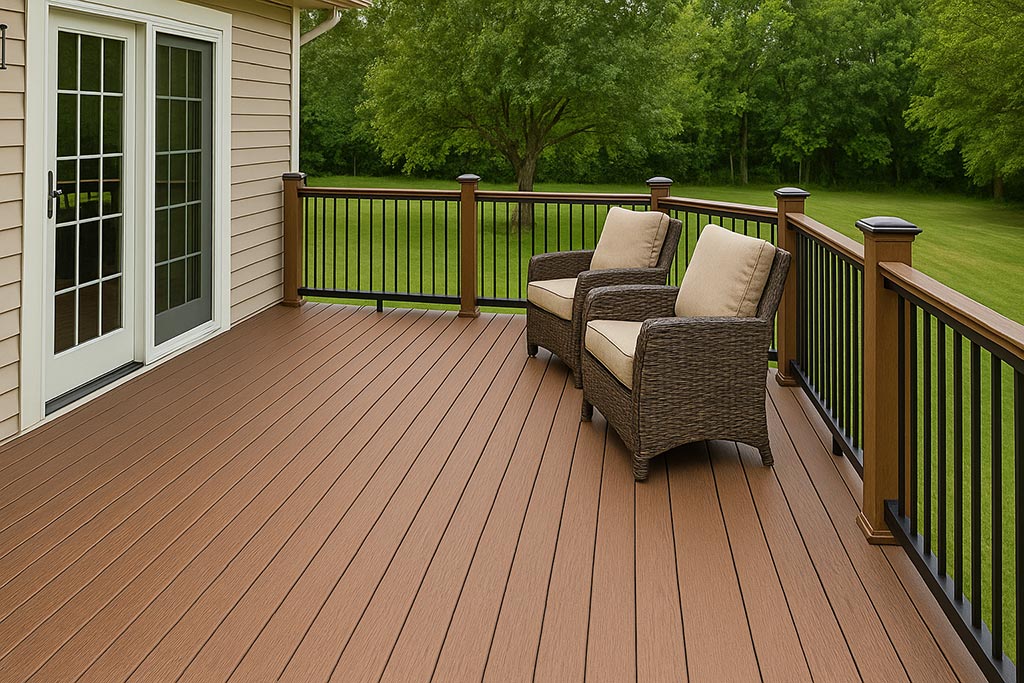
If you are planning an outdoor upgrade, one of the first questions you will face is simple: Is composite decking worth it compared to traditional wood? The short answer is yes for most homeowners who want a deck that lasts longer and needs far less maintenance. The upfront cost is higher, but the long-term experience is very different.
Composite decking removes most of the maintenance, durability, and lifespan problems that wood struggles with. That difference shifts the value equation for anyone who wants a deck that stays in good shape without constant upkeep.
This guide will help you decide with confidence by laying out the real benefits, drawbacks, costs, and practical factors that matter most.
What Composite Decking Is Made Of
Composite decking is engineered from a blend of recycled plastics, wood fibers, and bonding agents. Manufacturers use combinations of sawdust, plastic film, recycled grocery bags, and hardwood fibers to form dense, durable boards.
These engineered materials have become a common choice in custom deck construction because they stay stable and resist moisture far better than traditional lumber.
Most modern boards are capped, meaning they have a protective polymer layer around the outside. This cap helps block moisture, reduce fading, and protect the surface from stains and mold. Brands like Trex, Fiberon, and Deckorators use high percentages of recycled material, creating boards that are more consistent, long-lasting, and eco-friendly.
The biggest advantage of composite comes from this engineered structure. Wood absorbs water, moves with the weather, and eventually cracks or splinters.
Composite limits those problems through controlled manufacturing and improved resistance to moisture, which is why the material performs so well after years of exposure.
Why Composite Decking Performs Better Over Time
Composite decking holds up better than wood because it is built to solve the most common problems that affect outdoor structures. Moisture, sun exposure, insects, and seasonal movement can wear down natural lumber fast, especially in areas with heavy rain or intense heat.
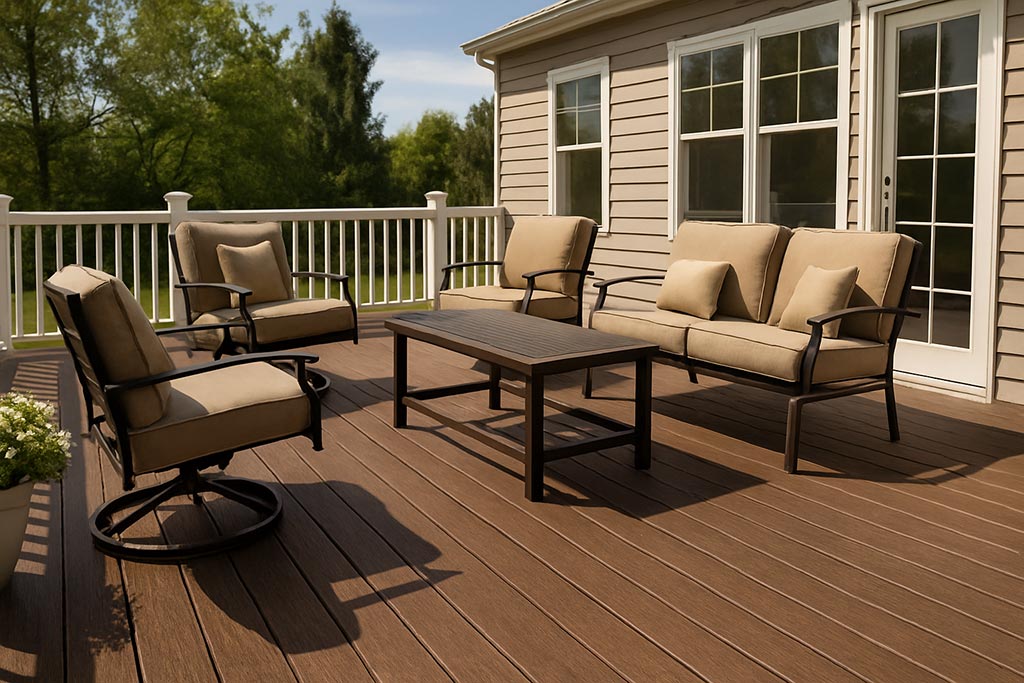
This is why an outdoor living contractor often recommends composite decking for homeowners who want a deck that stays stable and reliable through changing weather. The material handles long-term exposure with more consistency, which is why many homeowners see a clear difference over time.
Here are the qualities that matter most over the years.
1. Built for Harsh Weather
Composite boards hold up extremely well against rain, sun, and temperature swings. They resist rot and do not splinter. Wood boards naturally break down faster because they absorb water. Composite absorbs far less moisture and stays more stable throughout the seasons.
2. No Bugs or Infestation
Insects can damage wood over time, especially in humid climates. Composite materials are not attractive to insects and do not suffer from woodworm, termites, or beetle issues.
3. Low Expansion and Contraction
All outdoor materials move with temperature, but composite moves less than softwoods. Many capped boards are engineered to keep expansion predictable and controlled. This helps the deck stay smoother and quieter with each season.
4. Safer for Bare Feet
Composite does not splinter. It stays more comfortable for kids and pets. When used with the proper surface texture, it has improved slip resistance compared to smooth-finished wood.
5. Consistent Look
Wood changes color, weathers unevenly, and shows knots or surface defects. Composite boards stay uniform and predictable, which is ideal for modern designs where a clean finish is important.
Maintenance Is Where Composite Has a Huge Advantage
Maintenance is one of the biggest advantages of composite decking. Homeowners choose it because it cuts out the ongoing work that wood demands. A wood deck needs regular sanding, staining, sealing, and occasional repairs just to stay in good shape. Composite removes those tasks entirely, so once it is installed, there is no need for refinishing or yearly coating.
Cleaning is simple. Most composite decks only require a quick rinse or a light soap wash. A hose or pressure washer is usually enough to remove dirt, pollen, and everyday buildup. Even tougher spots like grease or rust can be handled easily without harsh scrubbing or chemicals.
Composite also keeps its color longer. High-quality boards resist fading much better than stained wood. Sun exposure will soften the shade slightly over time, but the change happens very slowly.
Wood loses color much faster unless it gets consistent maintenance every year, which adds time and cost. Composite avoids that problem and keeps a more consistent look for many seasons.
Drawbacks You Should Consider
Composite decking is not perfect. The drawbacks matter when budgeting and planning.
1. Higher Upfront Price
Composite costs more at the start. Most homeowners see a price difference that is two to three times higher than pressure-treated wood. The extra cost covers the manufacturing process and the protective cap that gives the composite its long lifespan.
2. Color Cannot Be Changed Later
With wood, you can stain the deck again if you want a new look. Composite color is locked in at the factory. You must choose a shade you will be happy with long-term.
3. Heat Retention
Darker composites can get warm under direct sunlight. Many new boards have cooling technology, but it is still something to think about if the deck will sit in full sun all day.
4. Stronger Structure Required
Composite boards are more flexible than lumber. Most brands require joist spacing of 16 inches on center or even 12 inches for warranty coverage. Older decks with 24-inch spacing need reinforcement before switching to composite.
Cost Breakdown: The Real Numbers
Here is what homeowners can expect today:
Composite deck installation: 6,000 to 15,000 for most size ranges (custom shapes and premium brands can run higher)
Standard wood deck installation: 4,000 to 10,000, depending on size and material quality
Wood seems cheaper, but the ongoing maintenance changes the long-term picture. Wood requires repeating costs like:
- yearly staining or sealing
- board repairs
- rot replacement
- sanding
- fastener tightening
Composite avoids nearly all of that. The higher upfront price trades yearly maintenance for long-term stability.
Does Composite Decking Add Home Value?
The material itself does not drastically change the resale price, but it helps the home show better. Buyers like low-maintenance outdoor spaces. A composite deck looks newer for longer, which can help the home sell faster and stand out in a competitive market.
In regions where outdoor living is expected, composite is often seen as a premium upgrade. Many buyers also appreciate the low upkeep because it reduces their future workload.
Smart Tips Before Choosing Composite
If you are thinking about composite decking, a few steps will help you get better performance.
- Choose a proven brand. Manufacturers with strong protective caps and long warranties offer better reliability.
- Check joist spacing. Make sure your structure meets the manufacturer’s requirement for support.
- Protect the substructure. Use joist tape to prevent moisture damage and extend the life of the frame.
- Use the right fasteners. Hidden fastener systems give a cleaner finish and improve board stability.
- Plan color based on sun exposure. Lighter colors stay cooler in direct sunlight.
Making the Right Decision for Your Outdoor Space
So, is composite decking worth it? For most homeowners, the answer is yes. The higher initial price is balanced by long-term savings, less maintenance, and a deck that stays attractive for many years.
Wood can work well if you enjoy upkeep or want a lower project cost, but composite delivers a smoother experience and a longer lifespan. If you want an outdoor space that stays clean, safe, and low-maintenance, composite is usually the smarter investment.
If you want help refining or expanding any section or converting the comparison into a bullet list, just let me know.