

Why Free Trials Matter More Than Most People Think
When people search for a new streaming service, they usually want proof that it works. That is why an IPTV free trial gets so much attention. It lets users test the service and helps them judge whether the provider is reliable, fast, and worth trusting.
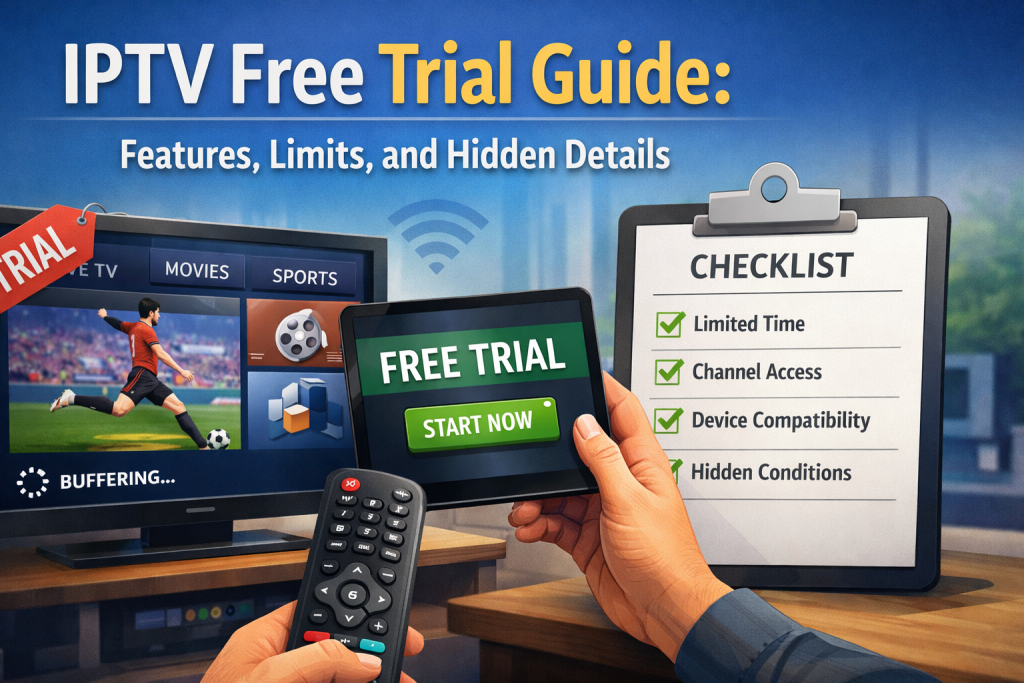
Free trials do more than attract clicks. People want to know what channels they will get, how stable the stream is, whether the service works on their device, and what restrictions come with temporary access.
Still, not every trial is as generous as it looks. Some are designed to impress, while others hide weak spots until the paid plan begins. That is why understanding the details behind a free offer matters as much as testing the stream itself.
What an IPTV Trial Usually Includes
A trial period is often presented as a sample version of the main service. In many cases, it includes access to live TV, selected sports channels, movies, and sometimes on-demand content. Some providers let users test support quality, app usability, and login speed during the trial window.
A standard IPTV free trial may include:
- Access for 12 to 48 hours
- A single device connection
- A limited list of channels or categories
- Basic video quality
- Temporary customer support
That alone may seem enough. In practice, the value of the trial depends on what you are trying to test. If your main concern is sports reliability, a weekend trial during live matches is more useful than one that starts on a quiet weekday.
Users should never judge the service only by the number of channels shown on a landing page. What matters is the quality of access, not just the promise of it.
Features Worth Checking Before You Judge the Service
A smart trial user does not just open the stream and hope for the best. The right approach is to evaluate the platform in a structured way. A provider can look polished on the surface and still deliver poor performance where it matters most.
During the trial, pay attention to:
- Channel loading speed
- Buffering during peak hours
- Video clarity on different channels
- Program guide accuracy
- Device compatibility
- Login stability
- Replay or catch-up options, if offered
One hidden detail many people miss is timing. Streams often perform well in off-peak hours, then struggle when more users log in at night. A serious test should happen when demand is highest. That gives a more honest picture of server strength.
Another overlooked factor is navigation. A huge content library means little if menus are slow, categories are messy, or channels are hard to find. Good service is also about ease of use.
The Common Limits Providers Do Not Highlight
Most trial pages focus on benefits, but limits are where the story begins. Others are buried in small print or revealed only after signup.
One common limit is channel selection. A provider may advertise thousands of channels, but the trial may unlock only a narrow sample. In some cases, premium sports or regional channels are blocked until payment is completed.
Another limit is duration. A 24-hour trial sounds reasonable, but it may be too short to test streaming across different times of day. A short access window can prevent users from spotting buffering patterns or support delays.
You may also notice these hidden conditions:
- One connection only, even if paid plans support more
- No adult, premium, or pay-per-view content
- Lower stream priority than paid users
- No refund once a paid plan begins
- Automatic follow-up after registration
These details matter because they influence the user experience in subtle ways. If trial users are placed on lower-priority servers, the stream quality may not represent the paid version. Some providers also polish the trial and reduce performance later.
How to Tell Whether a Trial Is Genuinely Useful
Not every free offer deserves your time. A useful trial should help you make a clear decision, not leave you confused. The easiest way to judge this is to ask whether the trial answers your most important questions.
A genuinely useful trial should let you verify:
- Whether your favorite channels are available
- Whether the stream is stable on your internet connection
- Whether the service works on your preferred device
- Whether support replies quickly and clearly
- Whether the interface feels simple enough for daily use
It also helps to notice how the provider communicates. Clear setup instructions, realistic promises, and transparent plan details are usually good signs. Vague claims often signal weak credibility.
I always look for consistency between the sales message and the actual experience. If the website promises instant activation, smooth playback, and full compatibility, the trial should reflect that without excuses.
Red Flags That Should Make You Pause
A polished website can create confidence, but presentation alone should never guide your decision. Some warning signs show up before you even start the trial, while others appear during setup.
Be cautious if you notice:
- No clear information about duration
- No channel or feature breakdown
- No device setup guidance
- Overly aggressive messages after signup
- Payment requests before trial activation
- Broken links or confusing instructions
A major red flag is when a provider asks for too much personal information just to activate a short test. If the signup process feels excessive, think twice.
Support behavior is another strong signal. If you ask a question and receive a vague or rushed reply, that often reflects the overall service standard. Fast, helpful responses usually indicate that the provider values retention, not just quick conversions.
You should also watch for unrealistic claims. No streaming service is perfect all day, every day. Providers that promise flawless performance without limits are often overselling.
Getting the Most From Your Trial Period
If you want real value from a trial, use it with a plan. Random testing can miss the very issues that matter later. A more structured approach helps you judge the service fairly and quickly.
Start by testing at least three channel types, such as news, sports, and entertainment. Then check the service on the device you plan to use most often.
Here is a simple strategy:
- Test stream quality in the morning and at night
- Open channels from different regions
- Check whether audio and video stay synchronized
- Try reconnecting after logging out
- Contact support with one question
- Compare the experience with your current service
This process reveals more than casual browsing. It helps you separate short-term excitement from long-term usefulness. A trial should give enough information to decide whether the service fits your habits, budget, and expectations.
The Final Things Smart Users Keep in Mind
A free trial can be helpful, but it should never be the only reason you choose a provider. The goal is not just to enjoy a few hours of access. The goal is to uncover what daily use will actually feel like once money is involved.
The best decision comes from balancing features, limits, transparency, and overall ease of use. If the provider is honest about restrictions, delivers stable playback, and supports your device properly, the service may be worth a closer look. If the trial feels rushed, incomplete, or confusing, that is valuable information too.
In the end, the smartest users treat a trial like a research tool, not a free gift. They test with purpose, notice the details others ignore, and focus on long-term value rather than short-term appeal. That approach makes any IPTV free trial far more useful, and it helps you choose with confidence instead of guesswork.