
Rising Cross-Border Vehicle Purchases
Interstate used vehicle transactions continue to expand as buyers search for lower prices, broader inventory, and online listings that make distant purchases feel routine. This growth has created a larger flow of titles across state lines, and state offices are feeling the pressure. The appeal of cross-border shopping is obvious, but the documentation that follows is rarely as smooth as the transaction itself. Clerks must validate ownership records from various jurisdictions, each with its own unique title format and rules. As volumes increase, rejections and delays have become more common.
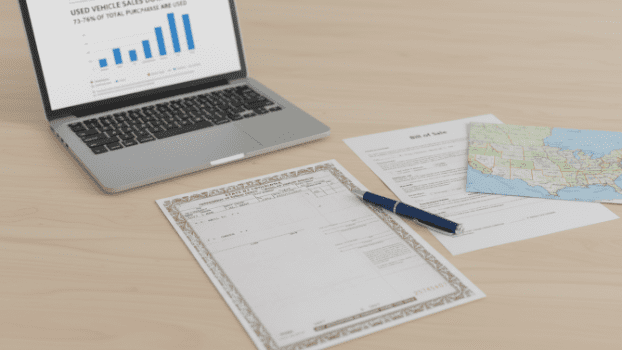
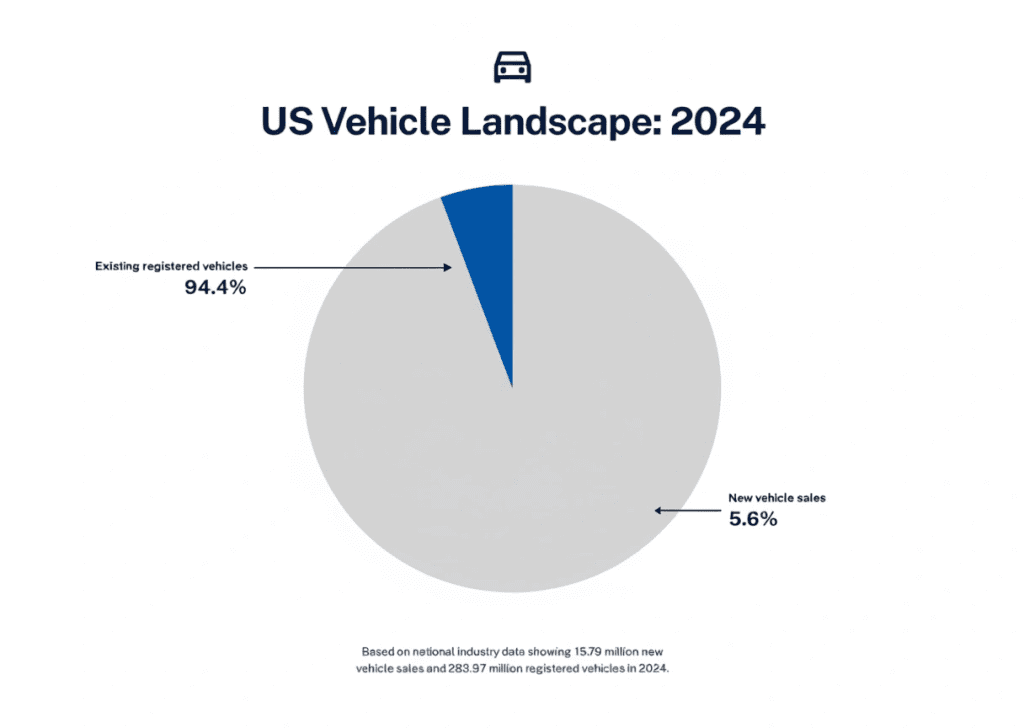
National used vehicle data reveals the significant growth of the market. Between 2015 and 2019, used vehicle purchases accounted for seventy-three to seventy-six percent of all United States vehicle sales, according to analysis from Consumer Affairs. As more sales shift to online marketplaces, a growing share now involves titles that originate in other states, and that shift directly affects paperwork accuracy.
Why Interstate Titles Increase Error Rates
Industry estimates often place the share of used cars sold with an out-of-state title at roughly one-third of all transactions. While exact figures vary, the movement is large enough to strain state processing. Clerks must confirm that documents created under one state’s requirements satisfy another state’s standards. Even when the documents are technically correct in the selling state, slight differences can trigger delays once they reach a destination office.
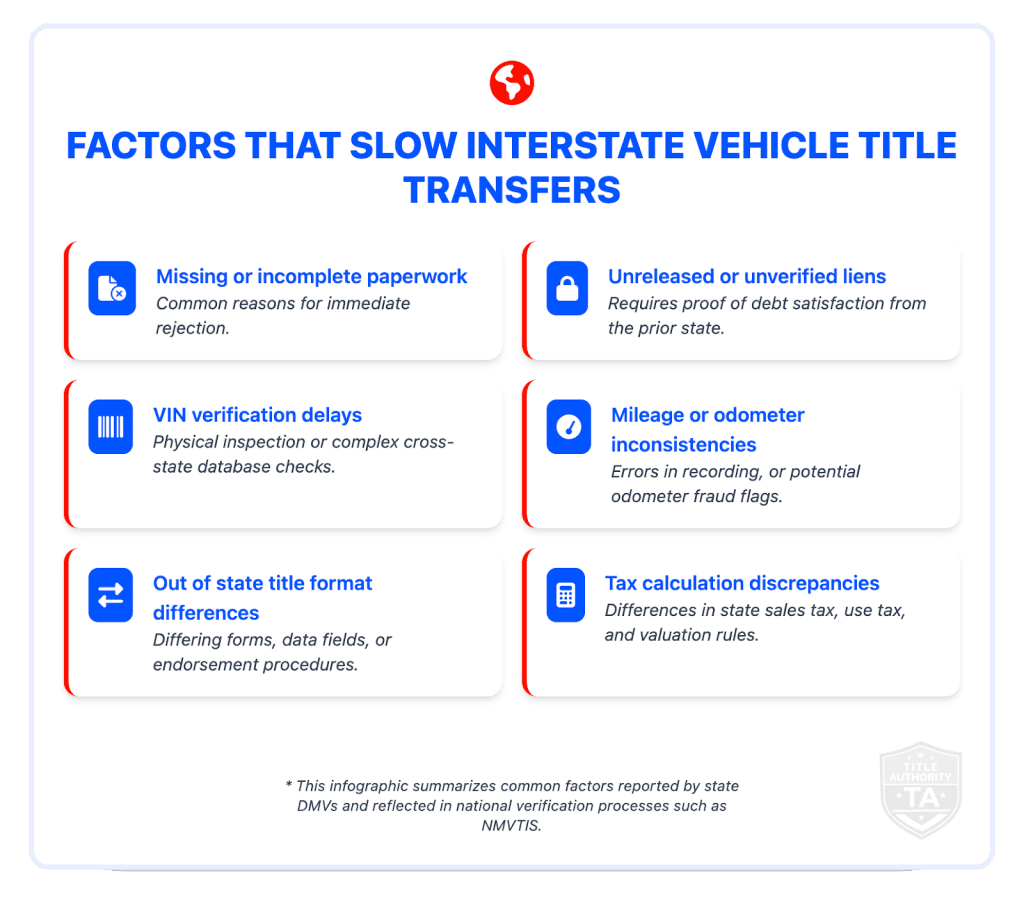
Recurring paperwork errors make these transactions even tougher. Issues such as incorrect name placement, missing signatures, and incomplete lien releases frequently occur in cross-border sales. These are detailed in industry reports on common title failures. When buyers rely on seller state rules without checking their home state requirements, these gaps become unavoidable.
Differences in State Rules
Each state enforces its own requirements for odometer statements, signature placement, notarization, and lien clearance. A buyer who completes a purchase in a state with minimal requirements may discover that more documentation is needed once they return home. Some states require notarized signatures for all transfers between private parties. Others do not. Some separate the odometer disclosure into its own document. Others place it directly on the title. These differences make interstate transfers more vulnerable to simple paperwork gaps that stop the process despite a legitimate sale.
A Louisiana Example of Document Complexity
An example can be found in the article “Louisiana Vehicle Title Transfer Requirements Explained,” which outlines how Louisiana processes out-of-state titles. Buyers must present the original title, a detailed bill of sale, proof of insurance, and a lien release when applicable. Louisiana may also inspect the vehicle identification number to confirm that the physical number matches the number listed on the documents. Many states follow similar procedures when documents arrive from jurisdictions with different formatting or verification rules.
Tax Issues That Follow Interstate Purchases
Sales taxes and use taxes vary by state, and these differences often create confusion after cross-border purchases. If the seller’s state has a lower tax rate or no tax requirement, the buyer may owe the difference during processing at home. Accurate documentation is essential for these calculations. When a bill of sale lacks clear price information or is missing signatures, clerks cannot complete the transaction. Buyers then must contact the seller again, which becomes difficult once the sale is complete.
Lien Releases and Delayed Updates
Liens complicate many interstate transfers. A seller may have fully paid off a loan, but the lender may not have updated the state database promptly. State offices will not process the transfer unless the release is documented correctly. Timing varies across states, and even minor delays can prevent the transaction from moving forward. Buyers often assume that a payoff receipt is enough, but official release documentation is still required.
How National Databases Help Clerks
National databases improve transparency but do not eliminate all discrepancies. The National Motor Vehicle Title Information System helps state agencies verify title history, branding, and theft records. The American Association of Motor Vehicle Administrators explains the system’s role in reducing fraud risk through its NMVTIS program overview. Although effective, the system depends on timely updates from states, insurers, and auctions, which means clerks occasionally delay processing until records align.
Private Sales Remain High Risk for Errors
Private party transactions produce more errors than dealership transactions. Dealers are generally familiar with disclosure rules and lien procedures, whereas private sellers vary widely in their understanding of the required forms. Buyers who complete sales informally often lack detailed bills of sale or complete odometer information. When the transaction spans multiple states, these gaps become more severe. Clerks cannot override missing information, and buyers often learn of the problem only when they are already at the counter.
Efforts by States to Reduce Confusion
Some states publish guides for interstate transfers and provide checklists that buyers can review before visiting an office. Others allow electronic submission of documents so clerks can review them ahead of time. These tools reduce errors, but adoption is uneven. Offices that process heavy volume remain vulnerable to delays because unfamiliar documents require more time to validate.
The Outlook for Cross-Border Purchases
Interstate used vehicle sales are not slowing. Online listings, nationwide search tools, and price differences continue to draw buyers to out-of-state options. With this shift comes greater responsibility for consumers to confirm that their documents meet the requirements of both the selling state and the receiving state. Until national rules become more consistent, clerks must scrutinize each document, and buyers must expect additional verification steps. Those who research requirements and collect detailed paperwork before finalizing a purchase have the smoothest experience.