

How the evolution of border management, data protection, and lawful anonymity is redefining cross-border movement
WASHINGTON, DC, October 28, 2025
The intersection of privacy law, border management, and international mobility is undergoing a historic transformation. As governments expand digital surveillance systems and biometric screening at airports, seaports, and land crossings, the traditional concept of travel freedom has given way to a complex web of data exchange, identity verification, and cross-border compliance. In 2026, global privacy frameworks are beginning to redefine how individuals move across borders, creating a new paradigm known as lawful anonymous travel.
This emerging reality balances two opposing imperatives: the state’s right to secure its borders and the individual’s right to privacy and personal autonomy. Through innovations in encryption, identity compartmentalization, and international legal cooperation, travelers can now maintain compliance while preserving discretion. The rise of digital governance, biometric passports, and privacy legislation has created new pathways for secure, traceable, yet privacy-respecting cross-border mobility.
The Evolution of Global Border Management
Modern border management has evolved into an integrated network of digital verification and data sharing, facilitating seamless cross-border transactions. Systems such as the European Union’s Entry/Exit System (EES), the United States’ Biometric Entry-Exit Program, and the United Kingdom’s e-Borders initiative utilize facial recognition, iris scanning, and biometric databases to authenticate identities in real-time.
These systems are designed to enhance national security, prevent document fraud, and streamline travel. Yet they also concentrate vast amounts of sensitive data, creating new vulnerabilities and privacy concerns. The storage of biometric identifiers, travel histories, and behavioral analytics poses risks if not properly encrypted and regulated.
In response, the European Union, Canada, and other privacy-conscious jurisdictions have introduced legislation mandating that border data collection adhere to data protection laws. For example, under the EU’s General Data Protection Regulation (GDPR), border agencies are required to justify each instance of data collection, provide limited retention periods, and allow individuals to access or correct their stored data.
Privacy and the Legal Right to Cross-Border Anonymity
Anonymous or discreet travel, once associated with diplomatic privilege or humanitarian circumstances, is now recognized as a lawful right to privacy under specific frameworks. The right to privacy in movement is grounded in international human rights law, including Article 12 of the International Covenant on Civil and Political Rights, which guarantees freedom of movement and protection from arbitrary interference.
While complete anonymity at borders is neither practical nor legally permissible, lawful anonymity refers to minimizing unnecessary exposure of personal data during travel. This is achieved through controlled disclosure and the lawful compartmentalization of personal, professional, or diplomatic identities. Individuals may use different verified identities for specific travel purposes, such as business, humanitarian missions, or international consulting, provided each identity is legally recognized and compliant with international law.
The Role of Digital Identity in Travel Privacy
Digital identity systems have become central to global mobility management. The European Union’s Digital Identity Wallet, scheduled for implementation in 2026, will enable travelers to store and manage digital credentials, including passports, visas, and health records. These credentials can be selectively disclosed during border checks, limiting the exposure of unrelated personal information.
Similarly, the International Civil Aviation Organization (ICAO) has launched its Digital Travel Credential (DTC) framework, allowing travelers to present encrypted identity tokens derived from physical passports. This system enables identity verification without direct access to sensitive databases, reducing the risk of data theft or misuse.
In countries such as Singapore, Japan, and the United Arab Emirates, e-passports and biometric systems are integrated with national privacy laws that require consent-based processing and strict access controls. This ensures that travelers retain some degree of agency over their personal data even within automated border environments.
Lawful Anonymity and Compliance Infrastructure
Lawful anonymity in travel does not imply invisibility but structured discretion. Individuals can utilize legitimate privacy structures, such as legal name changes, secondary citizenships, or diplomatic accreditations, to travel under identities recognized by law.
Dual or multiple citizenship frameworks, offered by countries such as Portugal, Malta, and St. Kitts and Nevis, allow individuals to hold more than one travel document, provided the arrangement is legally established. This enables professionals and global entrepreneurs to operate across jurisdictions with security and compliance.
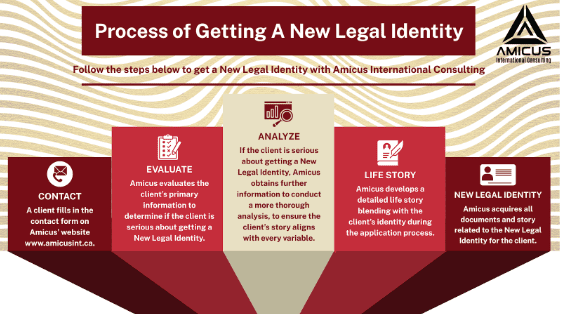
Furthermore, specialized travel entities and consulting organizations assist clients in structuring compliant travel identities that meet international legal standards. These lawful frameworks ensure that each document, residence status, or travel authorization aligns with both national and international law, avoiding any conflict with immigration regulations.
Case Study: The European Union’s Entry/Exit System
The European Union’s Entry/Exit System represents one of the most advanced biometric border management platforms in the world. Designed to record non-EU nationals’ time and place of entry and exit, it integrates facial and fingerprint recognition technology across the Schengen Area.
Following its pilot phase in 2024, the system underwent privacy audits under the supervision of the European Data Protection Supervisor (EDPS). These audits led to the implementation of new safeguards, including decentralized data storage, encryption-based access control, and mandatory transparency reports. The case demonstrates how lawful surveillance and privacy protection can coexist within the same regulatory structure.
Case Study: Canada’s Border Privacy and Digital Identity Pilot
Canada’s Border Services Agency (CBSA) has been testing a digital identity pilot that uses blockchain-based verification for cross-border travelers. The initiative enables individuals to verify their citizenship and travel eligibility through cryptographically signed tokens, without exposing their personal data.
Participants can verify their entry clearance without disclosing financial, health, or unrelated personal information. This approach aligns with the principles of privacy-by-design and lawful minimization, setting a precedent for other nations seeking to modernize border control while respecting human rights.
The Rise of Encrypted Travel Data Systems
Travel data encryption is emerging as a new frontier in border cybersecurity. Homomorphic encryption, a method allowing data analysis without decrypting it, enables customs and immigration authorities to process travel information securely.
Through encryption-based verification, border agencies can confirm a traveler’s eligibility, identity, and risk profile without direct access to sensitive data. This approach enhances security while preserving privacy, ensuring compliance with international human rights law.
Some jurisdictions are experimenting with decentralized storage models, where travelers’ personal data remains on their devices, under their control. Only minimal verification data is transmitted across borders, limiting potential exposure to surveillance or misuse.
The Legal Foundations of Data Protection in Mobility
Data protection law now plays a central role in regulating cross-border movement. The Council of Europe’s Convention 108+, the world’s first binding international treaty on privacy, establishes standards for processing personal data during travel. It mandates lawful purpose, proportionality, and transparency in government data collection and processing.
The OECD and the Asia-Pacific Economic Cooperation (APEC) have also developed frameworks for cross-border data governance, harmonizing how travel and migration data is processed. These standards promote mutual recognition among countries, facilitating seamless travel while preserving privacy.
In the Americas, regional cooperation through the Organization of American States (OAS) promotes the adoption of similar principles, ensuring that personal data collected for border purposes is handled securely and lawfully.
Humanitarian and Diplomatic Travel Privacy
Humanitarian workers, journalists, and diplomats often require elevated levels of discretion due to the nature of their missions. International law provides special categories of protection for these individuals, ensuring their identities and movements are shielded from unnecessary exposure.
For instance, the Vienna Convention on Diplomatic Relations guarantees the inviolability of diplomatic communication and identification. Similarly, humanitarian passports issued under United Nations supervision allow aid workers to cross borders in conflict zones without compromising their security.
While these frameworks are specific to official roles, their underlying principles influence how privacy protection is evolving for all travelers. The concept of “operational privacy” is now being extended to civilians engaged in international business, consulting, and activism, provided their conduct remains within lawful boundaries.
The Role of International Organizations and Legal Oversight
International institutions are increasingly central to shaping privacy law in travel. The United Nations, through its Office of the High Commissioner for Human Rights, continues to advocate for digital freedom of movement. At the same time, the International Organization for Migration (IOM) works to modernize border systems with privacy safeguards.
Oversight bodies, such as the European Data Protection Board (EDPB) and national data protection authorities, enforce compliance across both the public and private sectors. These authorities ensure that border automation and digital verification do not erode fundamental rights.
Case Study: The Schengen Visa Reform and Privacy Safeguards
The 2025 Schengen Visa Code reform introduced advanced privacy controls into visa processing systems. Applicants’ biometric data and supporting documents are now stored in an encrypted form and automatically deleted after their legal retention period has expired.
Applicants are also informed of their rights under GDPR, including access to and correction of stored data. This reform demonstrates that border security and privacy protection can coexist, provided that data is handled in a lawful and transparent manner.
The Future of Anonymous and Secure Travel
The future of travel privacy will be shaped by three trends: decentralization, encryption, and harmonized regulation. As blockchain identity systems and quantum encryption technologies mature, travelers will gain greater control over how their data is shared across borders.
Digital sovereignty, where individuals own and manage their personal information, is becoming the defining principle of cross-border movement. Governments are beginning to recognize that privacy protection strengthens, rather than weakens, security by increasing public trust in digital systems.
Lawful anonymity will remain a key feature of travel in 2026 and beyond. It reflects a growing international consensus that identity management should serve individuals, not expose them. As nations modernize their borders, privacy will no longer be a privilege but a standardized component of global mobility.
Conclusion
The new era of anonymous travel is not about concealing one’s identity, but about regaining control over it. Through privacy law, encryption, and cross-border cooperation, individuals can move freely while maintaining lawful discretion and compliance. The future of global travel will depend on the continued evolution of legal frameworks that protect privacy without undermining security.
The transformation of international border systems into transparent, privacy-aware infrastructures signals a new chapter in global governance. In 2026, privacy and freedom of movement will no longer be competing values, but rather interdependent principles that shape a safer, more dignified world.
Contact Information
Phone: +1 (604) 200-5402
Signal: 604-353-4942
Telegram: 604-353-4942
Email: info@amicusint.ca
Website: www.amicusint.ca