
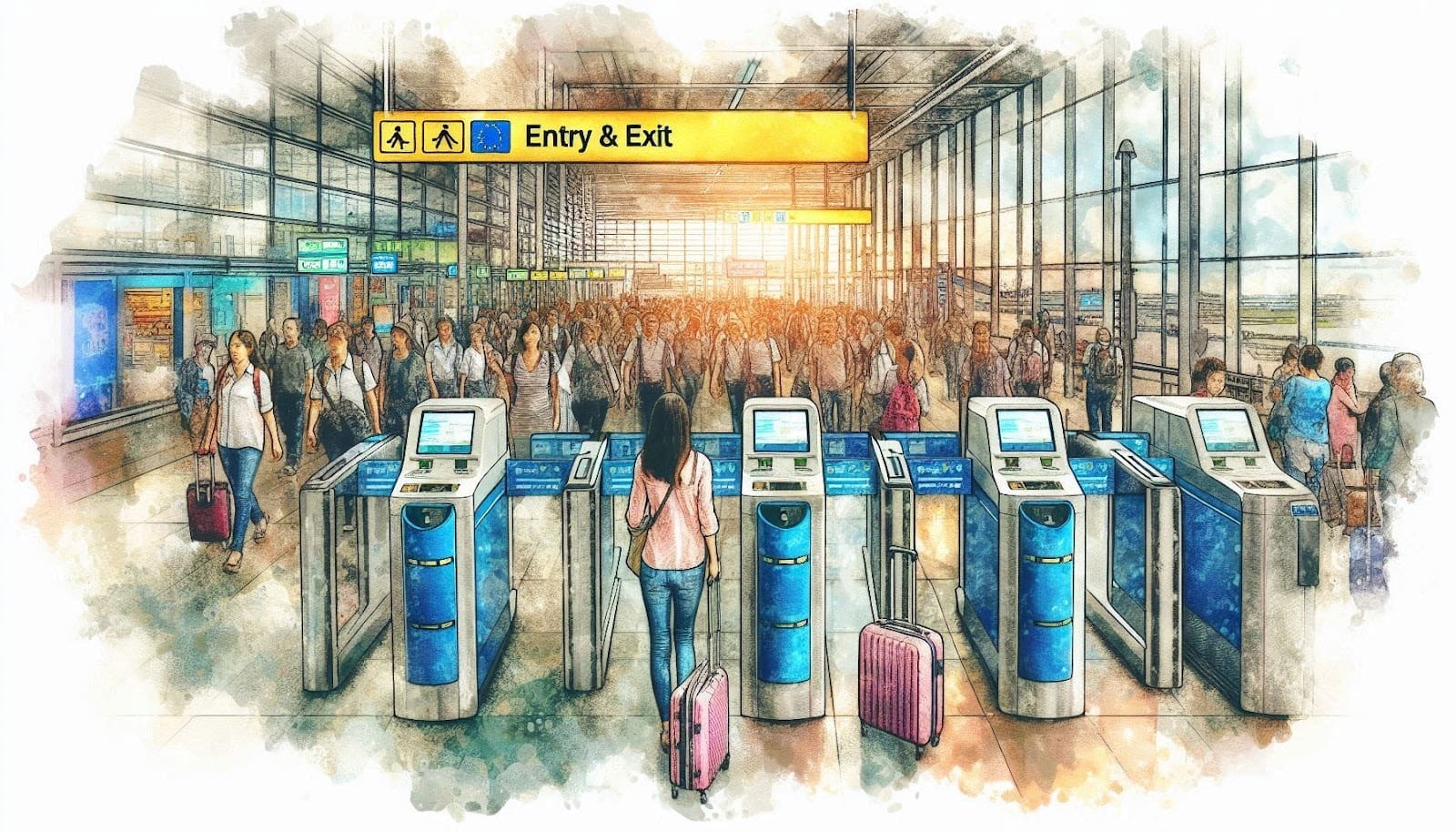
Temporary controls inside Europe complicate itineraries even when visas are valid, adding delays, secondary screening, and missed connections across routes built for flow
WASHINGTON, DC
The Schengen area is built on a promise of passport-free movement across much of Europe, yet the return of temporary internal border controls has become a recurring feature during migration pressure, security alerts, and domestic political stress. These measures rarely invalidate a valid Schengen visa or lawful visa-free status, but they reshape the traveler experience by reintroducing inspection into corridors designed for speed, predictability, and low friction.
For business travelers and cross-border commuters, the difference is practical rather than philosophical. A day trip that once relied on tightly sequenced trains, short regional flights, and highway transfers can become vulnerable to cascading delay. A missed connection can turn a one-day meeting into an overnight stay. A routine intra-Schengen drive can become a stop-and-go line. Even light-touch checks, when applied to high-volume routes, can generate bottlenecks because modern schedules assume uninterrupted flow.
Internal controls also introduce a second layer of uncertainty. External Schengen border rules set the headline terms of entry, but internal checks can apply with little notice and can vary by border crossing, time of day, and operational posture. Travelers experience this as inconsistent enforcement, even when the legal basis is standardized.
Why internal checks return, and what the rules allow
Schengen’s legal framework allows member states to reintroduce internal border controls on a temporary basis under defined conditions. In theory, the intent is limited and exceptional, focused on responding to specific threats or pressures. In practice, the tool has been used repeatedly, and frequent use changes how travelers perceive the Schengen promise.
Internal controls often return in recognizable patterns.
Security incidents and heightened threat reporting can trigger temporary measures around major hubs and politically sensitive borders.
Migration surges can lead to checks on key corridors where secondary movement is perceived as a problem.
Domestic politics can amplify the demand for visible enforcement, particularly when governments face electoral pressure to demonstrate control.
These measures are typically time-limited and subject to renewal conditions. The more often controls return, the more normal they become operationally, even when officially described as temporary.
What travelers should expect when controls return
Internal checks are not always a single checkpoint with a uniform process. They are often a mix of methods designed to increase visibility and friction without constructing permanent border infrastructure.
Document checks on trains and buses are common. Officers may board, walk the aisle, and check identity documents and residence permissions. The check can be quick, but it can also trigger secondary questioning for travelers whose documentation is incomplete or whose travel narrative appears unclear.
Highway controls can create stop-and-go lines, sometimes with selective screening rather than full stops for every vehicle. The effect is unpredictable travel time, which is particularly damaging for travelers relying on fixed meetings, airport departures, or train connections.
Regional flights within Europe may face tighter identity checks at departure or arrival, especially when airports adjust their internal security posture. Travelers who assume a domestic-style experience inside Schengen may be surprised by additional document scrutiny.
The primary risk for lawful travelers is disruption rather than denial. A valid visa usually remains valid. The problem is that disruption can carry compliance consequences. A missed connection can force an unexpected overstay in a city. A delayed train can ruin a day trip and require a hotel booking. A change in itinerary can create gaps between what a traveler claimed at entry and what later appears in their record.
The business travel penalty: How small delays create high costs
Business travel is uniquely sensitive to internal checks because its value depends on tight timing. A leisure traveler can absorb a two-hour delay with less consequence. A business traveler can miss a contract meeting, fail to attend a regulatory appointment, or miss a courier deadline.
Internal controls also raise the probability of secondary screening for travelers who cross frequently. Repeated cross-border movement can prompt questions about purpose, work status, and the distinction between short business visits and de facto work patterns. The traveler may be lawful, but scrutiny increases because the pattern appears different through an enforcement lens.
For companies, the costs are not limited to lost time. They include rescheduling fees, hotel costs, duty-of-care concerns, and increased compliance workload for mobility teams that must keep documentation current and consistent across repeated trips.
Visas still work, but assumptions change
Internal border checks do not generally cancel a valid Schengen visa or remove lawful visa-free status. What they change is the set of assumptions travelers rely on.
The most common assumption is that identification does not matter once inside Schengen. In reality, internal checks increase the likelihood that travelers will be asked to prove identity and lawful status away from the external border.

The second assumption is that proof is only needed at entry. Internal checks can occur days after arrival, far from the airport where a traveler first entered. Travelers who left their passports in a hotel safe or who carry incomplete documentation can find themselves in avoidable disputes.
The third assumption is that internal travel is operationally predictable. Once checks return, travel time becomes a variable. That affects connections, meeting schedules, and the ability to comply with onward travel plans.
Documentation readiness is the quiet determinant of smooth travel
In a world where internal checks are sporadic, the best defense is administrative discipline.
Carry documents that prove identity and lawful presence. For visa holders, that includes the passport with the visa sticker and any supporting documentation relevant to the trip. For visa-exempt travelers, it means the passport and supporting records that demonstrate the purpose and timeline of the stay.
Keep travel narratives consistent. If a traveler enters with a business meeting description and is later found commuting repeatedly across borders, the mismatch can trigger questions even when no rule is violated. Consistency reduces friction.
Track days carefully. Internal checks do not change the 90-day rule in any 180-day period rule, but they increase the likelihood that day counts and travel patterns will be questioned. Travelers who operate near the limit should expect more scrutiny.
Maintain proof of onward plans. Tickets, reservations, and event documentation can be useful when officers ask why a traveler is moving frequently or staying for extended periods.
These practices are not about gaming the system. They are about avoiding preventable disruptions in an environment where enforcement is layered, and the burden often falls on the traveler to provide clarity quickly.
Policy layering: Why Europe feels both more open and more monitored
A defining feature of the current travel environment is the coexistence of two trends.
Externally, Europe is reinforcing its borders through standardized recordkeeping, tighter identity verification, and more consistent enforcement of stay limits.
Internally, Schengen remains designed for free movement, but temporary checks reappear during crises and political pressure.
The combined effect is a layered enforcement environment. A traveler can experience smooth passage across several countries, only to face sudden checks on a train or highway that feel like a return to an earlier era. This mix can cause confusion, particularly for travelers who assume that once they have cleared the external border, the rest of the trip will be frictionless.
For institutions, policy layering means mobility planning cannot be reduced to a single rule. A valid visa may be necessary, but it is not sufficient to guarantee operational predictability. Companies and universities increasingly need contingency planning for internal travel disruptions, including buffer time and documentation-readiness protocols.
How this intersects with U.S. visa policy and screening narratives
The United States and Europe operate distinct immigration systems, but both are moving toward risk-based screening that values pattern and consistency. Internal Schengen checks, while not a U.S. measure, can still influence how travelers present their global mobility history.
A traveler who accumulates disruptions, itinerary changes, or inconsistent documentation outcomes in Europe may later need to explain those patterns in other contexts. This is particularly relevant for travelers who engage in frequent cross-border business activity, remote work arrangements, or repeated long stays that sit near the edges of short-stay rules.
For U.S. travelers, internal checks also highlight a practical contrast. The ideal of borderless movement is real inside Schengen in many periods, yet the system retains legal tools for internal enforcement when governments choose to use them. That reality encourages more conservative travel planning, including carrying documentation that many travelers would normally leave behind during intra-European trips.
Why is it happening more often?
Temporary controls have become more common because the pressures that trigger them have become more persistent.
Migration management remains politically salient and operationally challenging.
Security concerns and threat environments fluctuate, and governments often prefer visible measures.
Domestic political incentives favor actions that signal control, even when the measures are designed to be temporary.
As a result, internal controls function less like rare exceptions and more like recurring operational modes. Travelers experience this as unpredictability. Governments experience it as flexibility.
Are internal border controls allowed under Schengen rules?
Yes. Schengen rules allow temporary internal border controls under specified conditions, with time limits and renewal requirements. The measures are intended to be exceptional, but they have been used repeatedly in recent years.
Do visas stop working?
Generally, no. Valid visas and lawful visa-free status typically remain valid, but travelers may face more frequent checks, longer travel times, and greater disruption across routes that normally operate without inspection.
Will internal checks lead to denial of entry between member states?
For lawful travelers, denial is not the typical risk. The more common risk is disruption, secondary questioning, and missed connections. Travelers should still be prepared to prove identity and lawful presence when checks are in place.
Why does this matter for business travel?
Business travel relies on tight schedules. Even small delays can cascade into missed meetings, missed flights, and higher costs. Internal controls reintroduce unpredictability into routes designed for flow.
How should travelers prepare?
Carry identity documents, keep proof of lawful stay accessible, track stay limits carefully, and build buffer time into itineraries. Frequent travelers should also maintain consistent documentation and trip narratives across repeated crossings.
Amicus International Consulting provides professional services supporting lawful cross-border travel planning and documentation readiness in environments where internal controls can change with little notice.
Amicus International Consulting
Media Relations
Email: info@amicusint.ca
Phone: 1+ (604) 200-5402
Website: www.amicusint.ca
Location: Vancouver, BC, Canada
