
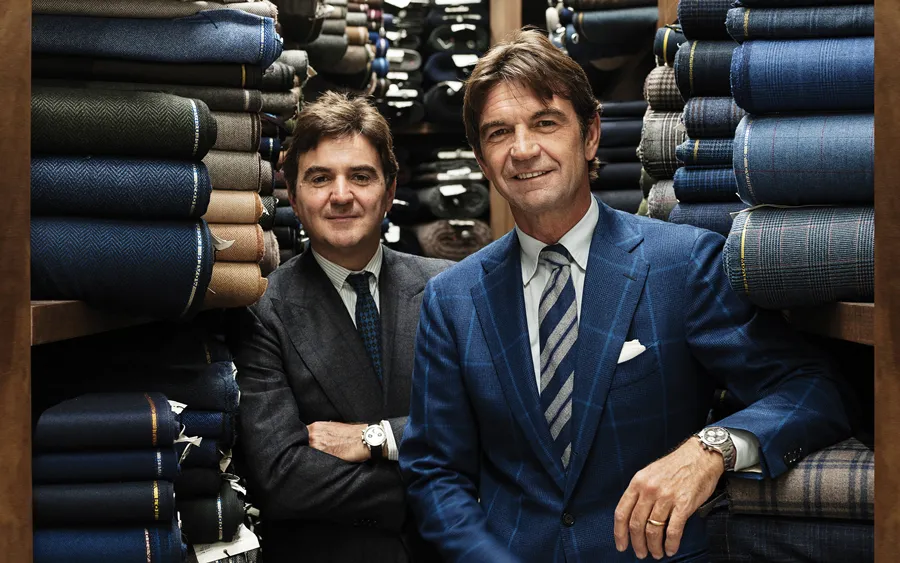
Italian menswear has always balanced between art and discipline, but nowhere does that balance feel more human than in Naples. Here, tailoring is not an accessory to power; it is a conversation between the maker and the wearer. Three houses—Kiton, Cesare Attolini, and Isaia—embody that dialogue. They stand as monuments to craft in an age that too often confuses novelty with taste. Together, they have created a shared language of softness, spontaneity, and respect for the body that redefined global menswear. Their legacies prove that mastery isn’t about opulence but about proportion, precision, and patience.
The Neapolitan Philosophy of Ease
To understand these houses, one must first understand the soul of Neapolitan tailoring. It was born from necessity, not luxury. The southern heat demanded lighter jackets; the Neapolitan temperament demanded movement. Tailors responded by deconstructing the heavy British model—removing padding, softening canvases, and sculpting cloth to feel like a second skin. The result was not rebellion but evolution.
Neapolitan tailoring is guided by restraint: fewer stitches, lighter canvases, deeper intuition. The tailoring hallmarks include:
- Unpadded shoulders (spalla camicia): a shoulder sewn like a shirt sleeve to follow the body’s contour.
- Soft chest canvas: allowing the garment to mold naturally over time.
- High armholes: improving range of motion and comfort.
- Rolling lapels: lapels that curve rather than lie flat, giving the chest depth.
This structureless architecture allows a suit to breathe. Each movement of the arm or turn of the torso reveals how form and function merge. The jacket becomes part of the body’s rhythm rather than its restraint.
The cultural context matters. Naples thrives on gesture and expression. The tailoring, like the city, is animated and conversational. Every seam, dart, and stitch holds a trace of the artisan’s touch. These garments are not mass-produced shells; they are written stories.
Kiton – The Discipline of Perfection
When Ciro Paone founded Kiton in 1968, he refused to compromise on craftsmanship. He often repeated that Kiton’s goal was “the best of the best plus one.” That “plus one” is the brand’s philosophy—the constant pursuit of refinement beyond logic or economy. In Kiton’s atelier in Arzano, outside Naples, every suit passes through the hands of more than thirty artisans. A single jacket can require 25 hours of work and 1,800 stitches by hand. Machines play supporting roles; the orchestra remains entirely human.
Kiton’s process begins with the raw material. The house weaves its own textiles in Biella, producing cloths that defy weight and texture conventions. Wool at 13.2 microns—finer than cashmere—gives their suits an almost liquid drape. Their fabrics include blends of silk, linen, and vicuña, prized for rarity and softness. Yet the luxury of Kiton isn’t flamboyant; it’s invisible. The beauty lies in what only the wearer feels: the roll of the shoulder, the way the collar hugs the neck, the balance that makes the garment seem to float.
Anatomy of a Kiton Suit
Kiton’s tailoring follows a quiet ritual:
- Fabric Inspection: each length is examined under natural light; flaws invisible indoors are rejected.
- Pattern Drafting: chalk lines are drawn freehand, guided by decades of experience rather than CAD precision.
- Hand Assembly: artisans align stripes and checks by eye; seams are basted, never forced.
- Fitting Philosophy: each try-on is treated as collaboration—tailor and client refining comfort until jacket and man become inseparable.
The suit’s silhouette—trim yet soft, structured yet fluid—speaks to Paone’s belief that elegance must feel natural. Kiton garments breathe; they whisper rather than announce. To wear one is to understand craftsmanship not as nostalgia but as discipline. In a culture obsessed with speed, Kiton remains devoted to time.
Beyond the Suit
Though known for tailoring, Kiton applies the same ethos to sportswear, shirts, and outerwear. Every piece shares the same meticulous DNA: hand-rolled edges, mother-of-pearl buttons, fabrics woven exclusively for the brand. Their denim line, cut and sewn entirely in Italy, is treated like couture tailoring, with invisible reinforcement and manual fading done by brush.
The brand’s philosophy resists trends. Instead, Kiton offers continuity—garments meant to age with grace, adapting to their owner’s rhythm. It is less about image than about integrity. For menswear enthusiasts, Kiton represents the rare meeting of technical purity and emotional honesty.
Cesare Attolini – The Blueprint of Modern Tailoring
Before Kiton’s founding, Naples already had a master who defined the modern suit: Vincenzo Attolini. Working at Gennaro Rubinacci’s atelier in the 1930s, he dismantled the stiff English silhouette and gave birth to the lightweight Neapolitan jacket. His son, Cesare, and later his grandsons, carried that legacy forward under the family name Cesare Attolini. Today, the brand remains a living archive of that original vision.
An Attolini suit is instantly recognizable. Its shoulders slope naturally, its lapels sweep widely, and its construction seems almost nonexistent. The secret lies in proportion. Every cut, every curve of the lapel, every millimeter of the gorge line has been refined through generations. The jacket doesn’t impose shape; it reveals it.
The Art of Softness
Attolini’s genius is that softness does not mean lack of structure—it means invisible structure. Inside each jacket lies a handmade canvas that shapes without hardening. Tailors pad the chest by hand with horsehair and cotton wadding so lightly that you can barely feel its presence. The result is a garment that moves like a living organism.
Core elements defining Attolini’s craft:
- Shoulder: completely natural slope with the spalla camicia technique.
- Sleevehead: minimal roping, preserving fluidity.
- Waist: gently suppressed for balance, not aggression.
- Stitching: dense yet delicate, each backstitch a heartbeat.
Every jacket passes through about 25 hands, from cutter to presser. No shortcuts, no glued layers. The process can take 30 hours, sometimes longer, depending on the fabric’s temperament. For Attolini, time is an ingredient.
The Legacy of Ease
Vincenzo Attolini’s original invention wasn’t just technical; it was cultural. By removing heaviness, he allowed men to express personality without rigidity. The new Neapolitan silhouette reflected the city’s rhythm—elegant yet relaxed, poised yet conversational. When Cesare Attolini brought this vision to international markets, it rewrote global expectations of formalwear. What had been casual in Naples became aspirational abroad.
Today, the brand’s suits remain benchmarks for discerning collectors. They sit at the intersection of sculpture and motion—art that functions. To wear one is to participate in a lineage rather than purchase a product.
Isaia – The Pulse of Modern Neapolitan Style
Where Kiton and Cesare Attolini represent classical mastery, Isaia speaks the language of evolution. Founded in the 1920s by Enrico Isaia, the brand was once a small tailoring workshop in Naples catering to local gentlemen. Over the decades, Isaia has become the bridge between tradition and contemporary culture—proof that heritage can breathe in color, not just gray and navy.
Isaia embodies confidence through contrast. It respects the codes of Neapolitan tailoring but refuses to be confined by them. While the soft shoulder, high armhole, and hand-stitched lapel remain intact, the brand’s energy comes from its modern attitude: vibrant fabrics, bold checks, coral-red linings, and a willingness to experiment. The coral pin, Isaia’s signature emblem, symbolizes both good fortune and rebellion.
The Art of Color and Character
Isaia understands that menswear need not whisper to be intelligent. It can converse, even laugh. Naples, after all, is not a city of restraint but of expressive rhythm. The brand captures this spirit by infusing tailoring with joy. Its collections juxtapose Italian craftsmanship with cosmopolitan taste. Whether it’s a double-breasted linen blazer in burnt orange or a soft wool overcoat in midnight green, Isaia proves that boldness can still be tasteful.
Key features that define Isaia’s modern tailoring:
- Rich palettes: emeralds, terra-cotta, rust, and dusty blues that reflect the Neapolitan landscape.
- Hand-finished details: pick stitching, rolled lapels, and pattern alignment perfected by eye.
- Lightweight construction: ensuring garments breathe in warm climates and move with rhythm.
- Playful sophistication: pairing formal silhouettes with unexpected textures and colors.
Isaia redefines the modern gentleman not as a static archetype but as a man who enjoys contradictions—serious about craft, unafraid of personality. The brand invites its wearer to dress with emotion, not performance.
Beyond Tailoring
While Isaia’s foundation remains in suits, the brand’s innovation thrives in hybrid garments—knit blazers, deconstructed coats, and drawstring trousers cut from luxury flannel. It’s tailoring reinterpreted for contemporary life. For Isaia, craftsmanship isn’t a museum artifact; it’s a living conversation. The modern man travels, works, and socializes across borders—his wardrobe must keep pace without losing soul. Isaia achieves this balance by marrying handwork with versatility.
The brand’s use of Neapolitan hand-stitching techniques in casual garments symbolizes a larger truth: in Naples, formality and ease coexist naturally. Isaia channels that duality into garments that remain as intelligent as they are spontaneous.
The Language of Craftsmanship
Though each brand expresses it differently, all three share an unspoken creed: tailoring as human art. In a world increasingly automated, the hands of Neapolitan artisans remain their most valuable asset. The act of sewing is not mere labor; it is a conversation between fabric and intention.
The Power of the Human Hand
Consider what separates hand-stitching from machine sewing. A machine moves in perfect rhythm, each stitch identical. A human hand, however, introduces nuance—tiny variances in tension that allow cloth to stretch, breathe, and return to form. This is why hand-padded lapels roll rather than bend, why a hand-set sleeve hangs more naturally from the shoulder.
The artisans behind Kiton, Cesare Attolini, and Isaia are not anonymous workers—they are custodians of invisible beauty. Their expertise cannot be replicated by algorithms or automation. Each motion is inherited, not taught. It’s a discipline learned over decades, often beginning as apprentices sweeping workshop floors before ever touching a needle.
The artisans’ precision represents something profound in fashion’s industrial century: the persistence of individuality. In Neapolitan tailoring, imperfection is not a flaw; it is proof of life.
Naples: Where Style Breathes Culture
It’s impossible to separate these brands from their birthplace. Naples is a paradox—a city of chaos and poetry, of decaying palazzos and dazzling sunsets. Its people dress the way they live: expressively, intuitively, never timidly. In the crowded streets of Chiaia or Spaccanapoli, one sees the roots of Neapolitan elegance: effortless, romantic, full of character.
The City as Tailor
The city’s architecture, cuisine, and temperament mirror its tailoring. Narrow cobbled lanes encourage intimacy. Colors fade under the sun into hues of stone and terracotta—echoes found in Isaia’s fabrics. The gestures of Neapolitans—hands moving, voices rising—find their echo in the drape of an Attolini sleeve or the roll of a Kiton lapel.
Fashion here isn’t decoration; it’s language. To dress well is not vanity but self-respect. A Neapolitan jacket doesn’t hide the man; it reveals him.
This philosophy explains why these three houses continue to matter even as trends shift. Their garments don’t chase novelty; they express continuity. In a Neapolitan atelier, the past is not a weight—it’s a compass.
The Persistence of Tradition in a Changing World
As global fashion accelerates, Neapolitan tailoring holds its own by refusing to lose touch with its humanity. Yet it isn’t frozen in time. Each of these brands balances preservation with progress.
Kiton continues to innovate fabrics, blending luxury with performance, ensuring lightness without losing authenticity. Cesare Attolini remains devoted to pure handwork, treating each suit as a sculpture made for motion. Isaia, in turn, speaks to new generations by infusing color, attitude, and urban vitality into classical frameworks.
The common thread among them is conviction. Craftsmanship here is not nostalgia—it’s resilience. These brands remind the fashion world that technology may refine production, but artistry refines identity. The true luxury isn’t speed; it’s sincerity.
The Sartorial Future of Naples
Neapolitan tailoring continues to influence global design houses, inspiring silhouettes and philosophies far beyond Italy. Yet what makes Naples unique is its refusal to standardize beauty. Each garment remains personal, imperfect, alive.
Emerging ateliers across Italy and beyond—many trained by masters from these three houses—carry the torch forward. They borrow the unstructured jackets, the hand-cut lapels, the relaxed confidence, adapting them for a changing world. What began as local necessity has become universal aspiration.
Still, at its heart, the essence of Neapolitan style resists globalization. It remains tied to streets filled with light, laughter, and craft. The best suits from Naples are not costumes of tradition; they are continuations of conversation.
Conclusion
In the end, the legacy of Kiton, Cesare Attolini, and Isaia transcends fashion itself. These houses remind us that true elegance cannot be manufactured—it must be cultivated. In every hand-padded chest, every curved lapel, every carefully aligned stripe lies a philosophy of life: dignity through detail.
To wear a Neapolitan suit is to carry a fragment of its maker’s patience. It’s a quiet rebellion against disposability, an embrace of permanence in a transient world. Whether through Kiton’s disciplined purity, Attolini’s architectural ease, or Isaia’s playful sophistication, the message remains the same—craft is character.
And in the southern light of Naples, that character endures.
