

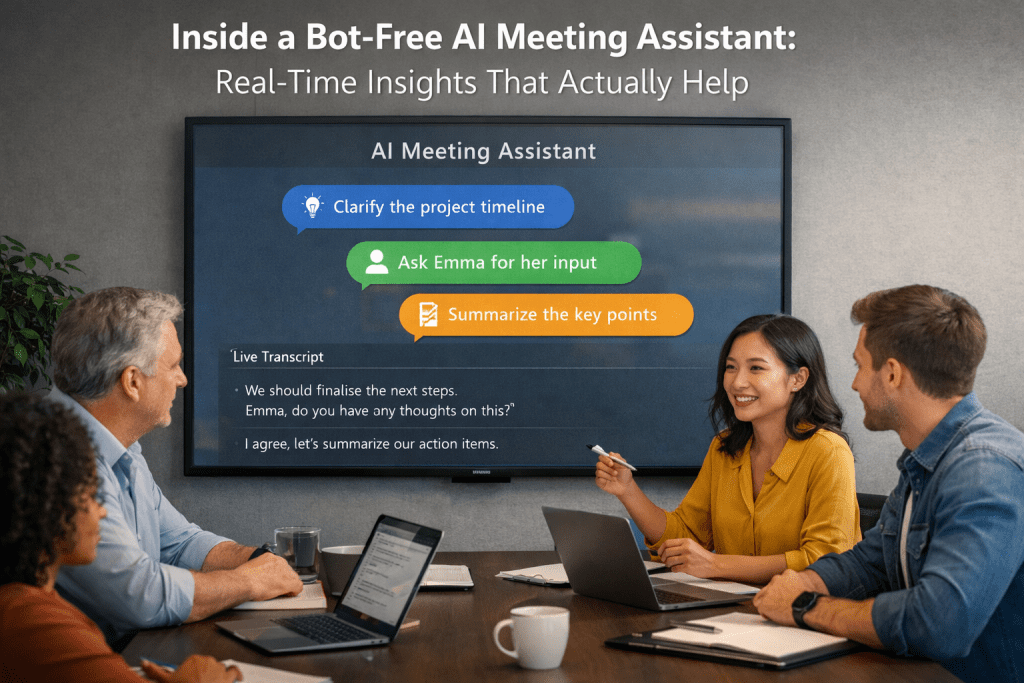
Meetings shape how teams think, decide, and move forward. Yet for many professionals, meetings often feel unproductive, rushed, or unclear. People talk over each other, key ideas slip through the cracks, and non-native speakers struggle to keep up. Technology was meant to solve these problems, but many tools introduce visible bots that interrupt conversations and make participants uncomfortable.
This is where a new approach stands out. A modern AI meeting assistant that works without a visible bot offers a quieter, smarter way to support meetings. Instead of recording everything or acting like an extra participant, it delivers helpful insights in real time while staying out of the spotlight. In this article, we explore how a meeting assistant without bot design is reshaping conversations and why it actually helps teams perform better.
Why Meetings Still Feel Broken for Many Teams
Despite video calls, shared documents, and chat tools, meetings remain a weak point for many organizations. The issue is not a lack of communication, but a lack of clarity and support during the discussion itself.
Common challenges include:
- Important points being missed or forgotten
- Discussions drifting away from the agenda
- Quieter team members not getting a chance to speak
- Language barriers affecting confidence and understanding
Traditional tools usually address these problems after the meeting ends. They generate summaries or transcripts, but by then, decisions are already made. A real-time meeting assistant takes a different approach by helping in the moment, when it matters most.
The Shift Away From Meeting Bots
Meeting bots were introduced with good intentions. They joined calls, recorded audio, and produced notes. Over time, however, many users began to feel uneasy about them. A bot sitting in a meeting can feel intrusive, especially in sensitive discussions or client calls.
A bot-free meeting assistant removes this discomfort. It does not join as a participant or announce its presence. Instead, it operates quietly in the background, focusing on assistance rather than observation. This subtle design change makes a big psychological difference.
People speak more naturally when they do not feel monitored. As a result, conversations become more honest, productive, and focused.
What a Bot-Free AI Meeting Assistant Actually Does
A bot-free AI meeting assistant is designed to enhance human interaction, not replace it. Its main strength lies in offering context-aware guidance while discussions are still happening.
This includes:
- Real-time meeting suggestions to improve clarity
- Prompts to summarize or confirm decisions
- Gentle cues to bring the discussion back on track
- Support for clearer phrasing and structure
Because the assistant is not visible to everyone, users can choose how and when to act on these insights. This creates a sense of control rather than dependence.
Real-Time Support That Feels Natural
The biggest advantage of a real-time meeting assistant is timing. Advice that arrives during the conversation can change outcomes instantly. If a point sounds unclear, the assistant may suggest rephrasing. If a topic runs too long, it may prompt a transition.
Real-time meeting suggestions are especially useful in fast-paced environments where decisions are made quickly. Instead of reviewing mistakes later, teams can correct course immediately.
This type of support feels more like a quiet coach than a tool, which is why adoption rates are often higher with bot-free solutions.
Helping Non-Native Speakers Participate Fully
Global teams are now standard, and many meetings include participants who are not fluent in the meeting language. These individuals often have strong ideas but hesitate to speak due to fear of making mistakes.
A non-native speaker meeting assistant offers discreet help that builds confidence rather than drawing attention. It can suggest clearer phrasing, correct common errors privately, or offer alternative expressions that sound more natural.
This support allows non-native speakers to focus on their ideas instead of their language skills. Over time, it leads to more balanced discussions and better collaboration across cultures.
Why Privacy Matters More Than Ever
Trust is essential in any meeting, especially when sensitive information is shared. Many people feel uneasy knowing a bot is recording every word. A bot-free meeting assistant reduces this anxiety by limiting unnecessary data capture.
Key privacy advantages include:
- No visible recording bot in the meeting
- Greater transparency around how data is used
- Increased comfort for clients and external partners
When people trust the tool, they are more open and engaged. This trust is a major reason why bot-free meeting assistant solutions are gaining popularity.
AI Suggestions During Meetings That Improve Outcomes
Good meetings lead to clear actions. Poor meetings create confusion and extra follow-ups. AI suggestions during meetings help bridge this gap by encouraging clarity at the right moments.
For example, the assistant might prompt a quick recap before moving to the next topic or suggest confirming responsibilities after a decision. These small nudges reduce misunderstandings and save time later.
Over weeks and months, this leads to stronger habits and more effective meetings without adding extra work.
Designed to Support, Not Distract
One of the biggest mistakes meeting tools make is overloading users with notifications. A well-designed AI meeting assistant avoids this by focusing on relevance.
Suggestions appear only when they add value. The language is neutral, supportive, and easy to understand. There is no pressure to act immediately, and no disruption to the flow of conversation.
This thoughtful design is what makes a meeting assistant without bot technology feel human rather than mechanical.
Real-World Use Cases Across Teams
The flexibility of a real-time meeting assistant makes it useful in many scenarios. Its benefits are not limited to one role or industry.
Common use cases include:
- Leadership meetings that require clear alignment
- Sales calls where precise messaging matters
- Remote team check-ins across time zones
- Client discussions where professionalism is key
In each situation, the assistant adapts to the context, offering insights that match the tone and purpose of the meeting.
Choosing the Right AI Meeting Assistant Without Bot Design
Not all tools deliver the same experience. When selecting an AI meeting assistant without bot technology, it is important to focus on how it behaves during real meetings, not just on feature lists.
Look for:
- Seamless integration with your meeting setup
- Useful real-time meeting suggestions
- Strong support for non-native speakers
- Clear and respectful handling of data
The best tools feel invisible when you do not need them and invaluable when you do.
A Smarter Way to Run Meetings
Meetings do not need louder tools or more automation. They need intelligent support that respects human interaction. A bot-free meeting assistant delivers exactly that by offering timely guidance without taking over the conversation.
By combining real-time insights, thoughtful design, and respect for privacy, this new generation of tools helps teams communicate better and make stronger decisions. As work continues to evolve, quietly intelligent assistants will define the future of effective meetings.